Astronomers Find Possible First Planet Born From a Dead Star's Ashes
A chemical anomaly buried in 27-year-old Hubble data points to a Jupiter-sized world that may have formed after its star died, not before — a candidate for an entirely new class of planet.

Astronomers have reopened a 27-year-old mystery sitting in the archives of the Hubble Space Telescope and concluded that the likely explanation is something nobody had seriously proposed before: a planet built from the wreckage of its own dying star.
The object at the center of the puzzle is a white dwarf cataloged as HS 0209+0832, a compact stellar remnant about 270 light-years from Earth. In a paper published Monday in Nature Astronomy, a team led by Jamie Williams, a doctoral student in the physics department at the University of Warwick, reports that the star's atmosphere is contaminated with an extraordinary amount of niobium, a heavy metal that has no obvious business being there. The team's preferred explanation is that the white dwarf is still being fed by a planet, one that did not exist before the star died but formed afterward, out of the very material the star cast off.
A chemical clue that sat unread since 1999
Hubble first gathered spectra of HS 0209+0832 in 1999. Buried in that ultraviolet data were roughly 100 absorption features that nobody could identify at the time; the atomic databases available then simply did not have good matches for them. According to NASA's account of the find, Williams went back to that archival dataset with a modern, far more complete catalog of atomic transitions and found that niobium explained a large share of the unidentified lines. It was a result nobody was looking for in a 1999 dataset, which is part of why it took this long to notice.
The team did not stop there. Data from NASA's retired Far Ultraviolet Spectroscopic Explorer, or FUSE, independently showed the same strong niobium signature, which the researchers treat as confirmation that the Hubble reading was not a fluke of calibration or noise. Nickel and calcium were also present but fainter than standard stellar models predict, a pattern the authors say is consistent with material that has been chemically processed somewhere unusual before it reached the white dwarf's surface.
The numbers behind the claim
The niobium abundance measured in the white dwarf's atmosphere is more than 1,000 times the level found in the sun, and the University of Warwick's press office notes it is the first time the element has been detected in any white dwarf examined to date. Separately, NASA's Transiting Exoplanet Survey Satellite, or TESS, recorded a faint brightness signal from the system that repeats every 4.4 days. The team interprets that periodic dimming as the signature of a Jupiter-sized gas giant orbiting the white dwarf at a distance of roughly 3.7 million miles, or about 6 million kilometers — closer to its star than Mercury is to the sun.
At that range, the white dwarf's residual heat and ultraviolet glow are strong enough to strip gas from the planet's outer atmosphere. The researchers propose that the escaping material trails behind the planet, spirals into a disk around the white dwarf, and eventually rains down onto the stellar surface — which is exactly where Hubble's spectrograph would pick it up as an atmospheric contaminant, niobium and all.
Why a "second-generation" planet is different
A white dwarf is what remains after a star like the sun exhausts its nuclear fuel and sheds its outer layers, leaving behind a hot, dense core roughly the size of Earth. Planets that orbited the original star before its death are sometimes called first-generation worlds; their chemistry reflects the gas and dust cloud the whole system formed from billions of years ago. A second-generation planet, by contrast, would have assembled afterward, out of material the star itself ejected while dying.
That distinction matters chemically because of where niobium comes from. According to co-author Nicholas Stone, an astronomer at the University of Wisconsin-Madison, the element pattern in HS 0209+0832's atmosphere looks like the fingerprint of the s-process, a slow neutron-capture reaction that builds heavy elements inside aging, swollen red giant stars — not the kind of chemistry a planet would inherit from an ordinary, young protoplanetary disk. Stone described it as "a chemical signature no ordinary, 'first-generation' planet should carry," according to the Warwick release.
There is a complication the team had to address: a single star dying on its own tends to shed mass in a roughly symmetrical shell that drifts outward and disperses, not material that would collect into a disk and condense into a planet. Williams has suggested that HS 0209+0832 likely had a companion star whose gravity helped pull the ejected material back into orbit instead of letting it escape into space, though the current data cannot yet confirm that companion.
"It looks like it was built from the very material its own star cast off as it died," said Boris Gänsicke, a professor of physics at the University of Warwick and a co-author of the study, adding, "Once we realized it was there, everything fell into place."
A candidate, not yet a confirmed planet
The researchers are careful about how far the evidence goes. "It's not a confirmed planet," Williams said, according to NASA's release. "It's only a candidate for now." The chemical and photometric evidence point in the same direction, but no one has yet directly imaged a planet or measured its mass independently. If the interpretation holds up, astronomers say it would represent a new class of planet, and would raise the possibility that other white dwarfs host similar bodies that have simply gone unnoticed, since nobody had previously thought to search white dwarf spectra for niobium.
Gänsicke, whose work on the project was supported by a grant from the European Research Council, has also raised a broader question prompted by the find: whether the solar system itself could eventually produce a similar object, once the sun exhausts its fuel in several billion years and becomes a white dwarf of its own. Outside researchers covering the paper have noted that, if real, HS 0209+0832's planet would be the first confirmed example of a world built entirely after its star's main life ended, rather than alongside it.
What happens next
The team's near-term plan is observational. They intend to re-observe HS 0209+0832 with both Hubble and NASA's Chandra X-ray Observatory over the coming year to look for additional signatures of infalling planetary material, and they have requested observing time on the James Webb Space Telescope, which could help determine whether the hypothesized planet is still intact or has begun to disintegrate under the white dwarf's radiation. Early coverage of the paper has already nicknamed the object the "phoenix planet," though the researchers themselves use more cautious language, treating it as a candidate pending further confirmation rather than a settled discovery.
Whether or not this particular planet survives scrutiny, the underlying method — mining decades-old Hubble archives with updated atomic databases — has already paid off once. Astronomers involved in the work say it suggests other "unidentified" absorption features sitting in old spectra, dismissed for years as noise or instrumental artifacts, may be waiting to tell similar stories.
NASA — Suspected Second-generation Planet Solves NASA Hubble Cold Case
Nature Astronomy — Discovery of a second-generation planet candidate accreting onto a white dwarf
University of Warwick — The Phoenix Planet
Space.com — 'Completely unexpected' Phoenix planet was born from the ashes of a dying star

Europe's New Climate Satellite Sends Back Its First Images
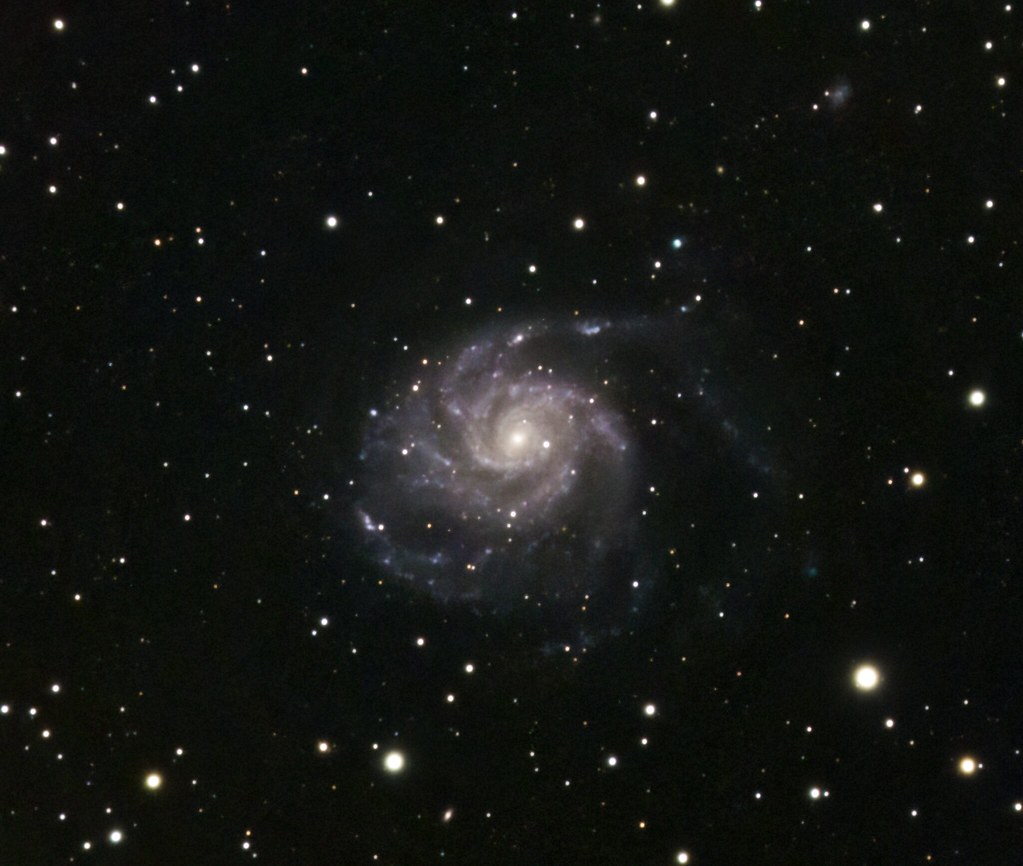
Long-Predicted "Backsplash" Galaxies May Have Finally Been Found Near the Pinwheel

Margaret Hamilton, Software Pioneer Behind the Apollo Moon Landings, Dies at 90
