Gut-targeted delivery could offer a needle-free path for mRNA vaccines and GLP-1 drugs
A Georgia Tech and Emory University study found that where a lipid nanoparticle is placed inside the gastrointestinal tract of mice determines which organ it reaches, opening a possible route to needle-free mRNA vaccines and metabolic drugs.
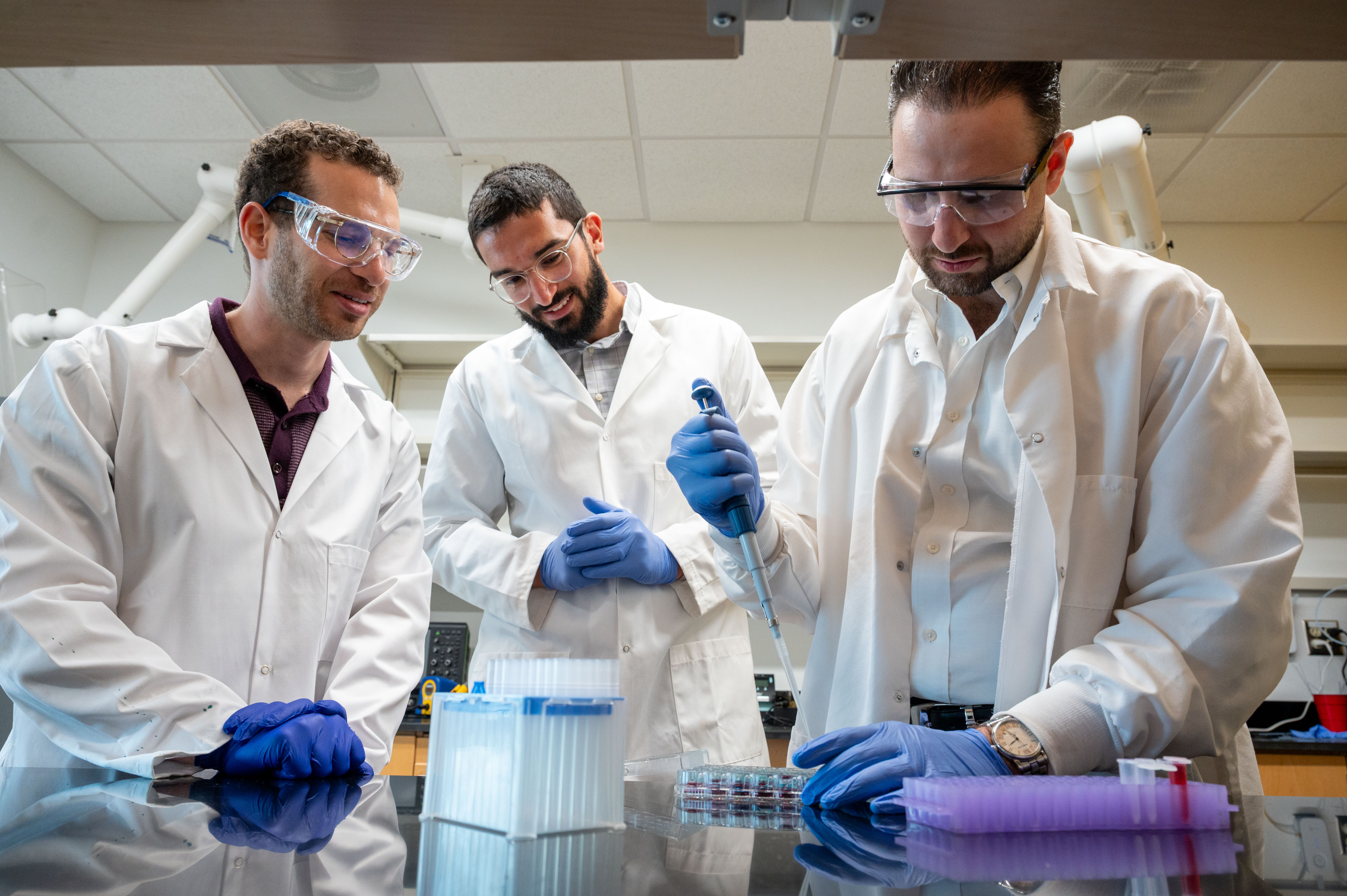
Engineers at the Georgia Institute of Technology, working with colleagues at Emory University, have shown in mice that the exact spot inside the gastrointestinal tract where a messenger RNA drug is delivered determines which organs it reaches afterward — a finding that could eventually let vaccines and metabolic drugs such as GLP-1 therapies reach patients without a traditional injection.
The study, published by Georgia Tech's research office and in the peer-reviewed journal ACS Nano, found that lipid nanoparticles — the fatty, microscopic capsules that ferry mRNA into cells, best known for carrying the active ingredient in COVID-19 vaccines — behave very differently in the body depending on whether they are placed against the lining of the cheek or the stomach. Steering the particles to the cheek sent them toward the lymph nodes, the hubs of the immune system. Steering them to the stomach sent them toward the pancreas, the organ that regulates blood sugar.
How location changes the destination
The research team, led by Alex Abramson, an assistant professor in Georgia Tech's School of Chemical and Biomolecular Engineering, and James Dahlman, a joint Georgia Tech-Emory faculty member in biomedical engineering, used microneedle injections to place lipid nanoparticles at several distinct sites along the gastrointestinal tract of mice, then tracked where the particles and their genetic payloads ended up.
Delivery to the cheek, or buccal, tissue routed the nanoparticles toward lymph nodes and produced an immune response that matched or exceeded a conventional injected vaccine, according to the researchers. Delivery to the gastric lining instead carried the particles toward the pancreas; when the payload was mRNA coding for glucagon-like peptide-1, the hormone mimicked by diabetes and obesity drugs such as semaglutide, the gastric route improved blood sugar regulation in the animals. Just as notably, nanoparticles delivered through the gut accumulated far less in the liver, lungs and spleen — the organs most often associated with side effects from standard subcutaneous or intravenous injections.
"Here we show that oral delivery of mRNA wouldn't just enhance the patient experience compared to injections, but it also may enable improved or even completely new treatments," Abramson said in the university's release. "We're able to deliver to organs that are hard to target via traditional administration methods while simultaneously reducing uptake in organs normally associated with toxicity."
Vaccines and metabolic disease in one platform
The dual result matters because it points to one delivery platform serving two of the biggest categories of mRNA medicine now in use or development: vaccines, which need to reach the immune system efficiently, and metabolic drugs, which need to reach organs such as the pancreas without flooding the bloodstream. GLP-1 receptor agonists, the class of drugs that includes semaglutide-based medicines sold under brand names such as Ozempic and Wegovy, have become one of the most widely prescribed and discussed drug categories in the United States in recent years, used for both type 2 diabetes and obesity. All currently approved versions require injection or, in one oral form, a tightly controlled dosing routine built around a very different chemistry than mRNA.
Ramy Ghanim, a Georgia Tech doctoral student involved in the work, said the ability to direct the same nanoparticle technology toward different organs by changing only the injection site could also lower costs. "Not only are we potentially improving LNP benefits by changing how it is administered, but we could even potentially decrease the cost of those mRNA vaccines or mRNA drugs," Ghanim said. He added that for vaccine applications specifically, "delivering to the cheek matched or improved the immune response of a vaccine compared to a traditional injection."
Safety at high doses
A central concern for any new nanoparticle route is whether it is safe at doses high enough to be clinically useful. Abdulraouf Abbas, a doctoral student in Dahlman's Emory lab and the study's lead author, said the gastric route cleared that bar in the mouse experiments. "We found that the LNP was completely safe at a very high dose when delivered via a gastric route of administration," Abbas said. Abramson noted that avoiding liver and lung exposure in particular could open room to raise doses further without a matching rise in side effects, a trade-off that currently limits how much mRNA drugmakers can safely administer through injection.
"What's really exciting about not affecting the liver and the lungs is that it may allow us to increase the dose without increasing the side effects," Abramson said.
The findings, reported by Phys.org and other outlets this week, build on a broader push across the drug-delivery field to replace injections with oral pills, skin patches or brief endoscopic procedures. The Georgia Tech-Emory group's contribution is less a finished device than a map: evidence that the gut itself contains multiple distinct "addresses" that can be used to direct a drug to a specific organ, information that developers of oral capsules, buccal films or endoscopic injectors can use to decide where in the digestive tract their devices should release their payload.
Who stands to benefit, and what comes next
The immediate audience for the research is other scientists and drug developers rather than patients, since the work was conducted entirely in mice and has not been tested in humans. If the approach eventually reaches clinical use, the clearest beneficiaries would be two large, overlapping groups: people who receive mRNA vaccines, including the seasonal and pandemic-response shots that rely on lipid nanoparticle technology, and the tens of millions of Americans using or considering GLP-1 drugs for diabetes or weight management, many of whom currently rely on weekly self-injections.
- Delivery site inside the gastrointestinal tract, not just the drug itself, determined which organ the nanoparticles reached.
- Cheek-lining delivery directed particles to lymph nodes and matched or beat a standard injected vaccine's immune response.
- Stomach-lining delivery directed particles to the pancreas and improved blood sugar control when carrying GLP-1 messenger RNA.
- Gut delivery reduced nanoparticle buildup in the liver, lungs and spleen compared with conventional injection routes.
Abramson's and Dahlman's labs say the next phase of work will refine the engineering needed to translate site-specific gut delivery into a practical device, whether a swallowed capsule, a patch held against the cheek, or a tool used briefly during an endoscopy. That stage, along with the extensive safety and efficacy testing required before any human trial, typically takes years even for well-funded academic-industry collaborations. For now, the result stands as an early but concrete demonstration that the gut's geography, not only its chemistry, can be engineered to send a drug exactly where it is needed.

Squid bodies hide hundreds more hair cells than scientists knew, study finds

NASA, SpaceX launch Crew-13 to space station after three-week delay

Long space missions linked to higher hip fracture risk in astronauts, study finds
