Interstellar Comet's Methane Points to a Deep-Freeze Birthplace
James Webb Space Telescope data show heavy-hydrogen levels in 3I/ATLAS's methane unlike anything measured in our solar system, hinting the interstellar visitor formed in one of the coldest environments known.
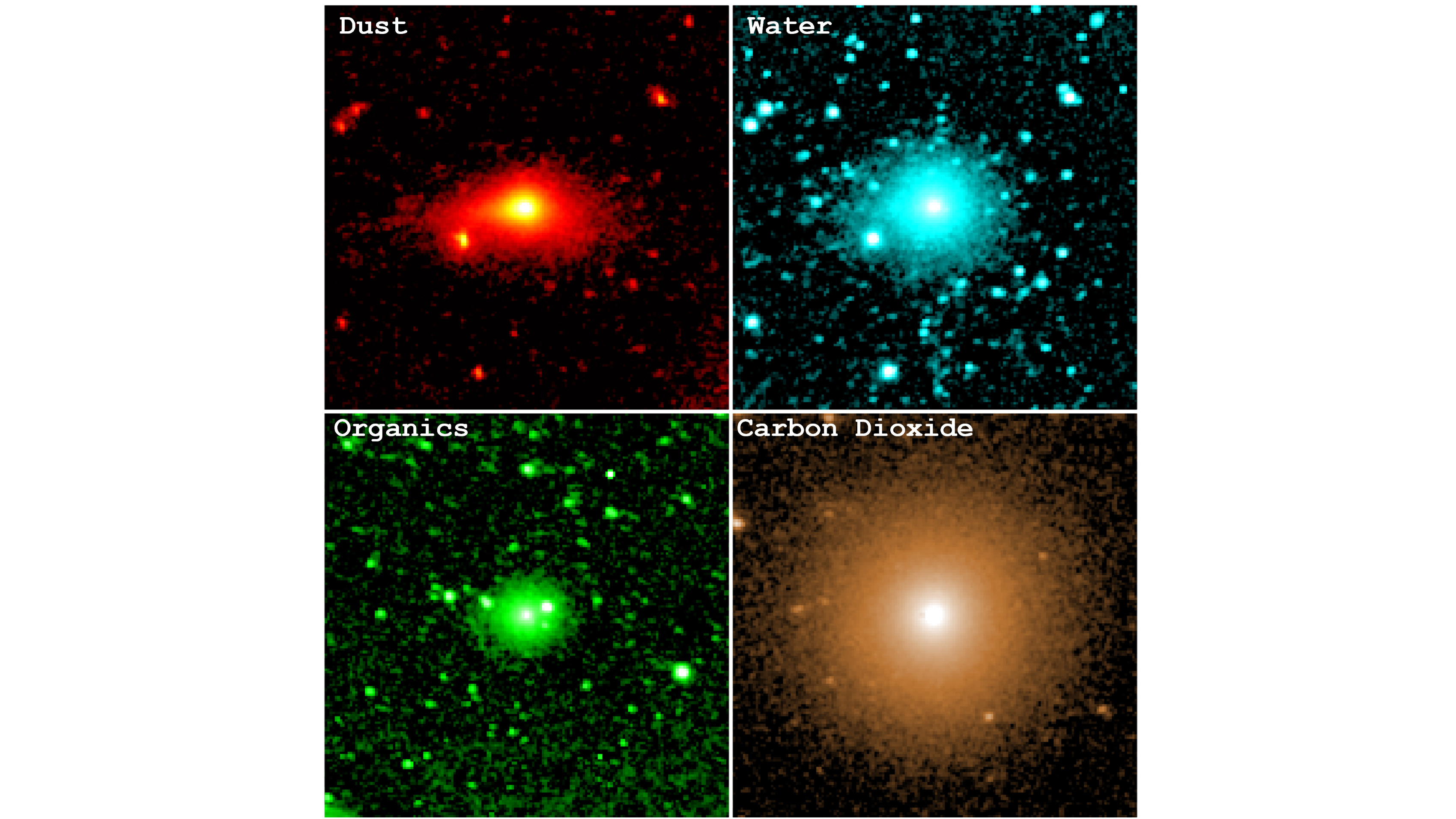
Astronomers using the James Webb Space Telescope have found that methane gas streaming from the interstellar comet 3I/ATLAS carries an unusually high proportion of heavy hydrogen, a signature researchers say points to one of the coldest birthplaces ever inferred for a comet. The finding, led by Nathan Roth of NASA's Goddard Space Flight Center and American University, was published in Nature Astronomy and adds a striking new data point to more than a year of observations of only the third interstellar object ever confirmed to pass through the solar system.
A ratio unlike anything in our solar system
The team measured a deuterium-to-hydrogen ratio of about 3.2% in the comet's methane — roughly 13 times higher than the ratio found in comet 67P/Churyumov-Gerasimenko, which likely formed alongside the rest of the solar system, and about three times higher than the ratio already measured in 3I/ATLAS's own water. "This D/H ratio exceeds any other value for methane measured in the solar system," the authors wrote. The measurements came from Webb observations of the comet on December 22 and 23, 2025, when it sat roughly 2.4 times farther from the sun than Earth, detailed in a NASA account of the telescope's methane detection.
3I/ATLAS was discovered on July 1, 2025, by the ATLAS survey telescope in Chile and is only the third confirmed interstellar object, after 'Oumuamua in 2017 and Borisov in 2019. It made its closest approach to the sun on October 29, 2025, and its hyperbolic, unbound orbit is catalogued in NASA's Jet Propulsion Laboratory small-body database. Since its discovery, an unusually large fleet of spacecraft — including the Parker Solar Probe, Europa Clipper, Psyche, Hubble and the SPHEREx infrared observatory — has taken turns observing it, a campaign chronicled on NASA's dedicated blog for the comet, which has posted updates every few weeks since the object's discovery was first confirmed last year.
A clue to a cosmic deep freeze
The elevated ratio implies the methane ice formed in a region around 10 kelvin — about 440 degrees Fahrenheit below zero — cold enough that the chemical reactions which normally strip out deuterium proceed too slowly to matter. That is extreme even by the standards of comet formation, and the authors say it suggests the methane condensed later than the comet's water ice, possibly in a dust-poor cloud or around a young, still-forming star exposed to heavy cosmic-ray bombardment. Current chemical models of how comets form do not reach a ratio this high, meaning the measurement functions less as a confirmed origin story than as a benchmark those models will now have to explain.
The paper stops short of naming a specific birthplace, and its authors are cautious about reading too much into one measurement from one comet. But the result fits a pattern that has distinguished 3I/ATLAS since Webb's initial methane detection: researchers have repeatedly described its chemistry as unusually primitive, consistent with an object that spent a very long time far from any star before being ejected into interstellar space and, eventually, through our own solar system.
What's next
3I/ATLAS is now heading back out of the solar system on its one-way path and will grow too faint for most instruments within the next year or so, narrowing the window for further study. Teams that have already pointed telescopes at the comet are expected to publish additional chemical analyses in the coming months, and astronomers note that each new interstellar object detected — a pace expected to pick up as the Vera C. Rubin Observatory's sky survey matures — will offer another test of whether 3I/ATLAS's extreme chemistry is typical of visitors from other star systems or an outlier among them.

Seafloor scars expose trawling inside a protected Baltic zone

Alaska, Utah and three other states are warming fastest, MIT study finds

A fingernail-sized chip just let two telescopes see as one
