NASA report details astronauts' eyewitness sightings of meteorite flashes on the moon
A newly released NASA science report formalizes how the four-person Artemis II crew documented faint flashes from meteorite strikes, surface colors, and the sun's corona during April's crewed lunar flyby, the first since the Apollo era.
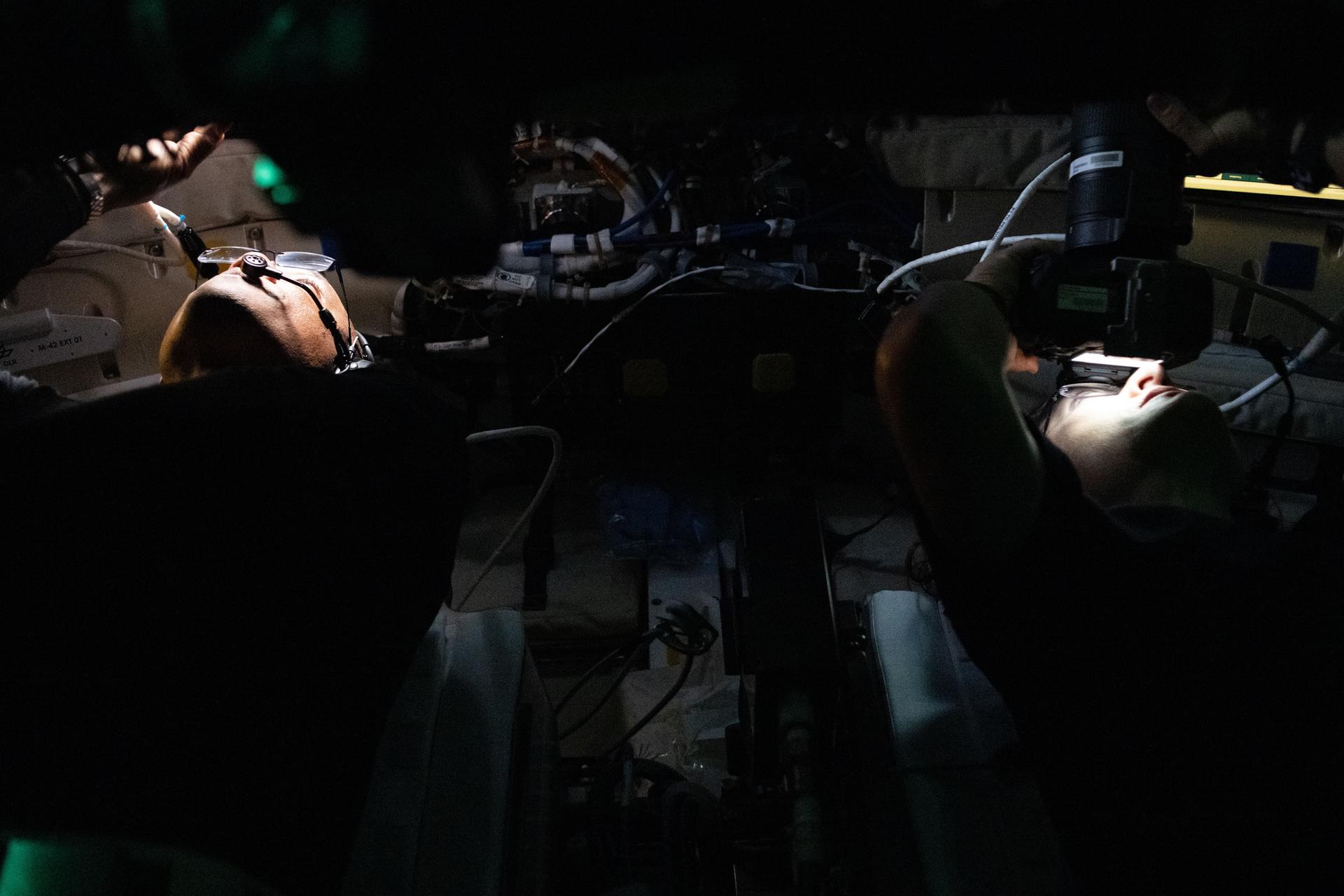
NASA on Tuesday published its first detailed scientific accounting of what four astronauts saw, heard and sketched during the agency's return to crewed lunar flight, confirming that the Artemis II crew documented faint flashes of light from meteorite strikes on the moon's far side while circling the moon in April. The preliminary lunar science report, released alongside two companion documents and the mission's full imagery archive, is the most complete record yet of what trained human observers can add to the robotic data NASA has relied on since the last Apollo crew left the moon more than 50 years ago.
The report does not describe new instruments or new discoveries in the traditional sense. Its significance lies in formalizing, with timestamps, annotated tablet sketches and crew audio, observations that were only sketched out in real time during the mission itself. Scientists at Johnson Space Center in Houston spent the past six months cross-checking what the crew reported against existing lunar data sets, producing a document NASA says will shape how astronauts conduct science on the surface during Artemis III.
What the astronauts recorded
Commander Reid Wiseman, pilot Victor Glover, and mission specialists Christina Koch and Jeremy Hansen of the Canadian Space Agency flew within 4,067 miles of the lunar surface on April 6 and 7, spending roughly seven hours taking turns at Orion's windows. Late in the flyby, the crew maneuvered the spacecraft so the moon blocked the sun, producing a 54-minute eclipse that plunged the lunar far side into darkness ideal for spotting faint light.
During that window, the crew reported five separate "pinprick" bursts of light, caused by small rocky fragments — some no larger than a couple of inches across — slamming into the lunar surface at thousands of miles per hour from roughly 46,000 miles away. Wiseman can be heard narrating the sightings in real time, and his handwritten tablet annotations, color-coded by crew member, mark exactly when each flash appeared relative to the eclipse's progress. One note reads simply: "these three roughly 10 min into eclipse."
Impact flashes on the moon have been observed before, mostly through automated telescopes scanning the lunar disk from Earth. What NASA had not had, until this report, was a human crew confirming sightings in real time from lunar distance, with annotated, cross-referenced records that scientists can now attempt to match against strike locations recorded by the agency's robotic Lunar Reconnaissance Orbiter. Mission controllers reportedly reacted with audible screams of delight when Wiseman first called out a flash in April, before the observations had been formally logged as data.
A wider catalog of observations
The impact flashes were one of several categories of data the report compiles from the mission:
- Surface color variations the crew described as a "muted rainbow" of grays, browns, tans, greens and blues, which scientists tie to differing concentrations of iron, titanium and volcanic glass in the lunar crust.
- The terminator, the moving line between lunar day and night, which Glover called "the most striking thing that I've seen so far" for the way low-angle sunlight threw craters and ridges into sharp relief.
- The sun's corona and surrounding stars and zodiacal light, visible to the naked eye during the eclipse in ways usually captured only by specialized solar telescopes.
- A full-disk nighttime photograph of Earth, titled "Hello, World," showing auroras at both poles, a Saharan dust plume and lightning over the Congo Basin by the light of the moon alone.
Koch, describing the Earth image, said the planet appeared to glow with reflected moonlight: "the Moon is a light sponge and the Earth is a light mirror... It's just a bright, bright, light blue — electric blue." Her description, along with the rest of the crew's recorded commentary, is preserved in the report as both scientific annotation and a rare first-person account of a view not seen by human eyes since 1972.
"The Moon is a light sponge and the Earth is a light mirror. It's just a bright, bright, light blue — electric blue."
How the data was gathered
Beyond standard cameras — two Nikon D5s and a Nikon Z9 inside the capsule — the crew's main instrument was simply practiced observation: trained eyes at a window, a tablet for sketches, and a voice loop to Houston. NASA's lunar science lead for the mission, Kelsey Young, has said publicly that the science team did not expect the crew to see impact flashes at all, and that mission control erupted when Wiseman first reported one. The new report formalizes that surprise into data, assigning each sighting a timestamp, an estimated viewing geometry and a priority rating for follow-up analysis against orbital imagery.
The approach reflects a deliberate bet by NASA's science team: that an astronaut's trained perception, however unscientific it may sound in the moment, can flag transient phenomena that automated instruments miss or record without context. Backup astronaut Jenni Gibbons, who helped train the crew for these observations and spoke with reporters during the mission, called them high-priority science precisely because they could not be replicated by a probe on a fixed schedule.
Who the findings matter to
The report's most direct audience is NASA's own Artemis III planning teams, which are designing the mission that would land astronauts near the lunar south pole as soon as the back half of this decade. Understanding how often small meteorites strike the surface, and how reliably untrained-in-astronomy eyes can spot and localize them, feeds directly into risk assessments for a future surface habitat and for spacewalking astronauts.
Planetary scientists more broadly stand to benefit from the surface color and terminator observations, which NASA says will be cross-referenced with the mission's full photo archive, now numbering more than 12,000 frames, and with years of orbital data from the Lunar Reconnaissance Orbiter. Mineral-composition hints drawn from color alone are a cheap, low-risk complement to the spectrometer data that robotic missions already provide, and they could help prioritize candidate landing and resource-prospecting sites.
What comes next
NASA says ground teams are still working to match the timing of each reported impact flash to surface imagery from the orbiter in hopes of pinpointing the fresh craters they left behind, which would let scientists estimate the size and speed of the impacting debris with more confidence than eyewitness description alone allows. A companion operations report, assessing how well the science team's procedures worked during the flight, is intended to directly inform crew training for Artemis III, where astronauts will be asked to do far more hands-on geology on the surface itself rather than observation from a spacecraft window.
For now, the agency is treating the report as the formal handoff between a six-month internal review and the broader research community, which can now pull the underlying data directly from NASA's public archives, including this frame of Glover and Koch gathering observations at Orion's windows during the flyby. Officials describe the arrangement as a relay race: Artemis II handed off a data set assembled largely through human observation, and the next legs, culminating in boots back on the lunar surface, are meant to pick it up from there.

Europe's New Climate Satellite Sends Back Its First Images
Long-Predicted "Backsplash" Galaxies May Have Finally Been Found Near the Pinwheel

Margaret Hamilton, Software Pioneer Behind the Apollo Moon Landings, Dies at 90
