Scientists Find Tens of Thousands of Organic Molecules Packed Inside Two Meteorites
A record-setting mass spectrometer and a single-molecule microscope reveal that two carbon-rich meteorites carry far more chemical complexity — and far less overlap with each other — than researchers had documented before, sharpening the picture of the raw materials delivered to the early solar system.
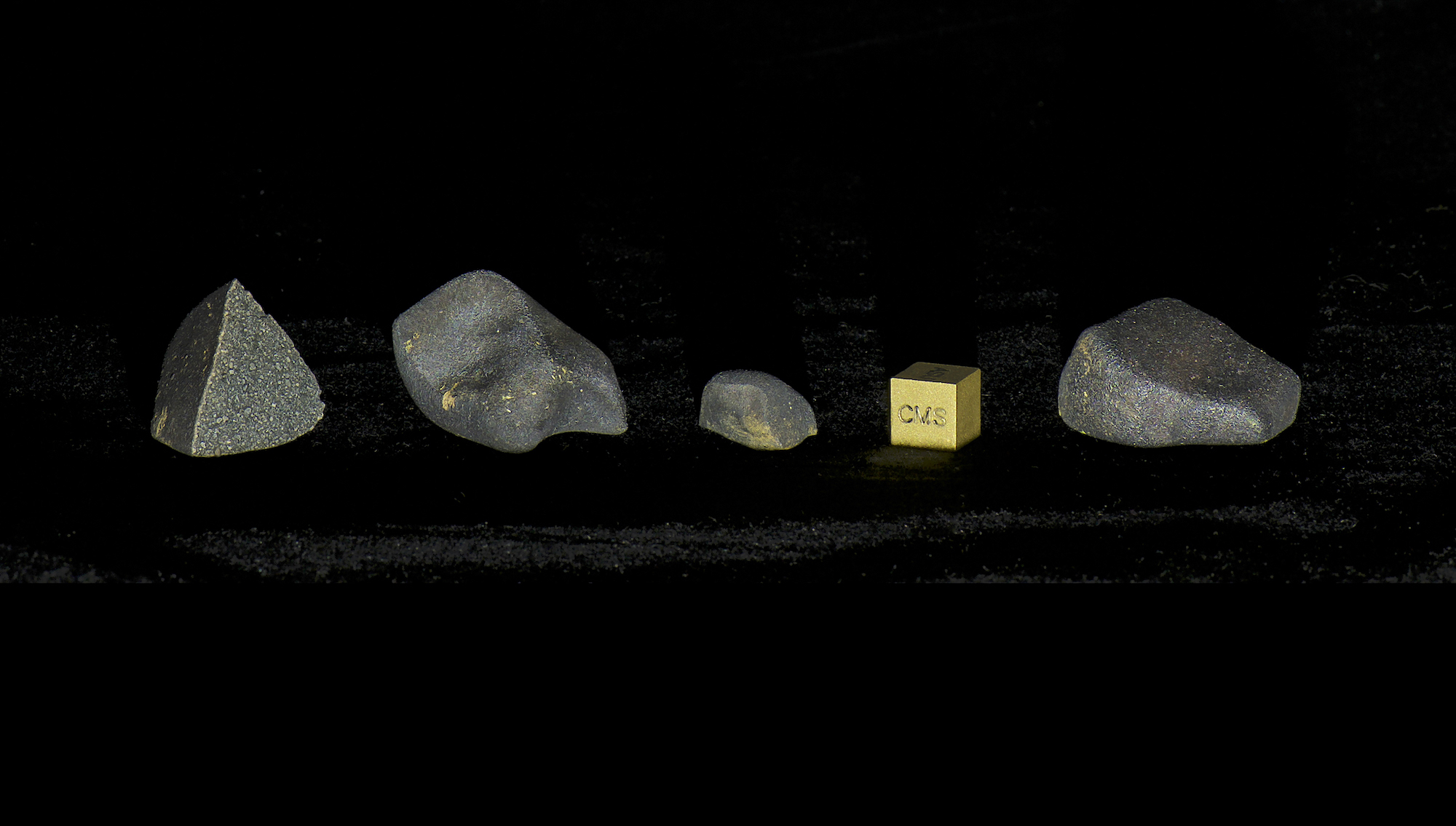
Researchers who cracked open fragments of two carbon-rich meteorites and ran them through the world's most powerful chemical fingerprinting instrument have found that each rock holds tens of thousands of distinct organic molecules, a level of chemical complexity that rivals crude oil and adds fresh evidence that the building blocks of life were abundant in the early solar system.
The findings, published this week in The Planetary Science Journal, come from an analysis of the Murchison meteorite, which fell in Victoria, Australia, in 1969, and the Aguas Zarcas meteorite, which fell in Costa Rica in 2019. A team led by Joseph W. Frye-Jones, a graduate researcher at Florida State University working at the National High Magnetic Field Laboratory, combined ultra-precise mass spectrometry with a microscope capable of imaging individual molecules, a pairing the researchers say has been applied to meteorite material only three times before.
A chemical census in the tens of thousands
The team dissolved small samples of each meteorite in solvents and ran the extracts through a 21-tesla Fourier-transform ion cyclotron resonance mass spectrometer, the highest-field instrument of its kind in the world, housed at the magnet lab in Tallahassee. That instrument can separate molecular signals differing in mass by less than half a thousandth of a dalton, fine enough to distinguish compounds that would otherwise look identical to less sensitive machines.
The results were striking. The Murchison sample yielded 66,187 unique molecular formulas in positive-ion mode, rising to nearly 93,000 when negative-ion data were combined in. The Aguas Zarcas sample produced roughly 92,000 formulas in positive-ion mode and close to 83,000 in negative-ion mode. Across both meteorites and ionization methods, the researchers assigned tens of thousands of distinct formulas, containing anywhere from 10 to 70 carbon atoms and up to 20 oxygen atoms per molecule, with some iron-bearing organic compounds extending past 35 carbons.
Only a modest fraction of the two chemical inventories overlapped: about 30,000 formulas were shared between the meteorites in positive-ion mode and roughly 29,000 in negative-ion mode, out of well over 100,000 unique compounds identified overall. That gap, the researchers say, is itself a finding.
How two space rocks ended up this different
Murchison and Aguas Zarcas both belong to the same broad family of carbon-rich, or carbonaceous, chondrite meteorites, primitive fragments left over from the earliest days of the solar system that never got folded into a planet. Murchison is at least 5.5 billion years old, roughly a billion years older than Earth itself, and has been studied by chemists for more than half a century because of its dense organic content. Aguas Zarcas, which streaked across the sky over Costa Rica in 2019 and was recovered soon after landing, is a far newer discovery and has undergone comparatively little of this kind of high-resolution analysis.
Despite their shared origin as carbonaceous chondrites, the limited overlap between their molecular inventories suggests the asteroids that spawned them experienced substantially different chemical conditions as they formed and evolved, whether in temperature, exposure to water, radiation, or the parent bodies' internal chemistry. Brookhaven National Laboratory, which contributed the imaging work, said in a statement that the comparison shows space's organic chemistry is not uniform, and that different corners of the early solar system cooked up their own distinct chemical recipes even while starting from similar raw ingredients.
Beyond counting molecular formulas, Brookhaven physicist Percy Zahl used a technique called high-resolution noncontact atomic force microscopy, which hovers an atomically sharp tip over a surface and measures faint forces between atoms, to directly image 14 individual organic molecules extracted from the Murchison sample. Mass spectrometry alone can only report a molecule's chemical formula; the microscope let the team see how atoms within a given molecule were actually arranged and bonded, a level of structural detail mass spectrometry cannot provide on its own.
Who stands to benefit from the findings
The work speaks most directly to astrobiologists and planetary scientists trying to reconstruct the chemical inheritance that early Earth received from space. Carbonaceous meteorites are widely regarded as plausible delivery vehicles for prebiotic chemistry, the organic raw materials from which biology could eventually have emerged, and a more complete inventory of what those meteorites actually carry sharpens models of what was available on the young Earth roughly four billion years ago. The results also matter to the teams curating meteorite collections, including the Field Museum in Chicago, which supplied the Murchison sample, and Arizona State University's Buseck Center for Meteorite Studies, which provided the Aguas Zarcas material, since both institutions maintain reference stocks that laboratories worldwide draw on for exactly this kind of analysis. More broadly, the technique itself is a resource other cosmochemistry groups can now apply to additional meteorite falls, including samples returned directly from asteroids by spacecraft missions.
What researchers are saying
Frye-Jones, the study's lead author, said the sheer molecular density of the Murchison sample surprised him even though the meteorite has been picked over by chemists for decades.
"The Murchison meteorite is at least 5.5 billion years old, one billion years older than Earth, and this is just as complex as petroleum deposits, which are some of the most complex mixtures that we have analyzed in our lab. These findings show just how complex the organic materials in space can be."
Zahl, who described astronomy as a personal hobby outside the lab, said pairing the two techniques opened a new way of looking at extraterrestrial chemistry.
"Mass spectrometry can reveal the molecular formulas hidden within a meteorite, but this takes the analysis one remarkable step further," Zahl said, according to the Brookhaven statement. "This is the only method that can actually image the structure of a single molecule. You need an image to get a look at the structure, how things are linked together." He added that seeing the molecular building blocks of life laid out this way raised an old question in a new form: where they ultimately came from, and what their presence in meteorites implies about the odds of life existing elsewhere.
What happens next
The researchers describe the 14 imaged molecules as a starting point rather than an endpoint. Coverage of the study noted that resolving even a single molecule under the atomic force microscope can take anywhere from several days to several months, meaning imaging a meaningful share of the tens of thousands of formulas identified by mass spectrometry will require faster methods before the technique can be applied at scale. Other outlets tracking the research similarly flagged imaging speed as the main bottleneck between this proof-of-concept pairing and a systematic survey extended to additional carbonaceous meteorites, where researchers hope to determine whether the sharp chemical split seen between Murchison and Aguas Zarcas is a common feature of asteroid chemistry or an anomaly specific to these two falls. For now, the team's immediate takeaway is how much chemical richness has been sitting, largely uncatalogued, inside rocks that have occupied museum drawers and university collections for years.

Black Holes of Every Size Follow the Same Rule for Launching Jets, Study Finds

Stanford-led study finds the human brain is built from two separate organs, not one

Physicists find that a little disorder makes complex networks more stable, not less
