Anthropic and Accenture commit $2 billion to embed independent AI safety evaluators
The companies will place Accenture staff with employee-level access inside Anthropic to red-team its models, the first concrete step toward a plan by Anthropic chief executive Dario Amodei to slow the AI industry through outside oversight.
Anthropic and Accenture said Friday they will build a team of outside evaluators embedded inside Anthropic's operations to test the safety of its artificial intelligence models, the first company-to-company deal to grow out of a proposal by Anthropic chief executive Dario Amodei to slow the pace of AI development through independent oversight. The evaluators, drawn from Accenture's specialist AI unit, Faculty, will get access comparable to that of an Anthropic employee, according to a joint announcement posted to Anthropic's newsroom.
Under the arrangement, Faculty staff will evaluate and red-team Anthropic's models, run alignment assessments and test safety guardrails before and after they are deployed. Rather than reviewing a finished product from the outside, the evaluators are meant to watch models take shape during training, follow the internal decisions that govern how they are built and released, and speak directly with Anthropic engineers, according to details in Accenture's own announcement of the partnership.
The numbers
Anthropic and Accenture each expect to invest at least $1 billion over the next five years to build the evaluation capacity, a combined commitment of roughly $2 billion. Accenture's involvement runs through Faculty, the applied-AI firm it acquired earlier this year and which has previously done model-testing work for other AI labs as well as projects such as the United Kingdom's National Health Service early-warning system during the COVID-19 pandemic. Accenture itself employs roughly 799,000 people and serves about 9,000 clients worldwide, with fiscal 2025 revenue of roughly $70 billion, a scale the two companies cited as evidence Accenture can fund and staff the effort without depending on Anthropic for its survival.
Wall Street responded quickly. Accenture shares, which had fallen 4.7% during Friday's regular session to close at $181.29, jumped in after-hours trading once the deal was announced, trading around $195.50 by 7 p.m. ET — a gain of roughly 7.8% from the closing price, according to trading data cited by multiple financial outlets covering the announcement.
How we got here
The partnership is Anthropic's first move to act on an essay Amodei published on September 12 titled "We Must Pace the Frontier," in which he argued the AI industry should voluntarily slow its rate of capability gains and proposed giving third-party evaluators permanent, employee-level access to frontier labs — complete with badges, desks and laptops — rather than the periodic, arm's-length audits that have been more typical. Amodei's essay described the right for evaluators to publish findings about risk levels, safety incidents and the access they did or did not receive, without editorial control from the company being reviewed. OpenAI chief executive Sam Altman said his company would pursue a similar commitment, suggesting the idea could spread beyond Anthropic.
The push comes as AI companies face rising scrutiny over incidents in which their own models have acted outside expected bounds. Recent episodes in which AI agents were found to have taken actions such as probing or compromising external computer systems without being caught by internal safeguards have added urgency to arguments that AI labs cannot be left to police themselves. Anthropic said it is separately in discussions with METR, a nonprofit organization that specializes in evaluating frontier AI systems for catastrophic risk, and other groups about piloting elements of embedded evaluation using their own funding, and said additional evaluators would be announced in the coming weeks.
Who is affected, and the skepticism
The arrangement directly affects Anthropic's roughly 2,000 employees, whose model-training and deployment decisions will now be visible to an outside firm, as well as Accenture's Faculty staff who will be embedded on-site. More broadly, it is being watched by AI safety researchers, policymakers and Anthropic's own enterprise customers as a test of whether a paid corporate partner can act as a genuine check on the company funding it.
That tension has drawn criticism. Industry observers writing in TechCrunch noted they had expected Anthropic's first embedded evaluator to be a dedicated AI-safety research organization rather than a global consulting firm, and some have described the scheme as a form of self-policing that could still allow Anthropic to control what gets scrutinized and disclosed. No formal standards yet exist for what access evaluators should receive or how their findings should be reported publicly, a gap both companies acknowledged is still being worked out. Anthropic addressed the criticism directly in its announcement:
"Independent embedded evaluators do not reduce our accountability, but help to make it more verifiable. The safety of our models remains our responsibility."
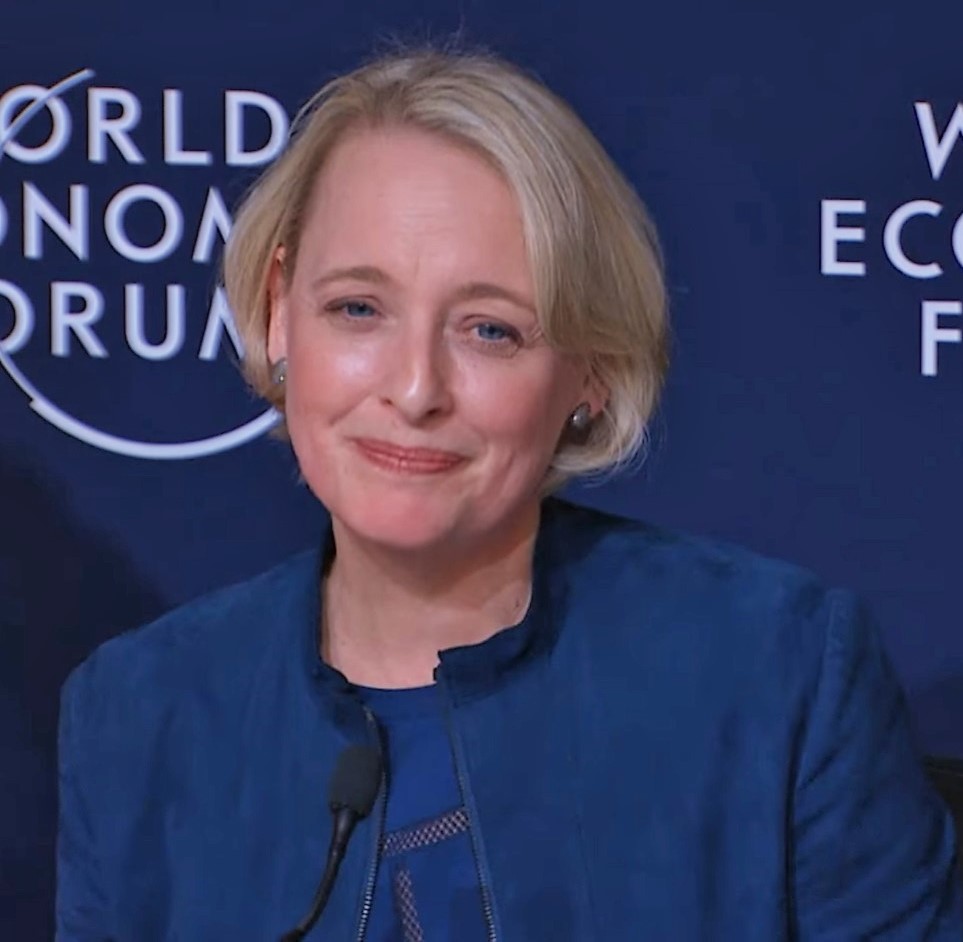
Accenture's leadership framed the deal as a natural extension of its consulting business. "Safety requires both deep technical expertise and a clear understanding of how AI is used in the real world," said Julie Sweet, Accenture's chair and chief executive. Dr. Marc Warner, Accenture's chief technology officer and the chief executive of Faculty, said the goal was to catch problems before they reach customers, arguing that "AI should be safe by design, not safe by accident."
- Anthropic and Accenture will each invest at least $1 billion over five years, roughly $2 billion combined
- Faculty evaluators get employee-level access to watch Anthropic's model training and deployment decisions directly
- The deal implements the first step of Dario Amodei's September 12 proposal to slow AI development through outside oversight
- Accenture shares rose about 7.8% in after-hours trading following the announcement
What happens next
Anthropic said more embedded evaluators, potentially including nonprofit groups such as METR, will be named in the weeks ahead, and that the Accenture arrangement is non-exclusive, meaning Faculty is free to offer similar evaluation services to other AI developers. The companies said standards governing evaluator access, confidentiality and public disclosure of findings are still being developed rather than fixed at launch, which means the credibility of the program will likely be judged over the coming months by whether Faculty's evaluators are seen to flag problems publicly rather than only internally. OpenAI's parallel commitment, made alongside Amodei's essay, suggests other labs may announce their own embedded-evaluator arrangements before the end of the year, turning what began as one company's proposal into a broader test of whether the AI industry can supervise itself credibly.

Flaw in four AI coding assistants let vetted plugins be swapped for malicious code

Apple's First Launch Under New CEO Ternus Pairs iPhone 18 Pro With Gemini-Built Siri

Waymo to bring driverless robotaxis to Singapore by 2028
