Apple unveils new Mac mini and Mac Studio chips in a rare August product launch
The M6 and M5 Ultra processors arrive in redesigned desktops built for running AI models locally, in what is likely Tim Cook's last major hardware unveiling before he steps down as chief executive on September 1.
Apple on Tuesday introduced new versions of the Mac mini and Mac Studio, built around a pair of processors the company says mark the biggest jump in its custom silicon since it moved away from Intel chips in 2020. The Mac mini now ships with the new M6 chip or the mid-tier M5 Pro, while the Mac Studio gains the M5 Max and, at the top of the range, an all-new M5 Ultra.
The announcement, detailed in a pair of releases on Apple's newsroom, was notable partly for its timing. Apple has not announced new Mac hardware in August since the 27-inch iMac in 2020, and the update lands weeks ahead of the company's usual autumn iPhone event. It also arrives days before Tim Cook hands the chief executive title to John Ternus, making the launch one of Cook's final acts atop the company he has run since 2011.
The numbers
The M6, built on what Apple describes as a 2-nanometer process, packs a 12-core CPU, a 12-core GPU with dedicated Neural Accelerators in every core, and a dual 16-core Neural Engine, according to the Mac mini product page. Apple says it is roughly 4x faster than the M4 at AI workloads and nearly 30 percent faster at peak GPU compute than the outgoing M5. The Mac mini with M6 starts at $899; a version with the more powerful M5 Pro chip, offering up to an 18-core CPU, a 20-core GPU and 64GB of memory, starts at $1,699.
The bigger leap is in the Mac Studio. Its new M5 Ultra chip fuses two M5 Max dies using what Apple calls next-generation UltraFusion packaging — the first quad-die design in the M-series lineup — to produce a chip with up to 36 CPU cores, 80 GPU cores, 512GB of unified memory and 1.2 terabytes per second of memory bandwidth, per Apple's Mac Studio announcement. Apple claims up to 4.3 times the peak AI compute of the M3 Ultra it replaces. The Mac Studio starts at $2,499, with a maxed-out configuration — 36 cores, 256GB of memory and 16TB of storage — priced at $18,299. Both machines are available for preorder now and begin shipping September 22.
- Mac mini with M6: 12-core CPU, 12-core GPU, up to 32GB memory, from $899
- Mac mini with M5 Pro: up to 18-core CPU, 20-core GPU, up to 64GB memory, from $1,699
- Mac Studio with M5 Max/M5 Ultra: up to 36-core CPU, 80-core GPU, up to 512GB memory, from $2,499
Apple is also extending a memory-pooling feature it introduced for the M4 generation, which lets multiple Mac minis or Mac Studios link over Thunderbolt to run AI models too large for a single machine's memory. The new machines' Thunderbolt 5 ports run at up to 80 gigabits per second, and Apple says the connection requires no networking hardware beyond a standard Thunderbolt 5 cable. On the AI-specific figures Apple published alongside the launch, the Mac mini with M6 is rated up to 4.8 times faster than the M4 at large-language-model processing, and the Mac mini with M5 Pro is rated up to 8.5 times faster than the M2 Pro at the same task — among the widest generational gaps Apple has cited for the product. For the Mac Studio, Apple's chip page separately states the M5 Ultra's peak GPU compute for AI is up to 4.5 times that of the M3 Ultra.
How Apple got here
The update continues a chip strategy Apple began in 2020, when it started replacing Intel processors with its own Arm-based silicon across the Mac line. Each generation has been pitched around raw speed and battery efficiency; this one is pitched almost entirely around artificial intelligence. Apple's marketing for both machines leans on the idea of running large language models and image-generation systems directly on the device rather than sending queries to a remote data center — a contrast with the cloud-dependent approach that has defined the current AI boom.
That framing follows a rocky stretch for Apple's own AI ambitions. The company delayed a more conversational version of Siri last year and has faced persistent questions about whether its Apple Intelligence features lag rivals from Google and OpenAI. Positioning new Macs as capable of running substantial models locally, with the Thunderbolt clustering described above, is in part an attempt to make the hardware itself the selling point while software catches up.
The launch also lands inside a leadership handoff Apple set in motion in April, when it announced that Cook would become executive chairman and Ternus, previously senior vice president of hardware engineering, would take over as chief executive effective September 1. Apple's board chair, Arthur Levinson, said at the time the company believed Ternus was "the best possible leader to succeed Tim." Tuesday's product releases were not framed internally as a send-off, but they are the last hardware Apple will ship under Cook's direct authority as CEO.
Ternus has spent 25 years at Apple, almost all of it in hardware roles rather than the operations and supply-chain track that defined Cook's own rise through the company. He joined Apple in 2001 on the team that built the Apple Cinema Display, later led the hardware engineering team behind the G5-era iMac, and was named vice president of hardware engineering in 2013, taking responsibility for the Mac, iPad and AirPods lines before adding iPhone hardware oversight in 2020. He was promoted to senior vice president in 2021. That record — a career spent shipping the physical products Apple sells, including the chips unveiled this week — is one reason outside coverage of his succession has described it as a shift toward engineering-led leadership at the company.
Who is affected
The immediate audience is Apple's existing Mac mini and Mac Studio buyers — developers, video and 3D professionals, and a newer category the company is explicitly courting: people running autonomous AI agents on always-on desktop hardware rather than laptops. Apple's own materials describe the Mac mini as an "always-on agentic device," language it has not previously used for the product. Higher Mac Studio pricing, up $500 at the entry tier from the prior M4 Max model, will also register with the professional buyers — video editors, engineers, researchers — who make up the bulk of that line's customer base.
The price increase runs through the top of the lineup as well: the base M5 Ultra configuration, at $5,499, costs $200 more than the equivalent M3 Ultra model did at launch. Apple has not detailed the reason beyond citing higher component and memory costs, which have risen industry-wide as AI-driven demand for high-capacity memory chips has intensified.
More broadly, the launch sharpens Apple's competition with PC makers marketing "AI PCs" built around Qualcomm, Intel and AMD chips, as well as with Nvidia-based workstations aimed at running models locally. Apple's pitch is that its unified-memory architecture, which lets the CPU, GPU and Neural Engine share the same pool of memory, allows consumer-grade hardware to run models that would otherwise require a discrete graphics card with far more dedicated memory.
What Apple and outside observers are saying
Apple's chief hardware officer, Johny Srouji, framed the update around the Mac mini's flexibility:
"Mac mini has always been our most versatile Mac. Whether it's being used as a home computer, powering a professional studio, or as an always-on agentic device, it's the little Mac that can do it all. With a more powerful CPU and graphics, Neural Accelerators in the GPU, and higher memory bandwidth, Mac mini with M6 delivers a whole new level of AI performance."
Outside coverage has largely focused on whether the performance claims translate into real gains for the local AI models developers are increasingly running on consumer hardware. MacRumors noted the August timing is itself unusual, coming ahead of Apple's typical fall iPhone event and marking the company's first Mac-only announcement in that month since 2020. CNBC's report placed the launch in the context of Apple's broader push to keep AI processing on-device as a privacy and differentiation argument against cloud-first rivals.
What happens next
Preorders for both machines are open now, with shipments beginning September 22 in 30 countries, including the United States. The new hardware will run macOS 27, due as a free update this fall, which Apple says will extend Apple Intelligence and a more contextually aware Siri across the operating system — the software layer that has lagged the company's hardware promises in the past two product cycles.
One high-end configuration will not be available at launch. A Mac Studio with 512GB of memory is due in late October, roughly two months after the rest of the lineup, with Apple indicating U.S. pricing will start well above $10,000. Apple pulled the previous-generation, 512GB Mac Studio from sale in March amid an industry-wide memory chip shortage, and the delayed rollout of its successor suggests that constraint has not fully eased.
The more consequential date on Apple's calendar remains September 1, when Ternus formally becomes chief executive. Cook is expected to remain involved as executive chairman, and Apple has given no indication of an immediate strategy shift under new leadership. But Tuesday's launch, and the iPhone event expected in the coming weeks, will be among the last major product moments closely associated with Cook's tenure, and among the first that Ternus inherits responsibility for as he takes over a company whose AI strategy is still being tested against Google, OpenAI, and Microsoft's PC-industry partners.
Apple Newsroom — Apple introduces M6 and M5 Ultra for a big leap in performance and AI compute
Apple Newsroom — Apple unveils a more powerful Mac mini featuring the all-new M6 and M5 Pro
Apple Newsroom — Apple introduces new Mac Studio with M5 Max and M5 Ultra
MacRumors — New Mac Mini and Mac Studio: 13 things you might have missed

TSMC posts record third-quarter profit, raises outlook as AI chip demand outstrips supply
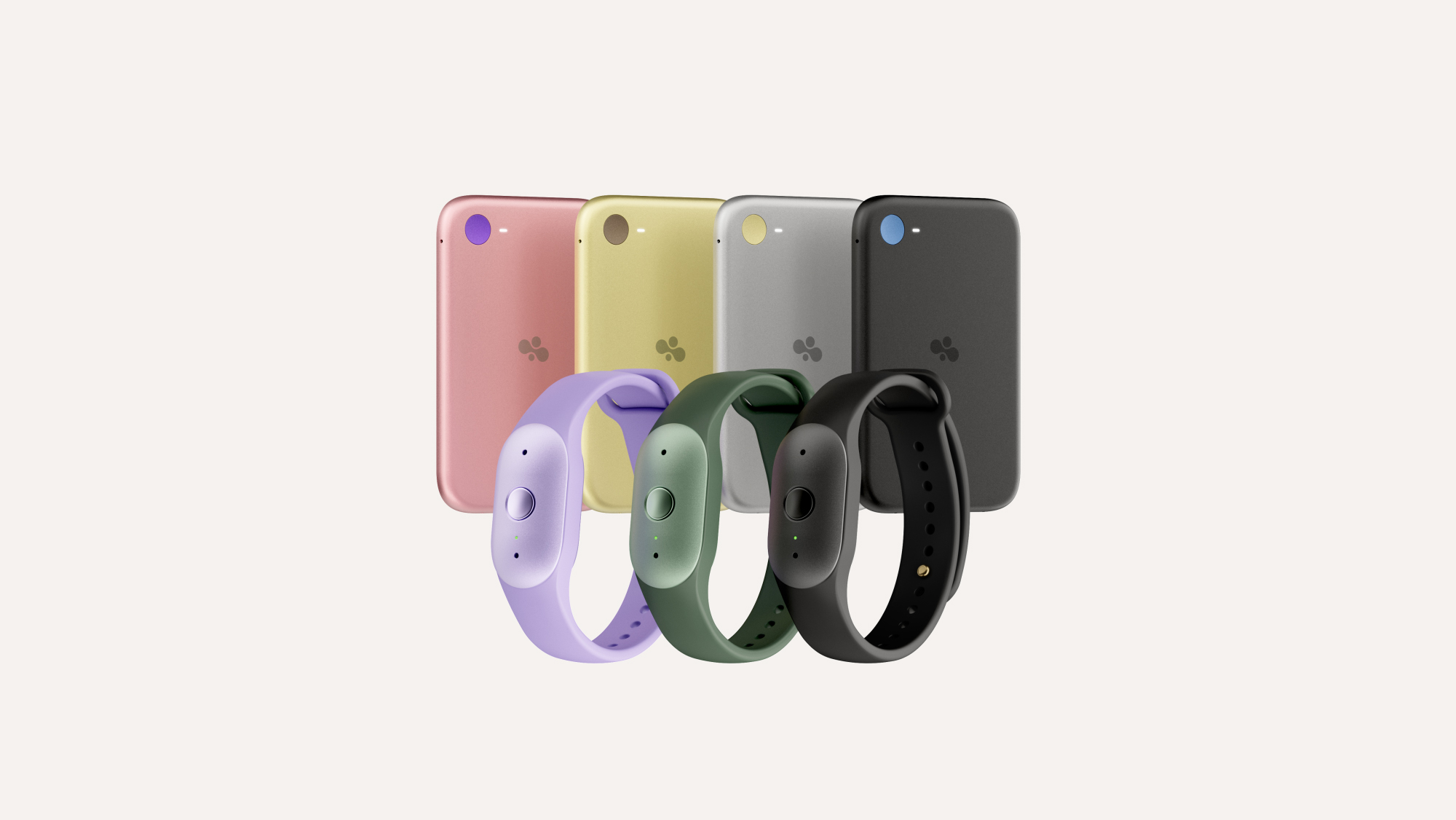
Amazon's Bee unveils two AI wearables that turn conversations into to-do lists

Flock Safety's CEO Defends Surveillance Cameras — and Contradicts His Own Website — at TechCrunch Disrupt
