Judge lets NAACP's pollution lawsuit against Elon Musk's xAI proceed
A federal judge in Mississippi rejected xAI's bid to dismiss a Clean Air Act suit over unpermitted gas turbines powering its Memphis-area Colossus data centers, finding the company's constitutional defense and standing arguments all fail.
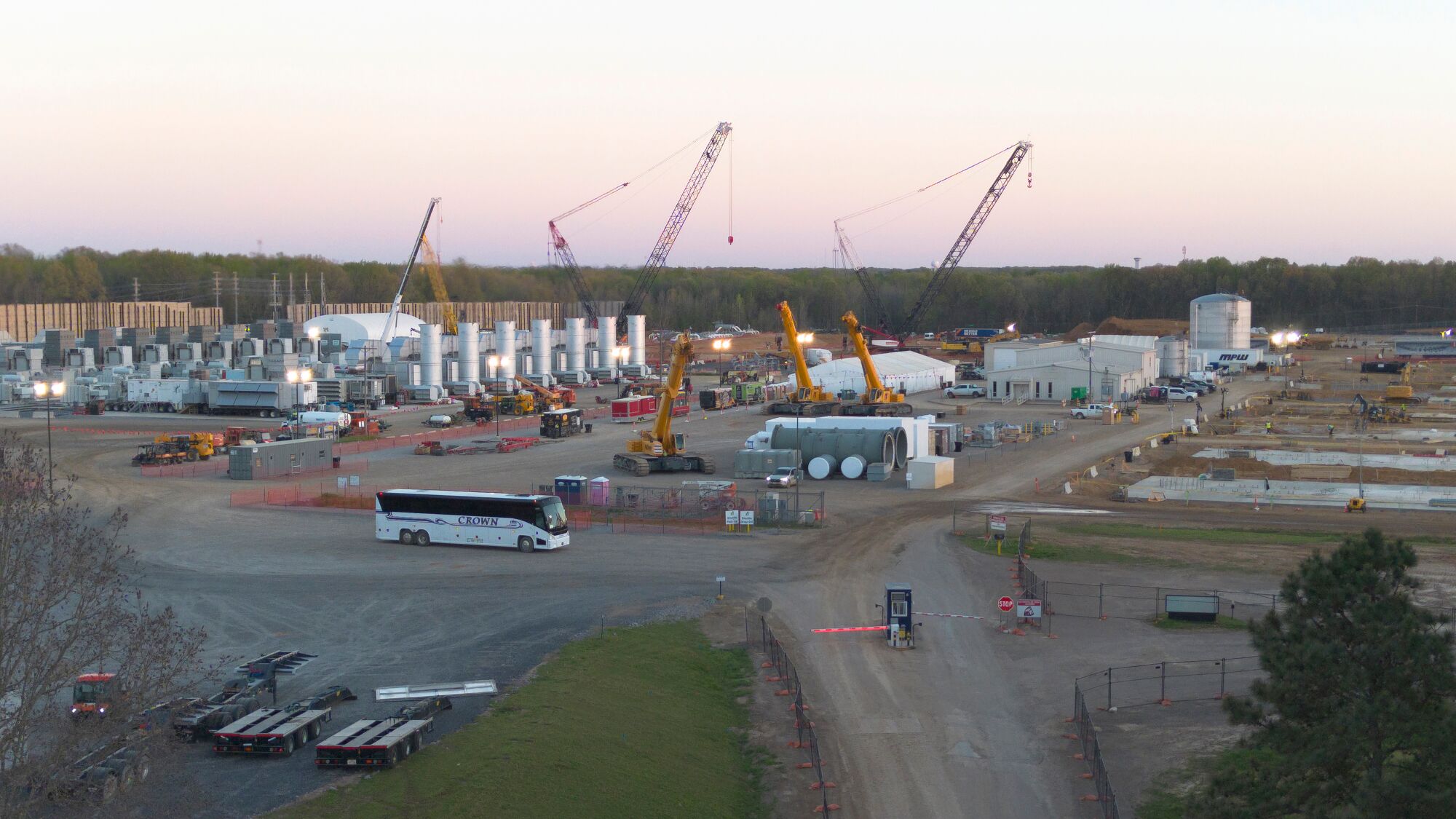
A federal judge in Mississippi has refused to throw out a Clean Air Act lawsuit the NAACP brought against xAI, the artificial-intelligence company Elon Musk folded into SpaceX earlier this year, over a gas-fired power plant that supplies electricity to its Colossus data center complex near Memphis, Tennessee. The ruling clears the way for the case to proceed toward a decision on the merits.
In a 28-page opinion and order filed October 30 in the U.S. District Court for the Northern District of Mississippi, Judge Debra M. Brown denied a motion by X.AI Corp. and its subsidiary, MZX Tech LLC, to dismiss the suit, rejecting every argument the companies raised against it. The case, NAACP v. X.AI Corp., was filed in the Oxford Division of the court under docket number 3:26-CV-74.
Dozens of turbines, no permits
The NAACP and its Mississippi State Conference filed suit in April, alleging that xAI and MZX Tech installed and began operating gas-fired combustion turbines at a site in Southaven, Mississippi, between August and December of 2025, without ever applying for the permits the Clean Air Act and Mississippi's state pollution-control plan require. According to the complaint, summarized in Judge Brown's opinion, the companies had put at least 27 turbines on the site by early April, with a combined generating capacity of at least 495 megawatts. Collectively, the plaintiffs estimate, those turbines have the potential to emit roughly 1,700 tons of nitrogen oxides, 580 tons of carbon monoxide, 180 tons of fine particulate matter and 19 tons of formaldehyde every year. The turbines feed power to xAI's Colossus data centers, the company's flagship computing cluster for training its Grok chatbot, which sit just across the state line in Memphis.
xAI did not dispute the basic facts in seeking dismissal. Instead, the company argued the turbines qualify as "mobile sources" exempt from permitting under Mississippi's implementation plan, that the NAACP lacked standing to sue, and, more sweepingly, that the Clean Air Act's citizen-suit provision is unconstitutional because it lets private parties exercise power the Constitution reserves to the president. Judge Brown rejected all three positions, writing that the turbines do not meet the mobile-source exemption, that the plaintiffs have statutory standing, and that a citizen who sues to redress harm done to themselves is not exercising the federal government's executive power, so the suit does not violate Article II or the related private nondelegation doctrine.
A fight that predates the ruling
The lawsuit itself followed a 60-day notice of intent to sue that the NAACP sent in February, a step the Clean Air Act requires before citizens can bring their own enforcement action. It is one of several legal and regulatory fights that have trailed xAI's rapid buildout in the Memphis area, where the company converted a former Electrolux factory into its first Colossus facility in 2024 and has since been expanding a second site in DeSoto County. xAI itself has changed hands since the suit was filed: SpaceX absorbed the AI company into its operations earlier this year.
Friday's ruling was not the first time the court had turned away an effort to end the case. Roughly two weeks earlier, the same court denied a separate motion from the U.S. Department of Justice, which had sought to have the suit dismissed on the government's own authority. The court found no reading of the Clean Air Act that gives federal officials the unilateral power to kill a citizen suit, though it left open what role the department, which has intervened in the case, can still play going forward.
Residents and advocates respond
The plaintiffs' lawyers, from the Southern Environmental Law Center and Earthjustice, said the ruling lets communities near the plant keep their case alive despite the company's size and the federal government's attempted intervention on its behalf.
"There is no massive loophole in the Clean Air Act," said Laura Thoms, Earthjustice's enforcement director, calling the decision validation that the law applies to a company operating dozens of unpermitted turbines next to homes, schools and churches.
Abre' Conner, the NAACP's director of environmental and climate justice, said the organization's position "has been clear: xAI cannot operate gas turbines without the required permits," while Kym Meyer, the Southern Environmental Law Center's litigation director, said the right of communities to challenge pollution in court "cannot be tossed aside simply because a massive corporation finds it inconvenient." A CNBC report on the ruling noted that SpaceX, which now operates xAI, did not immediately respond to a request for comment.
What happens next
Friday's order resolves only the motion to dismiss; it does not decide whether xAI actually violated the Clean Air Act. TechCrunch, which first reported the ruling, noted that the court has not yet acted on a separate NAACP request for a preliminary injunction that would halt the turbines' operation while the case proceeds. The litigation now moves into further proceedings in front of Judge Brown, with no new hearing date yet set in the public record.
The case is being watched beyond Mississippi as a test of how far AI companies can go in building their own power supplies to outrun strained electrical grids, a practice that has drawn scrutiny in other states as data center construction has accelerated nationwide. For the NAACP and its local affiliate, the immediate stakes remain the air quality around a plant its lawsuit says sits near homes, schools and churches in DeSoto County, just south of Memphis.

Voice-AI Rivals No More: Deepgram Buys Daily, Spins Pipecat Into a Neutral Foundation

A Single Shared Link Could Hijack Any ChatGPT Account, Researchers Find
Binance says $6.3 billion hit in largest crypto theft on record
