Coast Guard opens criminal probe into cruise ship over suspected 'magic pipe'
Federal investigators are examining whether crew aboard the MSC Poesia routed oily waste around the ship's pollution-control equipment and dumped it at sea, after an 11-day detention at PortMiami forced MSC Cruises to cancel a Caribbean sailing and refund more than 2,000 passengers.
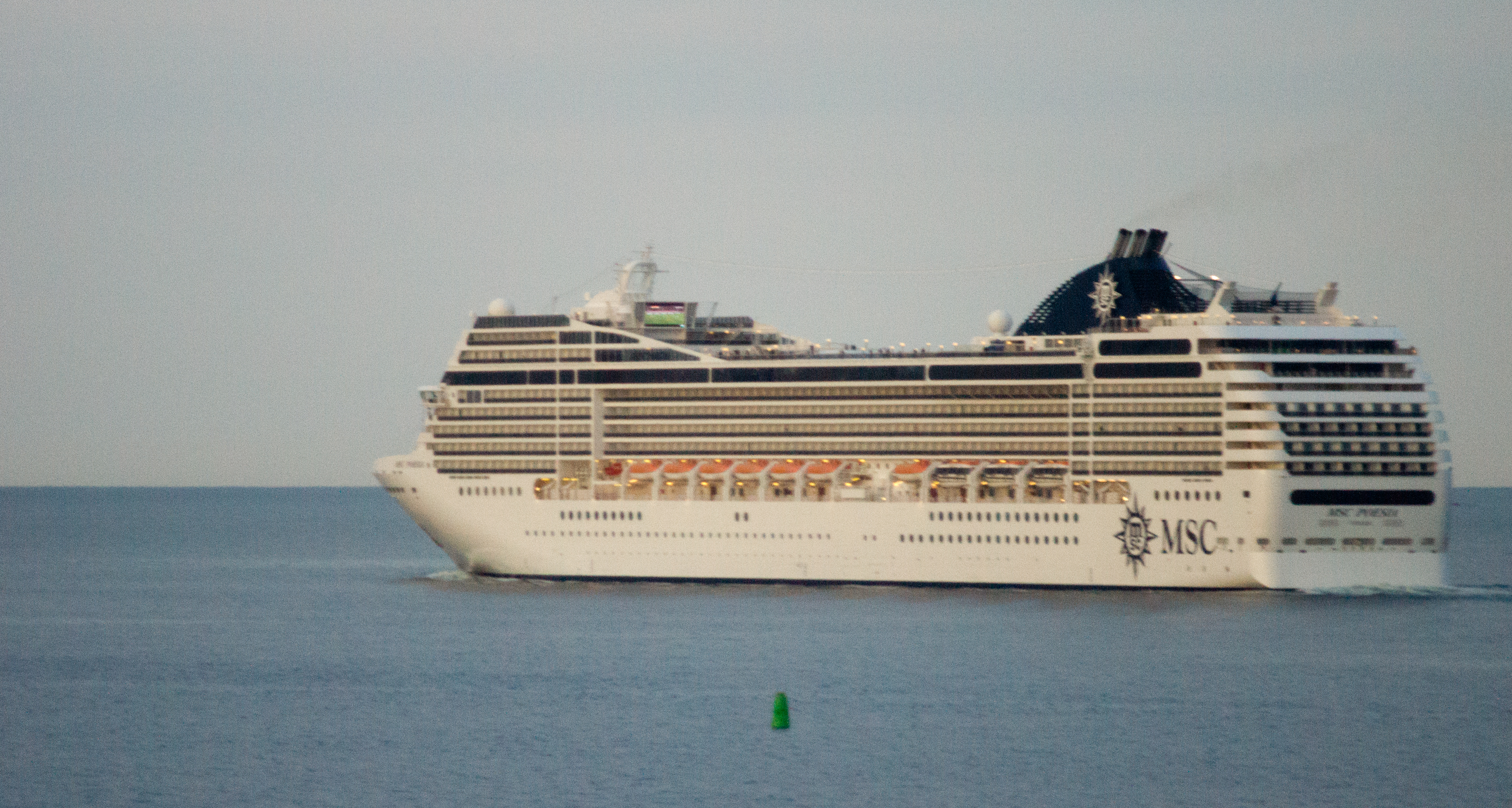
The U.S. Coast Guard has opened a criminal investigation into the cruise ship MSC Poesia over suspected illegal discharge of oily waste at sea, according to a U.S. official familiar with the inquiry, after the vessel spent 11 days detained at PortMiami and a Caribbean sailing carrying more than 2,000 passengers was canceled.
The Coast Guard held the ship at the Port of Miami starting Sunday, Nov. 1, during what it described as an expanded examination of the vessel's compliance with international and U.S. regulations. Capt. Frank Florio, commander of Coast Guard Sector Miami, said at the time that "we have identified deficiencies with systems on board the vessel that we are addressing with MSC," without naming the equipment involved. MSC Cruises, which operates the 3,223-passenger ship, said it had "made the difficult decision to cancel the current sailing" after "a regulatory matter arose that required resolution" too late for the 11-night voyage to Jamaica, Colombia, Panama, Costa Rica, Honduras and Belize to proceed. The company offered full refunds and travel assistance to the more than 2,000 guests who had been scheduled to sail.
What a "magic pipe" is
Within days, trade publications reported that inspectors suspected a so-called magic pipe: a hose or valve rigged to route oily bilge or sludge waste around a ship's required pollution-control equipment, typically an oil-water separator, so it can be dumped directly into the ocean instead of being treated, stored or offloaded onshore. The Coast Guard has not publicly confirmed that description or detailed what its inspectors found aboard the Poesia. The ship was cleared to leave Port Miami on Thursday, but CBS News reported Friday that the Coast Guard's inquiry has since become a criminal investigation into suspected illegal discharge, one that could eventually target crew members, the vessel's owner or others directly involved.
Such schemes are prosecuted under the Act to Prevent Pollution from Ships, the federal law implementing an international treaty that bars ships from dumping oil waste at sea and requires accurate record-keeping of what is discharged. A knowing violation is a federal felony, and the statute allows courts to direct up to half of any fine to whistleblowers whose information leads to a conviction — a provision that has historically turned junior crew members into witnesses against their employers.
A company with a history, and a costly pattern across the industry
MSC has faced this kind of case before. Its ship-management arm pleaded guilty two decades ago to concealing a magic-pipe scheme aboard a different vessel, the MSC Elena, and was ordered to pay roughly $10 million in criminal fines after prosecutors said the crew discharged more than 10,000 gallons of sludge through a bypass pipe over several months. The broader industry has paid far more: cruise and cargo operators have repeatedly been caught running similar schemes, and the Justice Department has continued bringing new cases. Last year, a federal court fined the shipping company V.Ships Norway $2 million after it pleaded guilty to discharging oily waste from a tanker through a hose connected directly to a sewage tank and falsifying the ship's oil record book to hide it. "Dumping oil-contaminated waste into the waters around our ports and coasts violates the law and poses an unnecessary health and environmental hazard," Acting Assistant Attorney General Adam Gustafson of the department's Environment and Natural Resources Division said when that fine was announced.
"We have identified deficiencies with systems on board the vessel that we are addressing with MSC."
The Coast Guard's role in catching these schemes has drawn scrutiny of its own. A 2020 Government Accountability Office report found that the agency's process for reviewing vessels' pollution-response plans had significant gaps and that the Coast Guard was not fully using the incident data it collects to tighten its oversight, concluding that closer analysis could help the agency better manage the broader risk of marine pollution. The Poesia case, by contrast, stemmed from the kind of hands-on port inspection — an "expanded examination," in Coast Guard terminology — that has become more common since a wave of magic-pipe prosecutions against cruise and cargo lines over the past decade, including a record $40 million fine against Princess Cruise Lines in 2016 that the Justice Department called the largest penalty ever for deliberate vessel pollution, according to CBS News, which first reported the criminal probe into the Poesia. Local coverage in Miami at the time of the detention noted that the Coast Guard gave no timetable for resolving the matter and that MSC said only that it was cooperating fully.
What happens next
MSC Cruises has not publicly addressed the criminal investigation; the company's earlier statements described the detention only as a "regulatory matter" under resolution. The Coast Guard likewise has not said what specific evidence prompted the expanded examination or confirmed the magic-pipe description publicly. Cases of this kind typically unfold over months, built on inspection records, falsified log entries and, often, an account from a crew member willing to describe what happened belowdecks. If the pattern of past prosecutions holds, investigators are likely to focus first on the ship's engine-room officers and records before any decision is made on criminal charges against the company itself.
For the passengers whose 11-night cruise was scrapped, the episode has already been resolved with refunds. For MSC, a company that has now faced magic-pipe allegations more than once, the Poesia investigation adds to a recurring cost of doing business in an industry that moves tens of millions of travelers through U.S. ports each year, almost all of it dependent on compliance the Coast Guard largely has to take on faith between inspections.
CBS News — Coast Guard opens criminal investigation into cruise ship over potential "magic pipe"
Fox News — 11-night Caribbean cruise abruptly canceled after Coast Guard detains ship
NBC 6 South Florida — U.S. Coast Guard detains MSC Poesia at PortMiami, sailing canceled
U.S. Department of Justice — Shipping Company Fined $2M for Maritime Pollution Offense


