Divers Begin Underwater Search for Amelia Earhart's Plane at Remote Pacific Atoll
A Purdue-backed expedition has started mapping a mysterious object in a Nikumaroro lagoon — the most active lead yet in the 89-year search for Amelia Earhart's lost Electra.
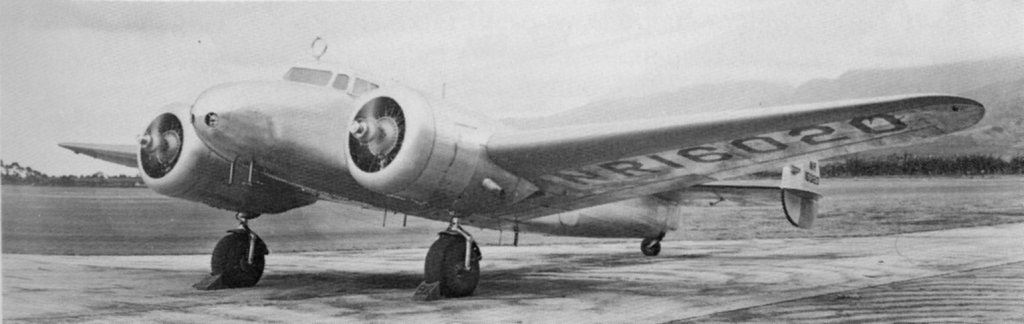
A research team backed by Purdue University began an underwater survey Wednesday of a mysterious object on the lagoon floor at Nikumaroro, a remote, uninhabited atoll in the Pacific nation of Kiribati, in the most active search effort in years for the wreckage of Amelia Earhart's lost airplane.
What happened
The 17-person expedition, which went ashore at Nikumaroro on Monday after a five-day, 830-nautical-mile voyage from Tarawa, spent its first two days clearing jungle trails and surveying the island's Taraia Peninsula for surface artifacts before turning Wednesday to the object itself: a shape first spotted in 2020 by a researcher reviewing satellite imagery, and later found in older images dating back to 2015 and in aerial photographs of the atoll from 1938. According to a Purdue University newsroom update, the team is using a magnetometer to check for ferrous metal and side-scan sonar to map what lies beneath the sediment, ahead of a planned hydroprobe and dredge to physically expose and inspect the object.
The numbers
The object sits roughly 10 feet from the lagoon's shore, under as little as 5 feet of water depending on the tide, and is covered by an unknown depth of sediment that researchers believe may have shifted during Tropical Cyclone Pam in 2015. The expedition, a joint effort of the Oregon-based Archaeological Legacy Institute and the Purdue Research Foundation, left Purdue University Airport on October 2, reached Kiribati on October 6-7, and arrived at Nikumaroro on the evening of October 12 after sailing roughly 830 nautical miles. The team expects to spend about five days on the island itself. A day-by-day account of the voyage is being posted to the expedition's own site, amelia.prf.org.
How we got here
Earhart disappeared on July 2, 1937, along with navigator Fred Noonan, while attempting to fly around the world in a Lockheed Model 10-E Electra partly funded through Purdue's "Amelia Earhart Fund for Aeronautical Research," where she had served as a visiting faculty member. The plane vanished on a leg toward Howland Island, roughly 400 miles northwest of Nikumaroro, and has never been conclusively found despite decades of search efforts by multiple organizations. The current expedition is led by Richard Pettigrew of the Archaeological Legacy Institute, with Purdue's involvement framed by the university as an extension of its historical tie to Earhart and, should wreckage ultimately be confirmed and recovered, an eventual goal of bringing the aircraft back to Purdue for display. The expedition was originally planned for 2025 but was pushed back a year amid permitting steps with the Kiribati government and the region's cyclone season.
Nikumaroro itself has drawn searchers for decades. A separate, longer-running organization has mounted repeated expeditions to the atoll since the 1990s on the theory that Earhart and Noonan made an emergency landing there and survived for a time as castaways, pointing to artifacts recovered from the island over the years that have never been definitively tied to the fliers. That theory, and the broader mystery of Earhart's final flight, has remained a fixture of American aviation history for nearly 90 years, fueled in part by the lack of any confirmed wreckage from her Electra despite deep-sea searches spanning thousands of square miles of open ocean near Howland Island. In 2025, the Trump administration ordered the FBI to declassify and release its files related to Earhart's disappearance, adding a fresh batch of records to the decades of archival material researchers have combed through without resolving the case.
Who's affected
Beyond the research team and Purdue, the search has drawn in Kiribati's government, which has embedded ministry representatives with the expedition and supplied a separate 17-person boat crew for the voyage. It has also reopened a long-running debate among Earhart researchers. Ric Gillespie of a separate, longer-running search organization has argued publicly, as Newsweek reported ahead of the expedition's departure, that the object is more likely a submerged tree stump or root system than aircraft wreckage — a reminder that similar "promising" leads in the Earhart search have not held up before, including a 2024 sonar image near Howland Island that was later identified as a natural rock formation.
Reaction
"It's too early to reach conclusions as we've got a lot of science left to apply," expedition leader Richard Pettigrew said as the underwater survey got underway.
Earlier, before the team's departure, Pettigrew had been more pointed about what drew the expedition to the site in the first place, describing the anomaly as "a shiny metal thing" and saying "there's something in the lagoon that shouldn't be there." After reaching the atoll, he struck a more grateful note about the logistics of the journey itself: "It is incredibly rewarding to be this close to completing our inspection of the Taraia Object," he said, crediting "our very capable Kiribati crew" for getting the team there safely. The crew has been sleeping aboard its support vessel rather than on the atoll itself, in part because of large coconut crabs on shore, and shore access has been complicated by this year's El Niño conditions.
What happens next
The magnetometer and sonar data gathered this week will guide whether the team moves ahead with the hydroprobe and dredge work needed to physically expose and visually inspect the object before the expedition's time on the island runs out. Pettigrew has said that if the survey confirms the object is wreckage, the team would seek permission from Kiribati for a full archaeological excavation in 2027. For now, researchers caution that the discovery remains unconfirmed, and that the atoll has disappointed searchers before.

Trump cancels Hegseth's plan to livestream Fort Hood shooter's execution

Florida man charged with murder in ex-fiancée's 2011 disappearance

Former gymnastics coach sentenced to 90 years for hidden bathroom camera