Five charged in alleged Russian scheme to finance terrorism and kill a US-based dissident
Federal prosecutors say a Kremlin-linked network offered a Brooklyn recruit $40,000 to kill a dissident believed to live near Washington; all five defendants remain in Russia, beyond the reach of US authorities.
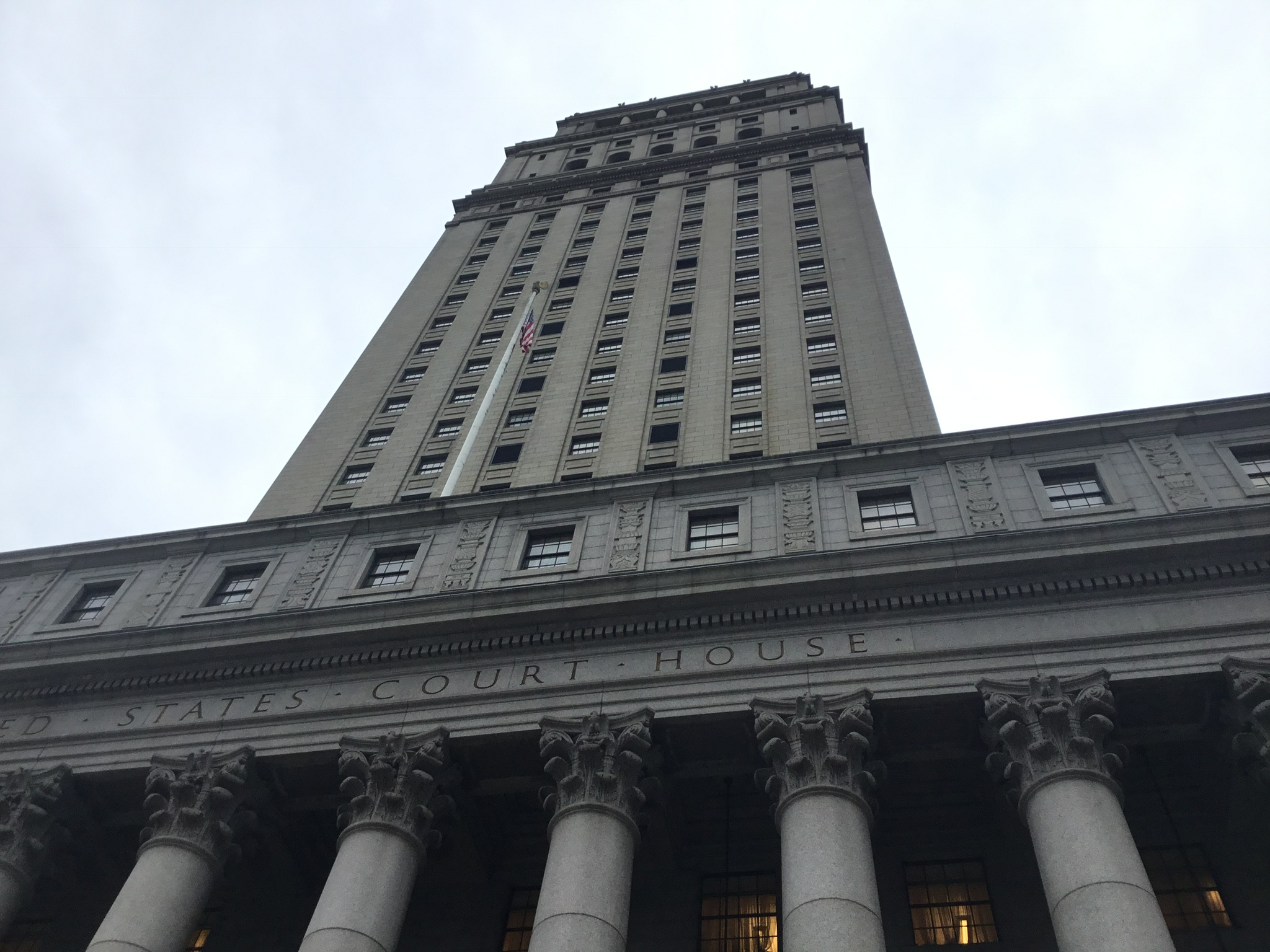
Federal prosecutors in Manhattan unsealed charges Wednesday against five people accused of working on behalf of Russian intelligence services in a scheme to finance terrorism and carry out killings in the United States and Europe, including an attempt to recruit a Brooklyn resident to assassinate a Russian dissident believed to be living in the Washington area.
The indictment, announced by the Justice Department, names Yuri Khrameev, 63, a former colonel in Russia's intelligence services; his son, Kirill Khrameev, 27, described as an officer with Russia's Federal Security Service, or FSB; and three men prosecutors say served as recruiters and coordinators for the network: Oemis Romagoza Durruthy, 35, and Yaidel Delgado Suarez, 35, both Cuban nationals, and Angel Eduardo Castro, 22, of Venezuela. All five are believed to be living in Russia and remain at large.
The charges and the numbers
Each defendant faces one count of conspiring to finance terrorism, which carries a maximum sentence of 20 years in prison. Khrameev, Suarez and Castro face an additional count of conspiring to commit murder for hire, punishable by up to 10 years. Prosecutors say the network operated from at least 2024 through this summer, paying and attempting to pay people in the United States and Europe to surveil and, in some cases, kill people the Russian government regarded as enemies.
According to the unsealed indictment filed in the Southern District of New York, the network paid a Brooklyn-based recruit, identified in court papers only as a U.S. resident, between $1,000 and $1,500 for photographs and video of two locations tied to an intended target. When the recruit was later offered $40,000 to "eliminate" or "disappear" that target — a Russian dissident the network believed lived in the Washington, D.C., area — he declined. A separate person was paid $200 to photograph the target's home address.
How the plot unfolded
Court papers describe a recruitment pipeline that ran through informal networks of Cuban and Venezuelan nationals living in Russia and the United States, who were allegedly used as intermediaries to insulate Russian intelligence officers from direct contact with recruits. Prosecutors say Suarez and Castro worked together to identify and pay the Brooklyn resident, while Romagoza Durruthy, described as an influential figure among the Cuban diaspora in Russia, helped coordinate communications and financing across the operation.
The indictment also ties the network to two earlier episodes abroad. In 2024, prosecutors allege, associates of the network were involved in a failed arson plot targeting buses in the Czech Republic, and in September of that year a similar attempt targeted a facility in Lithuania that supplied radio equipment to Ukraine's military. In the Lithuania case, recruits were allegedly offered $200 for surveillance and as much as $25,000 to kill a target connected to the facility. Prosecutors described the overall operation as reaching people and infrastructure "perceived to be allies of Ukraine," in addition to Russian dissidents and defectors.
A pattern federal officials call transnational repression
The case is the latest in a string of episodes, dating back two decades, in which the Kremlin has been accused of pursuing critics who fled abroad — including the 2006 poisoning death of former FSB officer Alexander Litvinenko in London, the 2018 nerve-agent attack on former double agent Sergei Skripal in England, and the 2020 poisoning of opposition leader Alexei Navalny, who died in a Russian prison colony in 2024. Officials have increasingly used the term "transnational repression" to describe such efforts by foreign governments to silence exiles, journalists and activists on U.S. soil, and the Brooklyn recruitment described in Wednesday's indictment marks one of the more detailed public accounts of an attempt to carry out such an operation inside the United States itself.
Assistant Attorney General for National Security John Eisenberg called the alleged scheme "a gross violation of our sovereignty and a threat to our national security," describing it as part of "a global assassination network that reached into the United States." In a statement from the Manhattan U.S. attorney's office, U.S. Attorney Jamie McDonald said the network was "brazen, aggressive, and far-reaching."
"We will not tolerate efforts to finance terrorist activities and engage in acts of violence — particularly when these activities are commissioned by state actors and touch American soil," McDonald said, adding that the charges "should send a clear message: no matter where you are, and no matter who you work for, we will investigate and prosecute you for your crimes."
Who is affected, and what happens next
The case is likely to resonate most immediately among Russian exile and dissident communities in the Washington area and beyond, who have watched a series of prior cases, detailed in earlier reporting on Kremlin-linked operatives, accused of tracking critics living abroad. FBI Director Kash Patel said the charges "reveal an alleged plot by the Russian intelligence services to murder a dissident on U.S. soil for daring to speak out against the Russian government," and said the case "illustrates the grave threat transnational repression poses to the lives and freedoms of all who challenge authoritarian regimes." The FBI's counterintelligence division, working with Homeland Security Investigations and the Justice Department's National Security Division, led the inquiry, according to the department.
None of the five defendants is in U.S. custody, and the United States has no extradition treaty with Russia, meaning prosecution is unlikely unless one or more of them travels to a country willing to detain and hand them over. CBS News reported that it sought comment from the Russian Embassy in Washington, which did not respond. The Justice Department did not identify the intended Washington-area target by name, and officials said the investigation, which also touched on the earlier plots in the Czech Republic and Lithuania, remains active. Congressional national-security committees, which have pressed federal agencies in recent months over Russian activity inside the United States, are expected to seek briefings on the case in the coming days, and officials said additional charges tied to the broader network have not been ruled out.
NPR — DOJ charges Russian agents with plotting attacks, including in the U.S.
CBS News — DOJ accuses Russian intelligence agents of plotting to murder U.S.-based dissident
NBC News — U.S. accuses Russia of plot to kill a prominent dissident in Washington
ABC News — DOJ charges Russians for allegedly financing terrorism, murder-for-hire plots

Two federal lawsuits seek to keep armed agents away from polling places as early voting begins

ICE Agent Arrested in Minneapolis, Ending Four-Month Extradition Standoff With Texas

ICE says five-day Indiana sweep netted 426 arrests, drawing scrutiny over who was detained
