Oregon's Big Grass Fire, now the largest wildfire in state history, reaches 94% containment
A lightning-sparked blaze that erupted in late July has burned nearly 579,000 acres along the Oregon-Idaho border, eclipsing a record that stood for 14 years, as crews report steady progress heading into a still-active fire season.
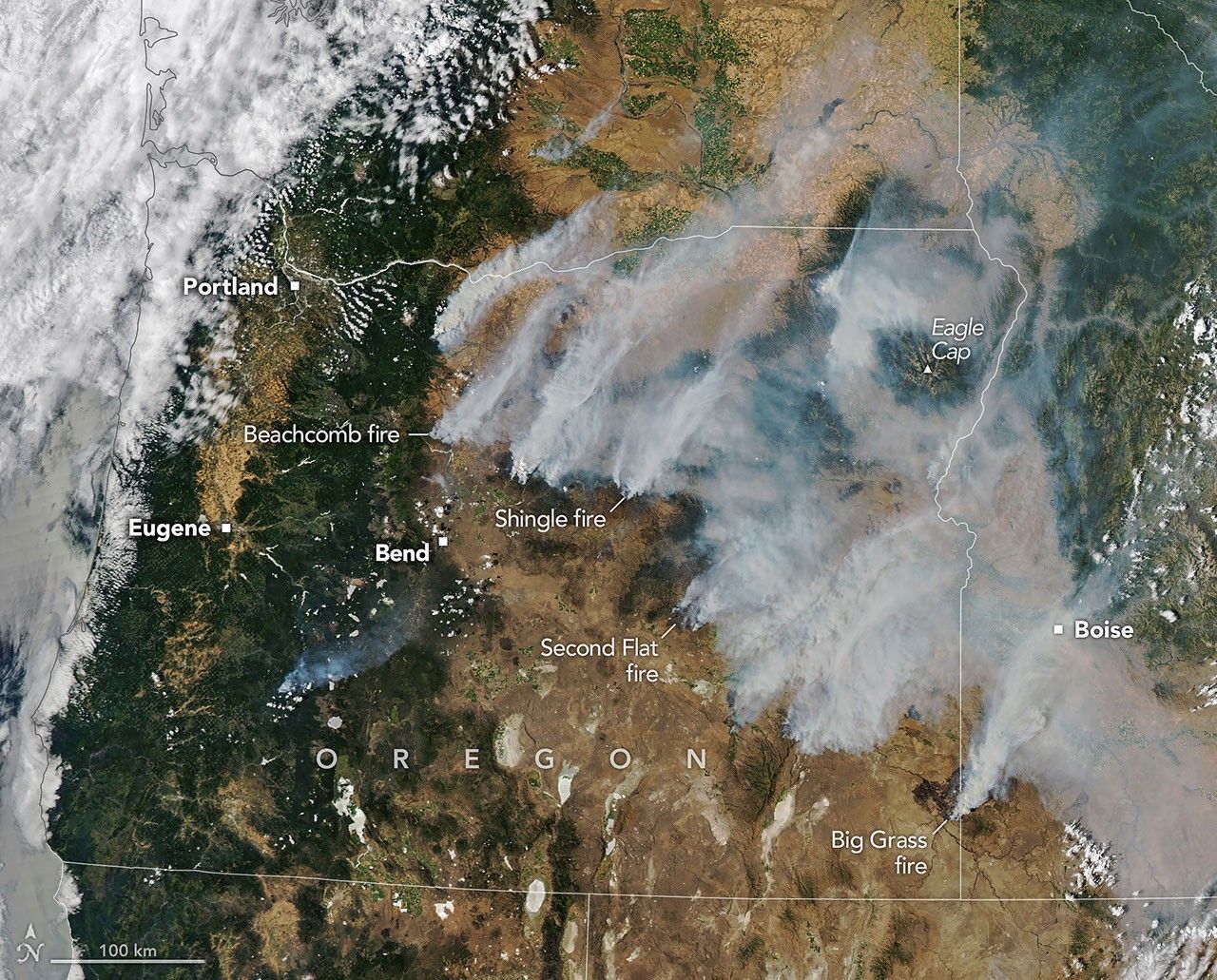
Six weeks after lightning ignited a patch of high desert grass in southeastern Oregon, the Big Grass Fire stands as the largest wildfire recorded in the state's modern history and is now 94 percent contained, according to the incident's federal tracking page on InciWeb. The fire, which straddles Malheur County, Oregon, and Owyhee County, Idaho, has burned 578,637 acres since it was first reported on July 23, according to the same update, posted Wednesday morning.
Crews have shifted from active suppression to mop-up and patrol work, and fire behavior is described in official reports as minimal, smoldering and creeping. But officials are not yet ready to call it over. Forecasters are warning of elevated to near-critical fire weather on Thursday, with gusty winds and low humidity expected to test the fire's still-uncontained edges, and the incident's estimated date for full containment is not until September 30.
The numbers
At its peak growth in the final week of July, the fire exploded by more than 280,000 acres in just two days, driven by dry grass, wind and triple-digit heat. It has since been managed by teams ranging from a large Type 1 complex incident command down to a smaller Type 3 team now overseeing mop-up, with 336 personnel currently assigned, down from a peak of more than 900 at the height of the suppression effort, according to fire updates compiled by regional television station KIVI/Idaho News. The fire's 578,637-acre footprint is roughly nine times the size of the city of Portland.
The Big Grass Fire is not an isolated event. The National Interagency Fire Center's national situation report counts more than 52,600 wildfires that have burned upward of 8.2 million acres across the United States so far in 2026, or 126 percent of the 10-year average for the number of fires and 163 percent of the average for acreage burned. Oregon alone has recorded more than 1,600 fires this year that have scorched over 2.3 million acres statewide, breaking the previous single-season record of roughly 2.08 million acres set in 2024, according to state fire officials cited by Portland's KATU News.
How a lightning strike outgrew a 14-year-old record
The fire began as a lightning-caused ignition in open rangeland about 25 miles southwest of Jordan Valley, Oregon, a town of a few hundred people near the Idaho line. Fueled by cured, one-foot-tall grass across Bureau of Land Management holdings, it grew explosively through late July and early August, crossing the state line into Idaho's Owyhee County and eventually surpassing the 2012 Long Draw Fire, which had burned about 558,000 acres and held the record for the largest wildfire in modern Oregon history for 14 years.
The scale of the burn prompted the BLM to close public land around the fire on both sides of the border. In Idaho, the agency's Boise District closed a series of roads in Owyhee County, including sections of Flint Creek Road, and has since extended that emergency closure order through September 6 to keep the public away from firefighting operations, even as nearby highways have remained open to travel throughout the incident.
Ranchers, a mayor's thanks and a governor's warning
The people most affected are ranching families whose grazing land sits inside the burn scar. As the fire swept across the high desert, it destroyed pastureland that cattle operations depend on for feed, along with fencing that will need to be rebuilt before livestock can safely return, according to accounts gathered by KATU News. Evacuation orders were issued at multiple points during the fire's growth, including a "Go Now" order for areas on the west side of Lake Owyhee, and Jordan Valley itself became a staging point for relief efforts, with a local Church of Jesus Christ of Latter-day Saints meetinghouse opened to provide meals, water and supplies to residents and fire crews.
"I have witnessed great tragedy and many great things in our community since the Big Grass Fire started," Jordan Valley Mayor Sheila Quintero said, according to KATU, thanking residents, volunteers and aid organizations for their support through the crisis.
Oregon Gov. Tina Kotek addressed the state's fire season, including the Big Grass Fire, during a briefing in late August after touring damage from the air. She credited firefighters with major progress but cautioned that the danger was not over.
"It's been all-hands-on-deck this summer to fight wildfires, and while we've made significant progress on containing fires and protecting lives and property, there is still a dangerous part of the season yet to go," Kotek said, according to Oregon Public Broadcasting's account of the briefing.
Kotek also urged residents to help prevent new ignitions as hot, dry conditions persist into September, saying the state still faces weeks of elevated risk even as it works to contain its largest blazes. Around 100 Oregon National Guard members have been assisting fire crews, and state officials say they have begun shifting some resources toward long-term recovery planning in the communities hit hardest.
What happens next
With containment at 94 percent, incident managers say the immediate priority is securing the remaining line before Thursday's forecast winds and low humidity, then continuing patrol and repair work — regrading fire lines, removing hazard trees and rehabilitating roads used during suppression — through the fire's projected containment date of September 30. The BLM's road closures in Owyhee County are set to remain in effect at least through September 6, after which officials will reassess conditions before reopening the area to hikers, hunters and other recreational users heading into the fall.
For ranchers in Malheur and Owyhee counties, the more difficult work is only beginning: assessing feed losses ahead of winter, rebuilding fencing across hundreds of square miles of burned range and, in some cases, waiting to see whether grazing allotments on federal land will be available again next season. State and federal agencies have not yet released a final damage assessment or total suppression cost for the fire, though funding is expected to be reviewed once full containment is reached and the incident is formally closed out.
Texas Opens Record Early Voting Clouded by New Registration Backlog

Gunman kills three children and a teacher at Bend elementary school before parent and teacher stop him

'No Kings' coalition pivots from protest to the polls with nationwide early-voting push
