Deadliest Strike Yet Hits Riyadh Airport as Houthi-Saudi War Escalates, 12 Killed
A missile attack on King Khalid International Airport killed 12 people and wounded 309, the worst single strike in a widening conflict that has drawn Washington toward direct involvement against Yemen's Houthi movement.
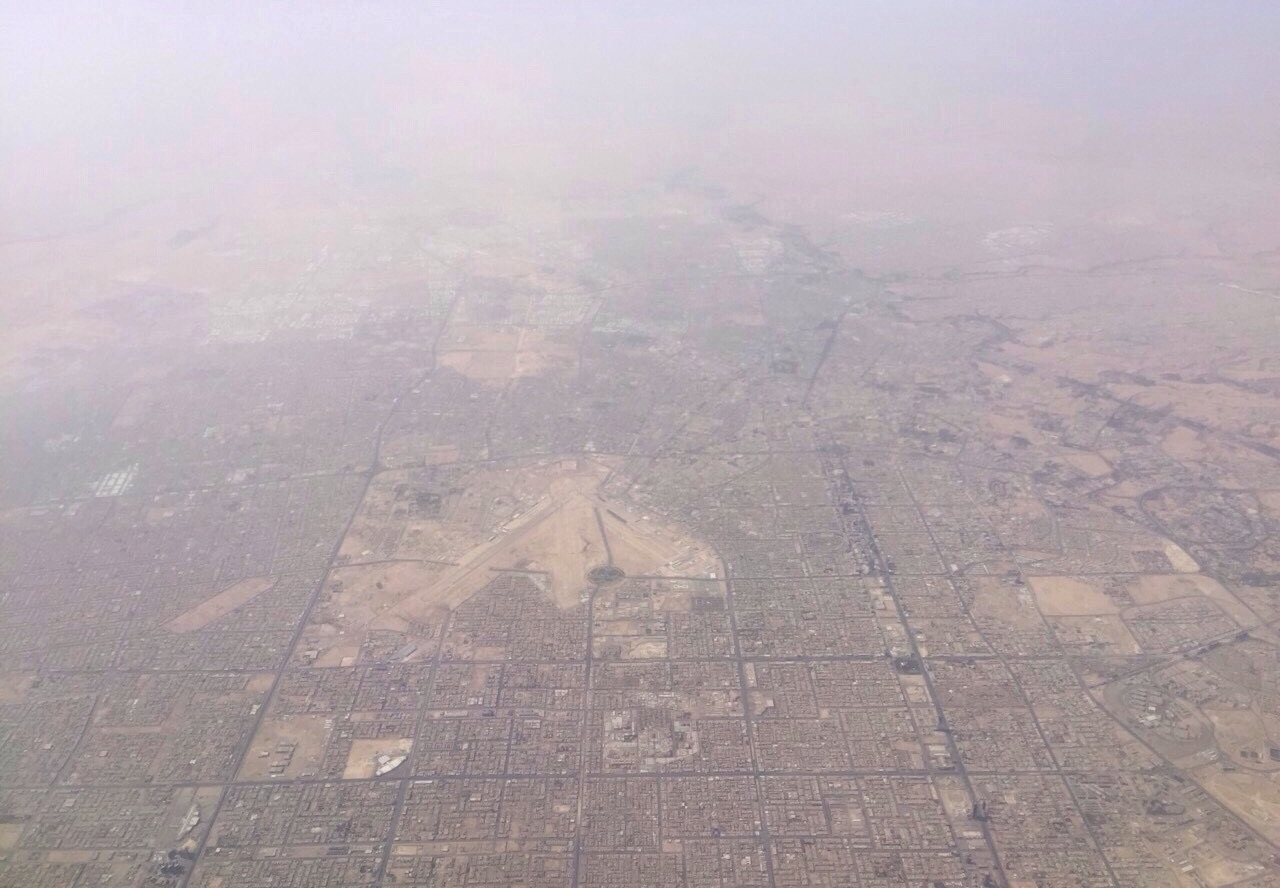
A missile attack on Riyadh's King Khalid International Airport killed 12 people and wounded 309 others on Saturday, Saudi Arabia's civil aviation authority said, making it the deadliest single strike yet in an escalating war between the Houthi movement in Yemen and the Saudi-led coalition that has drawn in growing American attention.
The General Authority of Civil Aviation (GACA) said early Sunday that the dead included four Saudi citizens, two Bangladeshi nationals, and one citizen each of the United States, Egypt, Jordan, Syria, Palestine and Sudan. Operations at the kingdom's busiest airport were suspended while crews assessed damage, and the Saudi-led coalition said projectiles were also fired toward King Fahd International Airport in Dammam and toward Al-Kharj, south of the capital, the same night, according to Arab News' account of the GACA statement. The coalition said it was the first time Dammam's airport had been targeted since the wider Iran war began in February, and that a drone was intercepted over the Eastern Province and a ballistic missile brought down over Al-Kharj the same night.
The toll keeps climbing
Saturday's strike was the fourth attack on Saudi airports in five days. GACA said attacks on Tuesday and Wednesday killed two women at Abha International Airport, in the kingdom's south, and a Sudanese resident at King Khalid airport in Riyadh. On Thursday, two further strikes on the Riyadh airport killed two Saudi nationals and, separately, a Saudia Airlines captain whose aircraft was hit while parked on the tarmac. Taken together, the week's attacks on Saudi aviation infrastructure have now killed at least 18 people and injured more than 345, based on the cumulative GACA figures reported across the week.
The disruption to air travel has been severe. Flight-tracking data cited by Arab News showed at least 291 flights out of Riyadh were cancelled in the 24 hours after the attack. Lufthansa Group, Air India, flydubai and Pakistan International Airlines have all suspended service to Saudi airports for periods extending into mid-October, and the European Union Aviation Safety Agency's regional conflict-zone bulletin now tells European carriers to treat Saudi airspace with heightened caution, citing the Houthis' demonstrated ability to strike deep inside the kingdom.
How the war reached Riyadh's runways
The attack is the latest escalation in a conflict that traces back to two separate but intertwined wars. The wider one began on 28 February 2026, when the United States and Israel struck targets inside Iran, prompting Iranian retaliation against Israeli and American positions across the region. A ceasefire reached on 8 April was extended in June, but tension in the Gulf has never fully subsided, and EASA's conflict-zone guidance still warns of "sporadic kinetic events" and the risk of aircraft misidentification over Iran and Iraq.
Yemen's own four-year-old truce between the Saudi-led coalition and the Iran-aligned Houthi movement unraveled separately, in July, after a dispute over a blocked Iranian flight bound for Sanaa escalated into coalition airstrikes on Sanaa's runway and Houthi missile fire on Abha airport. Since then, the UN Security Council has repeatedly condemned Houthi missile attacks on Saudi Arabia dating back to mid-July, while UN officials have warned that Yemen faces its greatest risk of all-out war since the 2022 truce. Houthi attacks on Saudi energy and aviation infrastructure intensified through September, and by early October had turned airports themselves into the primary target, with the group's Humanitarian Operations Coordination Centre declaring Saudi airspace a "theatre of operations" unsafe for airlines.
The Saudi-led coalition has not stood still. It said on Friday — the day before the Riyadh airport strike — that it had launched large-scale operations against Houthi positions, destroying more than 130 targets in a single sweep. The exchange of blows has settled into a pattern over the past month: coalition strikes on Houthi military infrastructure inside Yemen, followed within days by Houthi missile or drone fire aimed at Saudi airports, oil facilities or cities, each round larger than the last.
Civilians, airlines and migrant workers caught in the middle
The dead and wounded in Saturday's attack reflect how dependent King Khalid airport is on foreign labor and travel. Among the confirmed fatalities were Bangladeshi, Egyptian, Jordanian, Syrian, Palestinian, Sudanese and American nationals, alongside four Saudis, underscoring the airport's role as a hub for the millions of South Asian, Arab and Western expatriate workers who transit through or live in the kingdom. Saudi hospitals in Riyadh were treating the 309 injured, some in critical condition, and GACA said it was still assessing physical damage to the terminal complex days after the strike, according to a separate report in Gulf News, which also noted the authority's condolences to victims' families.
The economic and logistical fallout has rippled outward quickly. With roughly half of scheduled Riyadh departures cancelled on the worst days this week, travelers connecting through the Gulf hub have faced long delays or rebookings, and foreign ministries in several countries have urged citizens to check with airlines before heading to the airport. Saudi Arabia's own foreign ministry advised travelers unable to reach the kingdom to contact Saudi diplomatic missions abroad for assistance, according to Arab News' reporting.
Condemnation from allies, a warning from Washington
The reaction from Riyadh's coalition partners was swift and pointed. Maj. Gen. Turki al-Maliki, spokesman for the Saudi-led Coalition to Support Legitimacy in Yemen, said the strike amounted to a breach of international humanitarian law.
"The attack on King Khalid International Airport is a terrorist act and will be met with a firm response," al-Maliki said, describing it separately as a "full-fledged war crime" that violated fundamental principles and values, according to Arab News.
The Gulf Cooperation Council's secretary-general, Jasem Mohamed Albudaiwi, said repeated Houthi strikes on the airport reflect "persistent criminality and flagrant disregard for civilian lives," in a statement posted by the council's media office, and called for serious international action to deter the group. European Commission President Ursula von der Leyen said attacks on civilian infrastructure were unacceptable, echoing language the European Union's diplomatic service has used repeatedly over the past two months as Houthi strikes on Saudi territory have multiplied.
In Washington, President Donald Trump called the strike "not acceptable" and said he intended to speak directly with Saudi Crown Prince Mohammed bin Salman. Secretary of State Marco Rubio called the attacks "reprehensible" and said they "must stop now," noting that an American citizen was among the dead. Trump also said he was "looking at" joining Saudi Arabia in carrying out airstrikes against Houthi positions in Yemen, a step that would mark a significant deepening of direct US military involvement in the conflict beyond its existing role striking Iran.
What happens next
Saudi Arabia's UN ambassador, Abdulaziz Alwasil, has told the Security Council that Riyadh will not allow Yemen to be used as a launchpad for attacks on the kingdom. Whether Washington follows through on strikes of its own, and whether Trump's planned call with the crown prince produces a coordinated military or diplomatic response, are likely to shape the next phase of the conflict.
For now, the immediate questions are more basic: how long King Khalid airport's disrupted operations will last, whether international carriers return on the schedules they have announced for mid-October, and whether the Houthis — who had not issued a formal claim for Saturday's strike as of Sunday morning, according to Al Jazeera's live coverage of the conflict — will follow it with further attacks on Saudi aviation infrastructure in the days ahead.

UN Security Council Adopts First Resolution on Children, War and the Digital Age

Drone strike on disputed Abyei market kills dozens as UN warns death toll will keep rising

Portugal Arrests 55 as Housing Protesters Retake Cleared Squares
