Flydubai Co-Pilot Stabs Captain, Tries to Crash Israel-Bound Jet; Passengers Wrestle Back Control
A co-pilot stabbed the captain and apparently attempted to crash a Flydubai flight carrying more than 170 people from Dubai to Tel Aviv before passengers and off-duty crew subdued him and diverted the plane to Saudi Arabia.
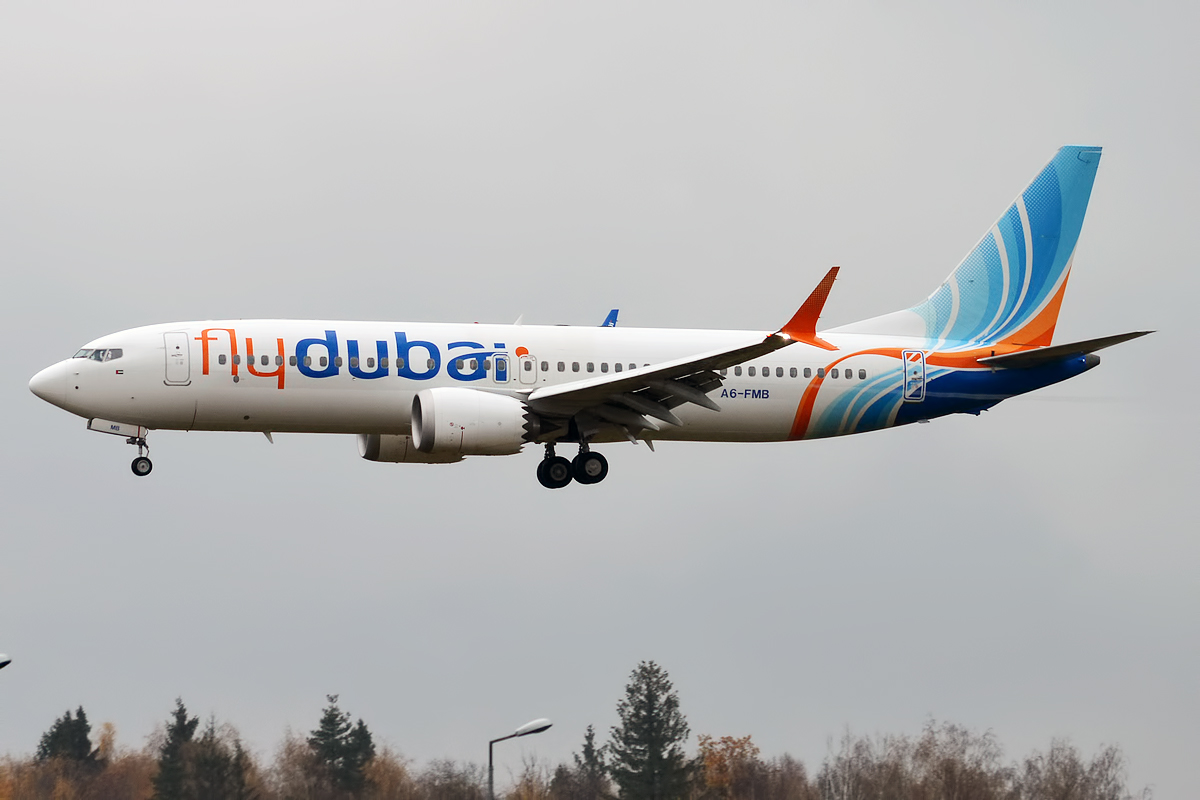
A co-pilot stabbed the captain and apparently tried to crash a Flydubai jet carrying more than 170 people from Dubai to Tel Aviv on Wednesday, Israeli Prime Minister Benjamin Netanyahu said, before passengers and off-duty crew forced their way into the cockpit, overpowered the attacker and helped divert the plane to an emergency landing in Saudi Arabia.
Flydubai flight FZ1073, a Boeing 737 MAX 8, took off from Dubai International Airport at 07:05 local time bound for Ben Gurion Airport. Roughly two and a half hours later, as the aircraft approached Israeli airspace, one pilot stabbed the other and "apparently tried to crash the plane with everyone on board," Netanyahu said in a video statement. The wounded captain, Indian national Capt. Smit Machchhar, managed to open the cockpit door before collapsing from his injuries, allowing passengers to storm in and subdue the attacker. The plane was flown to Tabuk Airport in northwestern Saudi Arabia by two off-duty pilots who happened to be traveling as passengers.
A Sharp Descent Over the Desert
Flight-tracking data showed the jet plunging from roughly 34,000 feet to under 17,000 feet in about a minute, a drop of more than 17,000 feet that Al Jazeera's correspondent described as a "steep, sharp descent that would have unnerved passengers." The aircraft transmitted a general emergency code, squawk 7700, and then switched to squawk 7500 — the international signal for unlawful interference, typically associated with a hijacking. It briefly crossed into Jordanian airspace before looping back toward Saudi territory and beginning a manual descent, touching down at Tabuk at 06:58 GMT. The emergency code reverted to 7700 less than an hour later as the situation on the ground stabilized.
Netanyahu said the aircraft had been carrying at least 150 people, "almost all" of them Israeli, and that no warning or advance intelligence had reached Israeli authorities before the incident. The UAE's General Civil Aviation Authority said the altercation "resulted in injuries to some members of the flight crew," who were taken to a Saudi hospital, and that the safety of passengers and crew remained its top priority. Both the captain and the pilot accused of the stabbing were hospitalized; the latter was then arrested and is being questioned by Saudi authorities.
Passengers Who Became First Responders
Accounts from the cabin described chaotic scenes as the plane dropped. Passenger Yaniv Hayun told Israeli media that the attacker was "trying to destroy the instruments in order to disable the plane" when he put him in a chokehold and pulled him out of the cockpit, after which other passengers helped pin him down. Hayun said he then briefly took hold of the flight controls himself — crediting his familiarity with the television series Air Crash Investigation — before a trained pilot took over. Another passenger, Zvika Meness, told Israel's Kan News that travelers tied the attacker up "with his own zip ties and with the multimedia headphones," adding that children and families on board had been through "a very severe, highly traumatic event." A woman whose daughter was on the flight told Reuters there was "blood everywhere" after the stabbing and that passengers screamed as the aircraft seemed to lose control.
Machchhar, the injured captain, was hailed as a hero by both the Israeli and Indian governments. Netanyahu said he "saved the lives of 174 people, including Israeli citizens and other nationals," while Indian Prime Minister Narendra Modi's office said in a statement that "his valour helped save hundreds of lives and avert a great tragedy," adding that India was "proud of Captain Machchhar" and wished him a swift recovery. The Indian embassy in Saudi Arabia said he was in stable condition.
"Regardless of whether or not it was a terrorist attack or whether it was a heated argument on the flight deck, or indeed, whether it was some mental health breakdown, it illustrates the fact that the insider threat is probably the greatest threat to civil aviation nowadays," said Philip Baum, managing director of the aviation security consultancy Green Light Ltd.
An Old Threat With a New Case File
Aviation security specialists have long warned that the gravest risk to a modern airliner often comes not from outside threats but from the people with legitimate access to the flight deck. Baum, speaking to Al Jazeera, noted that more lives have been lost to pilot suicide since the September 11, 2001 attacks than to hijackings or terrorism aboard commercial aircraft, a grim statistic that followed the 2015 Germanwings disaster, in which a co-pilot locked the captain out of the cockpit and deliberately flew an Airbus A320 into the French Alps, killing all 150 people aboard. That crash prompted many airlines to require two authorized crew members in the cockpit at all times, a rule some carriers have since relaxed.
Wednesday's incident was not the first time a Flydubai aircraft bound for Israel had diverted to Saudi Arabia; a flight made an unscheduled landing in Riyadh in September 2025 after a passenger suffered a medical emergency. It was, however, a far more serious episode for a route that has become one of the more visible symbols of the 2020 normalization agreements between Israel and the United Arab Emirates, which opened the Gulf to Israeli tourists and business travelers. Flydubai, the budget sister carrier of Emirates, operates an all-Boeing 737 fleet of nearly 100 aircraft, including 69 of the Max 8 variant involved in Wednesday's flight, out of Dubai International Airport, one of the world's busiest hubs for international travel.
Investigation, Politics and What Comes Next
The man accused of the stabbing remains in Saudi custody as investigators from the UAE, Saudi Arabia and Israel work to establish a motive. Israeli Defense Minister Israel Katz called it "an attempted jihadist attack" and said that "according to the initial information we have, the terrorist had one intention: to crash the plane," though he offered no supporting evidence for the "jihadist" characterization. Netanyahu himself was more cautious, telling reporters it was "too early to say" whether Iran was involved and adding that Israel would "get to the root of this attacker, whether he had accomplices, whether Iran was behind it." U.S. President Donald Trump said he had spoken with Netanyahu and suggested the attacker was "perhaps a terrorist," though he said other explanations had not been ruled out.
The episode also set off a political dispute in Israel. Opposition leader Yair Lapid rejected suggestions that the incident was connected to a security briefing Netanyahu had given him the previous evening, accusing government-aligned voices of playing "cheap politics" with the incident and calling them "an irresponsible bunch." A spokesperson for Netanyahu's office said the prime minister had ordered security to be "ramped up" on both Israeli and international carriers serving Israel.
Flydubai said in a statement that "an altercation occurred in the flight deck" and that the flight was "successfully secured by on-duty Flydubai crew traveling on the flight, who diverted and landed the aircraft safely at Tabuk airport," adding that the incident had no effect on its other scheduled operations. The airline sent two replacement aircraft to Tabuk; the passengers eventually continued to Tel Aviv, landing at Ben Gurion Airport at roughly 6:40 p.m. local time, where crowds gathered to greet them with music and Israeli flags. The General Civil Aviation Authority, the UAE's air-safety regulator, said its investigation into the operational and security dimensions of the flight was continuing, and it asked the public not to circulate unverified information while the inquiry proceeds. No timeline has been given for when its findings will be released.

South Korea's Exports Hit Record $120.9 Billion as AI Chip Boom Accelerates

G20 trade ministers wrap Milwaukee summit as tariff tensions simmer

Pakistani airstrikes in Afghanistan kill 22 militants, Islamabad says; Kabul reports nine civilians dead
