Gang massacre in Haiti's Kenscoff kills at least 47, with dozens taken hostage
A coalition of armed gangs stormed a farming town in the hills above Port-au-Prince, killing at least 47 people — including inside a church sheltering the displaced — and abducting more than 50 others, the United Nations said, in one of the deadliest single attacks of Haiti's four-year gang crisis.
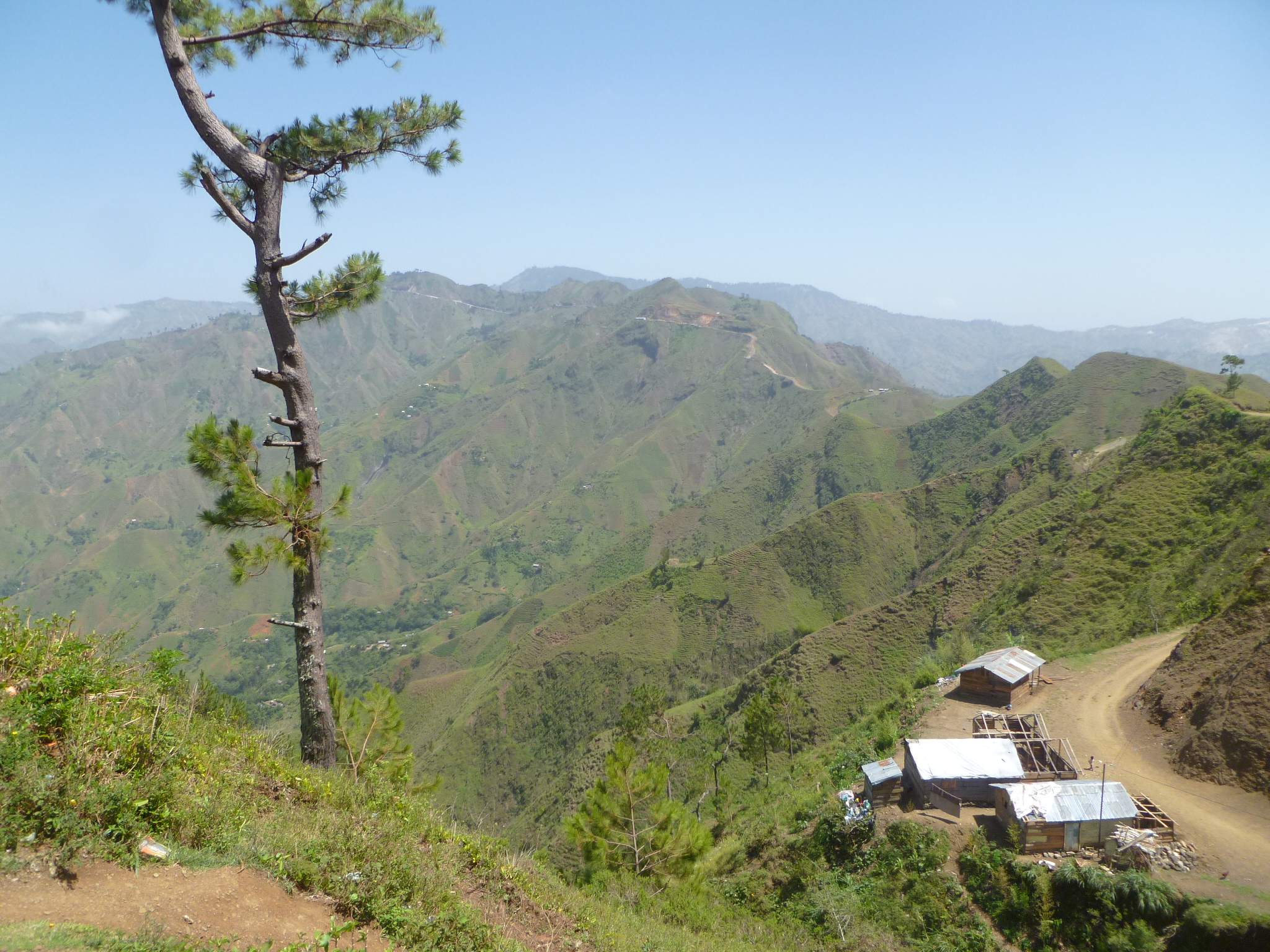
Gunmen from Haiti's largest gang coalition swept through Kenscoff, a farming community in the hills above Port-au-Prince, late Sunday night, setting homes ablaze and gunning down residents in what the United Nations says is one of the deadliest single attacks of the country's four-year gang crisis. At least 47 people were killed, 22 of them executed inside a church compound that had been sheltering people already displaced by earlier violence, and more than 50 others were abducted, according to the United Nations Integrated Office in Haiti.
By Monday morning, bodies lay in the streets of the mountain town, roughly 10 kilometers southeast of the capital. Among the properties torched was the home of Jean William Pape, a prominent Haitian physician and HIV/AIDS researcher, according to local media accounts cited by Al Jazeera. Kenscoff's mayor, Jean Massillon, said armed men "sowed chaos" throughout the community, which for generations has supplied vegetables and flowers to Port-au-Prince markets and was long considered a relatively peaceful mountain retreat.
What happened
The attack was carried out by fighters aligned with Viv Ansanm, the gang coalition the United States designated a foreign terrorist organization in 2025. Responsibility was claimed by a faction called 5 Segonn, whose leader, Johnson "Izo" André, has become one of the most powerful and violent gang figures in the country. Fighters under a subordinate calling himself "Izo 2" laid siege to both the local police station and the church sheltering displaced residents; in a video posted afterward, he threatened Haiti's national police director, Vladimir Paraison, warning that hostages would be killed if security forces used drones against the gang's fighters in Kenscoff.
Haitian rights monitor RNDDH offered a lower initial estimate of 30 to 40 dead and 15 to 20 wounded, cautioning that verifying numbers on the ground remained difficult in the attack's immediate aftermath. BINUH's tally of 47 dead, including at least five children, was described by the office as still subject to revision. Local officials said they had passed on intelligence warning of an imminent assault, but the security response that materialized was too thin to stop it, an echo of a February 2025 incident in which warnings of a Kenscoff attack circulated for days beforehand with little practical effect.
The numbers
- At least 47 people killed and 22 injured in the overnight raid, per BINUH
- 22 of the dead were reportedly executed inside a church compound sheltering displaced residents
- More than 50 people abducted — described by UN officials as one of the largest mass kidnappings in Haiti in recent years
- A prior gang incursion into Kenscoff between July 4 and 9 killed at least 61 people
- An earlier wave of attacks on Kenscoff between January and March 2025 killed at least 262 people over two months, according to a BINUH report
Nationally, the toll is far larger. A UN Human Rights Office report covering March 2025 through mid-January 2026 documented at least 5,519 people killed and 2,608 injured across Haiti, with gang violence, security-force operations and self-defense-group reprisals all contributing to the toll. The UN's daily briefing on the day of the Kenscoff attack added that at least 1,408 people were killed and 656 injured nationwide in the second quarter of 2026 alone, with gang attacks responsible for more than half of those deaths. Nearly 1.47 million people were internally displaced nationwide as of this spring, and the UN says more than 16,000 people have died in gang-related violence since the crisis accelerated in January 2022.
How Haiti got here
Kenscoff's position overlooking roads into Pétion-Ville — home to embassies, hotels and Haiti's temporary seat of government — has made it a strategic target for gangs seeking to tighten their grip on the capital's periphery. Viv Ansanm, formed in 2023 through an alliance of the rival G-9 and G-Pèp coalitions, has since seized control of an estimated 70 to 90 percent of Port-au-Prince, according to various UN and monitoring-group estimates, and helped force the resignation of a former prime minister in 2024. Kenscoff alone has now endured roughly a dozen gang incursions since early 2025, residents and local officials say, each one pushing more families from their homes. Attacks on churches and camps sheltering the displaced are not new to Haiti: in December 2024, gunmen from the Wharf Jérémie gang killed more than 200 people, most of them elderly, in a massacre in the Cité Soleil slum that the UN later documented in detail.
The international response has struggled to keep pace. The Kenyan-led Multinational Security Support Mission, deployed in 2024, was hampered by chronic funding and staffing shortfalls. In its place, the UN Security Council voted on September 30, 2025, to authorize a new Gang Suppression Force, envisioned at up to 5,550 personnel working alongside Haitian police and armed forces on intelligence-led operations against the gangs, backed by a new UN Support Office for logistics. The resolution passed 12-0, with China, Russia and Pakistan abstaining. Nine months later, according to a Security Council briefing, only about 1,000 of the planned 5,550 troops and police had actually deployed, even as the force's special representative, Jack Christofides, said implementation was "progressing steadily." The Dominican Republic's foreign minister told the Council the shortfall could not be allowed to delay protection for Haitians, warning that "time is not on Haiti's side."
Who is affected
Thousands of Kenscoff residents fled the town in the attack's immediate aftermath, adding to a displaced population that already numbered in the hundreds of thousands region-wide. Among those most directly affected are the families of the more than 50 people abducted, whose fate depends in part on how Haitian police proceed against the gang holding them. Kenscoff is also one of Haiti's principal vegetable-growing regions, and humanitarian officials have noted that the repeated violence and displacement there have disrupted agricultural production at a time when food insecurity is already rising across the country. Residents have accused local police of failing to respond despite the town's proximity to a police station — an allegation that has fueled demands for the local police chief to step down even as national officials defended the force's response.
"People in Kenscoff are suffering, and the government is to blame," said Coriolan Kendy, a resident of the town, in comments reported by Australia's public broadcaster.
Haiti's prime minister's office, in a statement responding to the attack, said: "Kenscoff will not be abandoned. The government's authority will be restored, without weakness and without delay." National police officials said reinforcements and a heightened security posture were being deployed to the area, though it was not immediately clear whether Gang Suppression Force personnel had been sent to Kenscoff specifically.
Reaction
UN Secretary-General António Guterres condemned the attack in a statement read by his spokesperson at the daily UN briefing, saying the "relentless attacks on communities and the loss of lives underscore the alarming security conditions in Haiti and reinforce the urgent need to intensify Haitian and international security efforts to counter these ruthless gangs." Guterres also renewed his call for Haitian authorities to pursue accountability for those responsible, including through specialized judicial units created with international support to investigate mass crimes.
Carlos Ruiz Massieu, the secretary-general's special representative for Haiti and head of BINUH, said the scale of recent violence in the greater Port-au-Prince area "underscores the urgent need to strengthen the protection of the population," a remark made as his office released its latest quarterly casualty figures alongside details of the Kenscoff attack. Haiti's government called the raid "heinous" and pledged to restore order, while human rights monitors including RNDDH renewed calls for faster deployment of the international force and better protection of displaced people sheltering in churches and camps, which have repeatedly come under attack elsewhere in the country over the past two years.
What happens next
Haiti's electoral authority has scheduled the first round of long-delayed presidential and legislative elections, along with a constitutional referendum, for December 13, 2026 — the country's first national vote in a decade — with a runoff planned for February 21, 2027. The Kenscoff massacre, coming less than four months before that vote, is likely to intensify scrutiny of whether the Gang Suppression Force can close its deployment gap in time and whether security conditions will allow voting to proceed safely in gang-affected areas of the capital and its outskirts. In the immediate term, attention is focused on the fate of the more than 50 people abducted from Kenscoff and on whether Haitian police, under threat from the gang holding them, will attempt further drone or ground operations to retake the town.

Japan denies spying charge as Tokyo presses Russia for access to detained reporter

Iran sinks two more ships in Strait of Hormuz as war enters ninth month

Ukrainian Ex-Officer Goes on Trial in Germany Over Nord Stream Pipeline Blasts
