Gold Mine Collapse Kills at Least 82 in War-Torn Sudan, Dozens Still Missing
An unregulated gold mine gave way in Rapid Support Forces-held West Kordofan this week, killing dozens of informal diggers in a disaster that lays bare gold's central, deadly role in Sudan's three-year civil war.
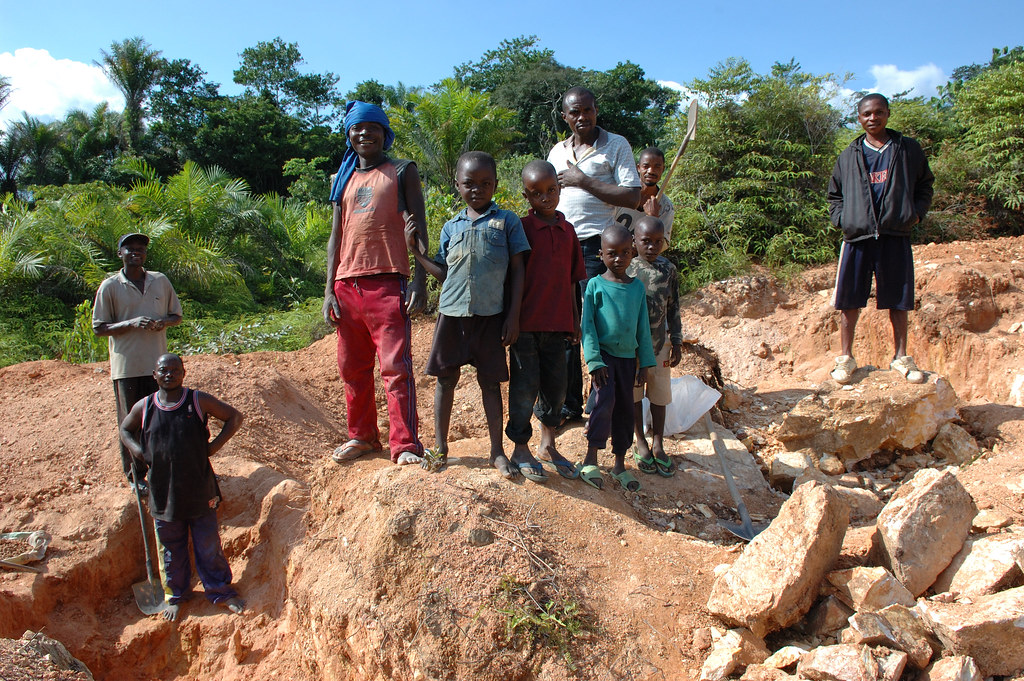
An informal gold mine in western Sudan collapsed this week, killing at least 82 people and leaving dozens more buried under sand and rubble, in one of the deadliest mining disasters of the country's civil war. The mine, known as al-Zara, sits near the town of Nuhud in West Kordofan state, territory controlled by the paramilitary Rapid Support Forces (RSF), and had no professional rescue equipment on hand when its interlocking shafts gave way.
Local officials, an RSF-aligned source and independent monitors gave slightly different tolls, but all describe a disaster on a similar scale, according to reporting by Al Jazeera and NBC News. A local administration official said 82 bodies had been recovered by Wednesday afternoon; the Kordofan Observatory, a monitoring group, put the toll at 70 killed or missing; and the Sudan Doctors Network, a volunteer medical body, had earlier counted 67 bodies pulled from the rubble. Rescuers said dozens of miners remained unaccounted for, meaning the final count is likely to rise.
The numbers
The mine shaft network stretches more than a kilometer across sandy ground and reaches depths beyond 30 meters, according to survivor accounts relayed to news agencies. Witnesses said the collapse began in one shaft late Tuesday and spread rapidly to adjacent, interconnected tunnels — a structural chain reaction typical of unsupported artisanal digging. At least 50 people were reported wounded. With no state mining authority present in RSF-held territory, rescue efforts were left to residents using shovels, ropes and a single privately owned forklift; there was no heavy machinery capable of clearing soil at the depths where miners remained trapped.
- At least 82 dead, according to a local administration official, with tolls from other sources ranging from 67 to 70
- At least 50 wounded
- Dozens still missing and unaccounted for as of Wednesday
- Mine shafts extend more than 30 meters deep across a site over a kilometer wide
- Only one forklift, privately owned, available for the rescue operation
"The collapse is massive and the situation is very dire," survivor Khairal-Sayed Gabara told reporters at the site, adding that residents "don't know how many more are still inside."
How Sudan's gold rush turned deadly
The al-Zara collapse is the latest and among the worst in a long string of accidents at Sudan's informal gold sites. A mine collapse killed 38 people in 2021 and another killed 14 in 2023, a pattern that predates the current war but has worsened since fighting between the Sudanese army and the RSF erupted in April 2023. Gold is Sudan's most valuable export commodity, and production has climbed even as the war has ravaged the rest of the economy: according to the U.S. Geological Survey's data on Sudan's mineral industry, national gold output rose to roughly 61,000 kilograms in 2024, up from 34,500 kilograms the year before, and production is "mostly artisanal" — meaning it comes from small-scale, largely unregulated digging rather than industrial mines with safety inspectors, engineered shoring or ventilation.
That informality has made gold both a lifeline and a hazard. With banks crippled, currency collapsing and formal employment scarce, hundreds of thousands of Sudanese, including people displaced by the fighting, have turned to digging for gold by hand. It has also made gold central to financing the war itself: researchers and a United Nations panel of experts have documented how both the army and the RSF tax, control or directly profit from mining sites and smuggling routes, using the proceeds to buy weapons and pay fighters. West Kordofan, where al-Zara is located, has been under RSF control for much of the conflict, and the paramilitary force — not any state mining regulator — is effectively the only authority governing conditions at the site.
Who is affected
The dead and missing are, by all accounts, ordinary laborers rather than mining professionals: young men working informal claims with hand tools, often for a share of whatever gold-bearing ore they can bring up. Many are believed to include people who fled other front lines and settled in West Kordofan, one of the few areas where cash income is still obtainable. The disaster lands on top of an already dire humanitarian picture in the province and across the country. The United Nations estimates that 33.7 million people need humanitarian assistance nationwide, and the World Food Programme says roughly 19.5 million people are acutely food insecure, with famine conditions confirmed in parts of the country. Kordofan itself has seen intensifying clashes and drone strikes on towns such as El Obeid, driving fresh waves of displacement even before this week's collapse, according to a UN News account of fighting in the region.
Reaction
The Sudan Doctors Network, which has documented casualties throughout the war, called the collapse a preventable tragedy rooted in the absence of safety enforcement at informal sites, according to Al Jazeera's reporting. Emergency Response Rooms, the grassroots mutual-aid networks that have become a primary source of relief across Sudan in the absence of functioning state institutions, said dozens of miners remained buried and appealed for equipment and support. No RSF or army official offered a public account of what, if any, safety inspections or licensing applied to the al-Zara site before it collapsed. International reaction has been muted so far; Sudan's civil war, now in its fourth year, has produced repeated mass-casualty events — from famine to shelling to mine disasters — that have strained the capacity of aid agencies and diplomats to respond to each new one individually.
What happens next
Search efforts were continuing into Wednesday with the same rudimentary equipment that hampered the initial rescue, and local officials cautioned that the toll would almost certainly climb as crews reach deeper sections of the collapsed shafts. There is no indication that heavy excavation machinery will reach the remote site soon, given the area's isolation and the RSF's control over access. Longer term, the disaster is likely to sharpen scrutiny of the informal gold trade that has become both an economic survival mechanism for Sudanese civilians and a funding stream for the armed groups prosecuting the war, an issue that has already prompted outside actors, including the European Union, to restrict trade in Sudanese-origin gold. Absent a ceasefire or an extension of state authority into RSF-held territory, however, analysts and aid workers say there is little prospect that safety standards at sites like al-Zara will change before the next collapse.
Al Jazeera — Gold mine collapse kills at least 70 people in Sudan's West Kordofan
NBC News — Sudan gold mine collapse kills at least 82 people, with many more missing
U.S. Geological Survey — National Minerals Information Center: Sudan
UN Office for the Coordination of Humanitarian Affairs — Sudan

Yemen's collapsing truce sends 100,000 people fleeing as Houthis seize Red Sea coast

U.S. Clears $24.3 Billion F-35 Sale to Saudi Arabia, Testing Israel's Military Edge
Toxic home-brewed gin kills at least 49 in southwestern Nigeria
