Israeli rights group says West Bank policy has become a single 'project of elimination'
A new B'Tselem report says violence, displacement and land seizure in the West Bank now form a single coordinated policy rather than separate abuses; Israel's military calls the conclusion baseless.
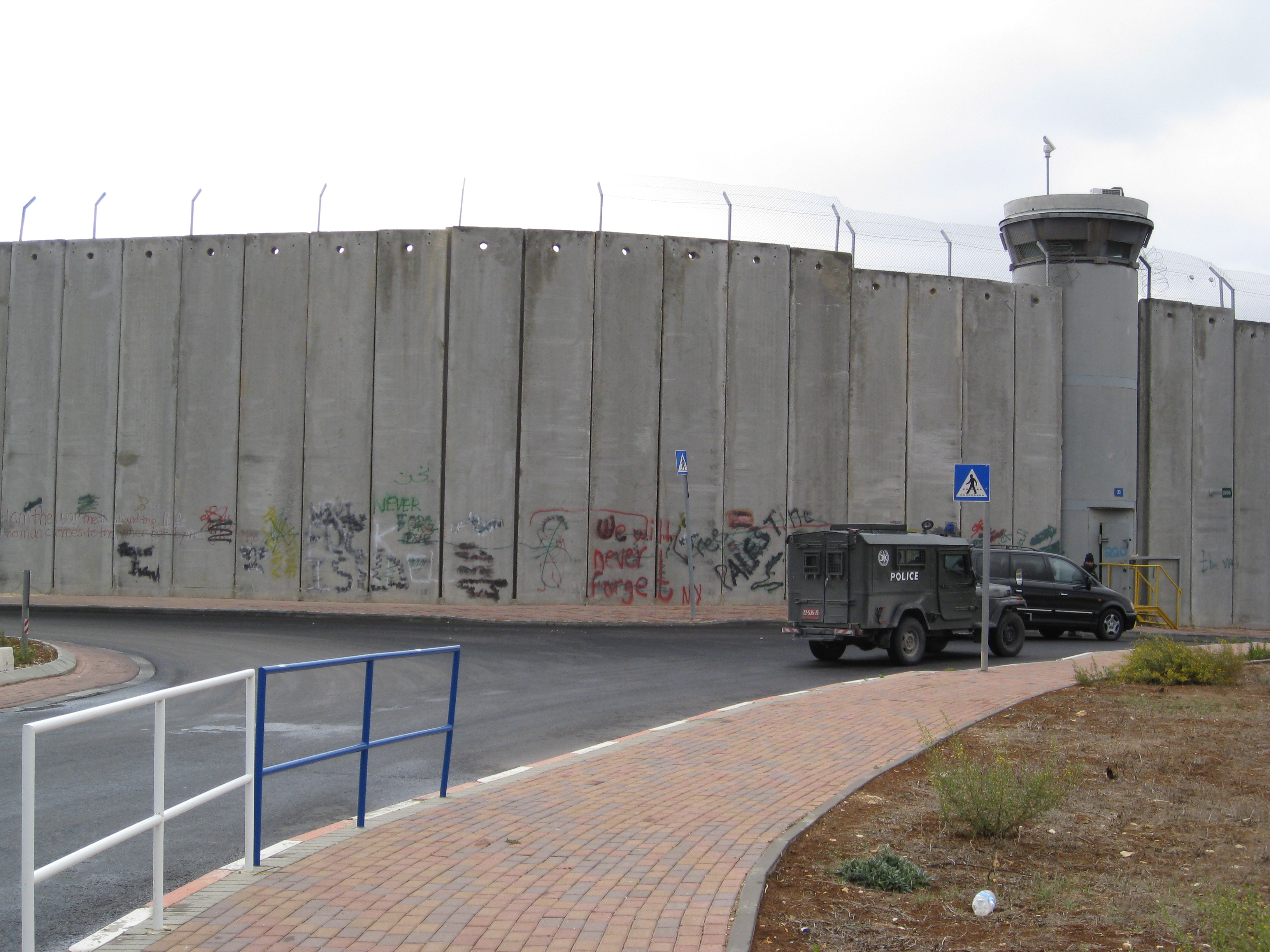
The Israeli human rights organization B'Tselem published on Monday the most extensive study of the occupied West Bank in its 37-year history, concluding that violence, displacement, land seizure and economic pressure against Palestinians there no longer amount to a series of separate abuses but form a single, coordinated state project. The 245-page report, titled The Elimination Project, draws on roughly 2,000 testimonies gathered from Palestinians since October 2023 alongside more than three decades of the group's own field documentation.
A pattern, not incidents, the report argues
B'Tselem, founded in 1989 to document Israeli conduct in the occupied territories, frames its central claim carefully: it does not allege that Israel is trying to make every Palestinian in the West Bank disappear, but that government policy is organized around making Palestinian collective life "increasingly impossible" while cementing permanent Israeli Jewish control over the land. The report groups the evidence into five mechanisms it says operate together — violence and intimidation by soldiers and settlers, restrictions on movement, economic strangulation, the criminalization of political and social organizing, and outright displacement paired with land takeover, according to Al Jazeera's account of the findings.
"What Palestinians are living through in the West Bank is not a series of separate incidents," B'Tselem executive director Yuli Novak said in comments accompanying the report's release. "It is a single political project that reaches into every part of life."
The numbers behind the findings
The report puts a death toll on the period it covers: at least 1,107 Palestinians killed in West Bank attacks between October 2023 and September 2026. It documents at least 75 Palestinian communities forcibly displaced, roughly 33,000 people driven from refugee camps in the northern West Bank amid a prolonged Israeli military operation there, and more than 1.07 million dunams of land — about 18 percent of the West Bank's total area — brought under the control of armed settlers as of July 2026. West Bank unemployment, the report says, rose from 13.1 percent in 2022 to 31 percent in 2024, a collapse it attributes largely to Israeli-imposed restrictions on Palestinian movement and trade. B'Tselem also counted at least 60 Palestinian journalists arrested since October 2023.
Those figures sit alongside separate, independently gathered United Nations data. The UN humanitarian affairs agency OCHA has recorded 925 movement obstacles across the West Bank and East Jerusalem — the highest count in two decades and 43 percent above the long-term average — including 89 permanently staffed checkpoints, more than 200 road gates and over 100 earthmounds blocking roads. Separately, the United Nations has said the pace of settler violence has reached an all-time high, with monthly attack rates early this year on pace to exceed 2,000 incidents by the end of 2026.
How the West Bank reached this point
Israel has occupied the West Bank since the 1967 war, and settlement building there has continued under successive governments for decades, treated by most of the world, including a 2024 International Court of Justice advisory opinion, as unlawful under international law; the ICJ's 15 judges found that year that Israel's continued presence in the occupied territory was unlawful and that it should end as rapidly as possible. B'Tselem's report argues that a distinct acceleration began with the formation of Israel's current governing coalition at the end of 2022, and that it sharpened further after the Hamas-led attacks of October 7, 2023, and Israel's subsequent military campaigns.
The report also cites internal military statements as evidence of a shift in approach. In May, the Israeli newspaper Haaretz reported that Major General Avi Bluth, commander of the army's Central Command and the most senior officer overseeing the West Bank, told a closed briefing that troops were "killing like we haven't killed since 1967," a remark he made while defending loosened rules of engagement, according to reporting on the comments at the time. B'Tselem's report cites the remark as an example of what it calls open acknowledgment, at senior levels, of a permissive approach to Palestinian casualties.
Reaction from Israel and abroad
The Israeli military rejected the report's central conclusion. A spokesperson said any suggestion that the armed forces were working to eliminate Palestinians as a people was "false, baseless, and blatantly detached from reality," adding that the military "condemns, in the strongest terms, incidents of nationalist violence" and rejects any claim that it targets or persecutes the Palestinian population, according to a HuffPost report on the military's response. Prime Minister Benjamin Netanyahu's office did not respond to requests for comment on the report.
"Palestinians are being left exposed to escalating violence while Israel advances its project of elimination in the West Bank," Novak said. "Governments cannot condemn these crimes while granting Israel the impunity to continue."
The report lands amid a broader shift among some of Israel's Western partners. Earlier this month, Britain, France and Canada announced coordinated measures targeting Israeli settlements, including a UK import ban on settlement goods and sanctions on individuals and companies the British government says have facilitated settler violence; the UK Foreign Office said the designations targeted networks it holds responsible for attacks on Palestinian communities. Israel closed its consulate in the UK city of Manchester in response and barred entry to several British lawmakers. B'Tselem's Novak pointed to that shift approvingly, saying recent steps by the UK and other governments "matter, because they begin to move from condemnation to consequences," while cautioning that sanctions announced so far are not expected to take full effect for six to nine months.
What happens next
B'Tselem's findings are likely to feed into ongoing diplomatic and legal pressure on Israel over the West Bank, including at the United Nations and in the domestic politics of European governments weighing further measures. Palestinian officials and rights groups including Amnesty International have in the past year adopted similar language, describing Israeli conduct in the territory in terms of ethnic cleansing, though Israeli officials dispute that characterization entirely. No independent international investigation has yet adjudicated B'Tselem's specific claims, and the group's methodology — reliant heavily on Palestinian testimony collected by its own researchers — is likely to face the same scrutiny and rejection from the Israeli government that has met its previous reports. For now, the practical test will be whether the report's publication, alongside the UK, French and Canadian sanctions, translates into any change in access, casualties or settlement expansion on the ground in the West Bank in the months ahead.

China's factories keep outrunning its shoppers

NATO jets shoot down drone over Lithuania in first such interception

Ferry carrying 243 capsizes in Java Sea off Borneo, killing six and leaving 136 missing
