Kasparov says US and Lithuania warned him of Russian assassination plot
The former world chess champion said intelligence services alerted him and a fellow activist to threats on their lives, days after federal prosecutors charged five men with running a Russian network accused of plotting contract killings of Kremlin critics in the United States and Europe.
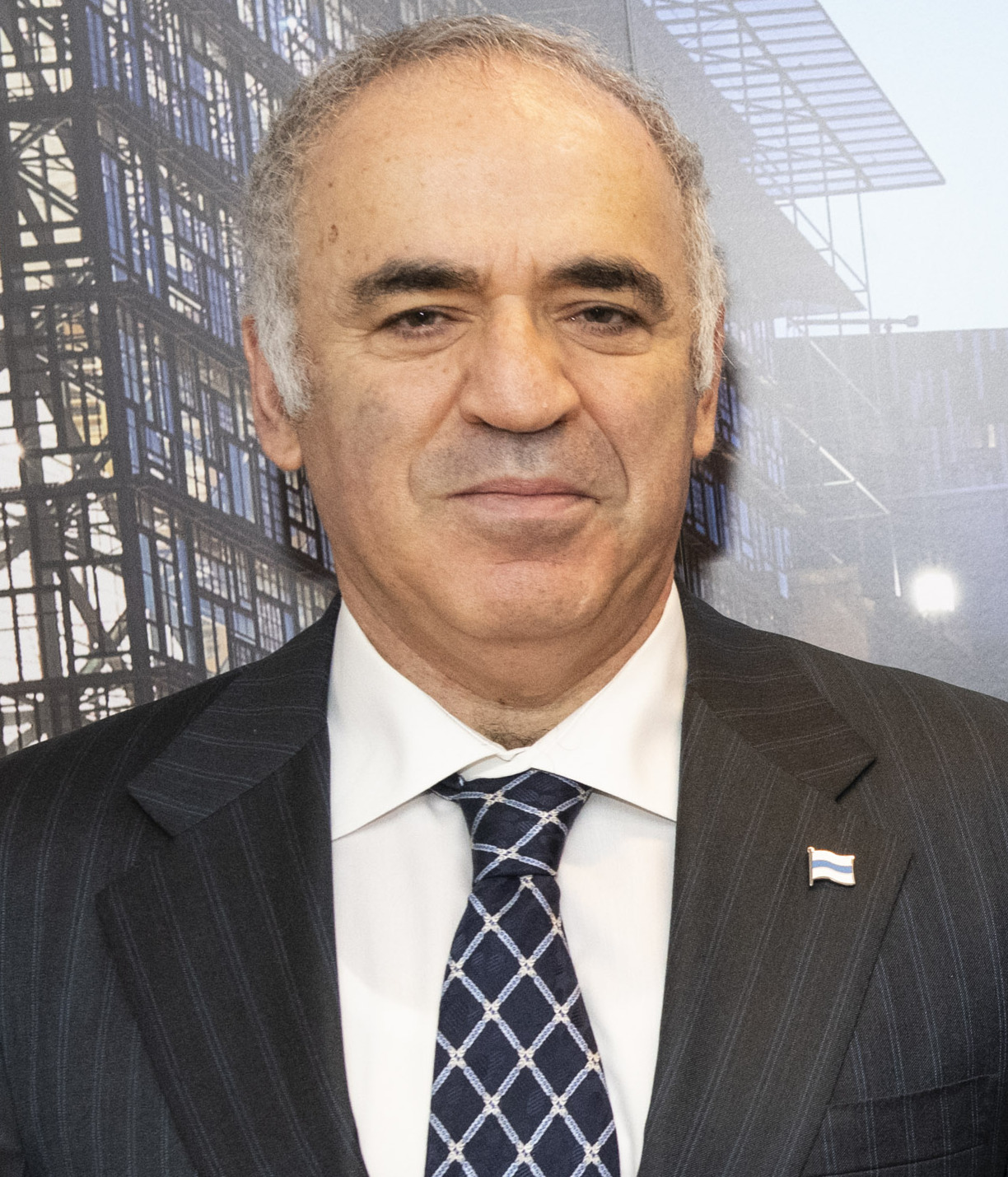
Garry Kasparov, the former world chess champion who has spent more than a decade as one of the Kremlin's most prominent exiled critics, said Wednesday that American and Lithuanian security services have warned him his life is in danger, following the unsealing last month of federal charges describing a Russian intelligence network that allegedly plotted to assassinate opposition figures in the United States and Europe.
In a post on Substack reported by Reuters, Kasparov, 63, said he and Ivan Tyutrin, his co-founder of the Lithuania-based Free Russia Forum, had not been told they were explicit targets of the alleged plot but had been contacted directly by intelligence officials. "We were, however, warned by security services in Lithuania and the US that our lives were in danger and that we should take precautions," he wrote. He added that he intended to keep up his activism: "I will not stop and I will not hide … I will continue to do everything I can to rally the free world against Putin's murderous dictatorship."
A network accused of recruiting killers
The warnings follow the September 15 unsealing of an indictment filed in federal court in Manhattan charging five men with conspiring to finance terrorism and, in three cases, with conspiracy to commit murder for hire. Prosecutors named the defendants as Yuri Khrameev, 63, described as a former colonel in Russian intelligence; his son Kirill Khrameev, 27, identified as an officer of Russia's FSB security service; Cuban nationals Oemis Romagoza Durruthy and Yaidel Delgado Suarez, both 35; and Angel Eduardo Castro, 22, of Venezuela. All five remain at large.
According to the indictment, the network had operated since 2024, recruiting people in the United States and Europe to surveil Russian dissidents, arrange contract killings and carry out or commission acts of sabotage against civilian and military infrastructure in European countries aligned with Ukraine. In the case prosecutors describe in the most detail, the group recruited a Venezuelan man living in Brooklyn in the summer of 2026 to track a prominent Russian dissident believed to be in the Washington area, paying him roughly $1,000 to $1,500 for surveillance and offering $40,000 to carry out the killing. The recruit ultimately refused. News organizations, though not the indictment itself, have identified that intended victim as Ilya Ponomaryov, a dissident who divides his time between Kyiv and Washington.
A separate strand of the indictment describes an alleged 2025 plot in Europe in which Kirill Khrameev is said to have offered an American recruit $25,000 to kill a Kremlin critic living in Vilnius, a figure widely reported to be Tyutrin. Bashkir independence activist Ruslan Gabbasov, who has separately told Lithuanian investigators he found a tracking device on his car, was also reportedly discussed by the network as a target.
Officials describe a global reach
Attorney General Todd Blanche announced the charges in a Rose Garden appearance on September 15, and the Justice Department's public account of the case quoted Assistant Attorney General for National Security John Eisenberg saying the defendants "operated as part of a global assassination network that reached into the United States." FBI Director Kash Patel said the charges "expose the lengths to which our adversaries will go to silence its critics," calling the plot evidence of "the grave threat transnational repression poses to the lives and freedoms of all who challenge authoritarian regimes." Each defendant faces up to 20 years in prison on the terrorism-financing count alone if ever apprehended and convicted; none has been arrested, and Russia does not extradite its nationals.
Part of a wider pattern
Kasparov and Tyutrin are only the latest in a growing list of Kremlin opponents in the West who say they have been targeted. Russia designated Kasparov a "foreign agent" and later listed him among "terrorists and extremists" after he left the country in 2013; Ponomaryov, a former State Duma deputy who broke with Moscow over the 2014 annexation of Crimea, has said the case marks an escalation. "America was previously considered safe," he told reporters after details of the plot emerged. "The Kremlin is now destroying that framework."
The case also lands weeks after Poland said it had disrupted a separate Russian-directed plot to kill a Ukrainian-American citizen in Warsaw, which Prime Minister Donald Tusk called the first known instance of an attempted Kremlin-ordered killing of a US citizen on the territory of another NATO member. Lawmakers in Brussels have taken note of the broader trend: in June, the European Parliament adopted a resolution on countering transnational repression by a vote of 434 to 128, explicitly naming Russia among the states using killings, abductions, surveillance and intimidation against exiled critics, and calling on EU governments to adopt a "zero-tolerance" response.
"I will not stop and I will not hide … I will continue to do everything I can to rally the free world against Putin's murderous dictatorship."
Who is affected
The immediate circle of people named or reported as targets spans three countries: Kasparov in New York, Ponomaryov moving between Kyiv and Washington, and Tyutrin and Gabbasov in Lithuania. More broadly, the case touches the wider community of Russian exiles, journalists and opposition figures who have left the country since the 2022 invasion of Ukraine and the subsequent crackdown on dissent, many of whom rely on Western governments for protection while continuing public criticism of President Vladimir Putin. Organizations such as the Free Russia Forum, which Kasparov and Tyutrin lead, have become frequent venues for exiled Russian politicians, and the indictment's description of a network built to track such figures raises security questions for that entire milieu, not just the handful of people named in court papers.
Reaction and denial
The Kremlin has not substantively engaged with the specific allegations in the September indictment. Russian officials have in the past dismissed similar accusations as politically motivated and unsupported by evidence, and Moscow has consistently denied directing assassination plots on foreign soil, including in the 2015 killing of opposition leader Boris Nemtsov and the 2006 poisoning of former agent Alexander Litvinenko in London, cases Western governments have linked to Russian state actors. Prosecutors have not disclosed whether they have identified the specific officials within Russia's intelligence services who directed the alleged network beyond the two Khrameevs.
Kasparov's public confirmation of the warnings is notable in itself: targets of suspected state-backed plots are often told privately by security services and do not go public. His decision to do so, paired with his vow to continue his advocacy work, is likely to keep pressure on both Washington and Vilnius to show visible protective measures and on European governments more broadly to act on the Parliament's June resolution.
What happens next
With all five defendants in the US case still at large and no extradition treaty with Russia in force, prosecutors face the prospect of a case that could sit dormant for years unless a defendant is detained while traveling outside Russia, a pattern seen in other Western indictments of Russian intelligence operatives. Lithuanian authorities, who have separately prosecuted more than a dozen suspects this year in connection with plots against activists on their soil, are expected to continue parallel investigations into the threats against Tyutrin and Gabbasov. For Kasparov, the near-term change is practical rather than legal: heightened security precautions, continued public advocacy, and a renewed test of how far Western governments are willing to go to protect dissidents the Kremlin has marked as enemies.

South Korea's Exports Hit Record $120.9 Billion as AI Chip Boom Accelerates

G20 trade ministers wrap Milwaukee summit as tariff tensions simmer

Flydubai Co-Pilot Stabs Captain, Tries to Crash Israel-Bound Jet; Passengers Wrestle Back Control
