Navi Pillay Wins 2026 Nobel Peace Prize for Defense of International Law
The Norwegian Nobel Committee honoured the South African jurist and former UN human rights chief for a career spanning the anti-apartheid struggle to the Rwanda and Myanmar genocide tribunals, in an award overshadowed by her recent chairing of a UN inquiry that found Israel committing genocide in Gaza.
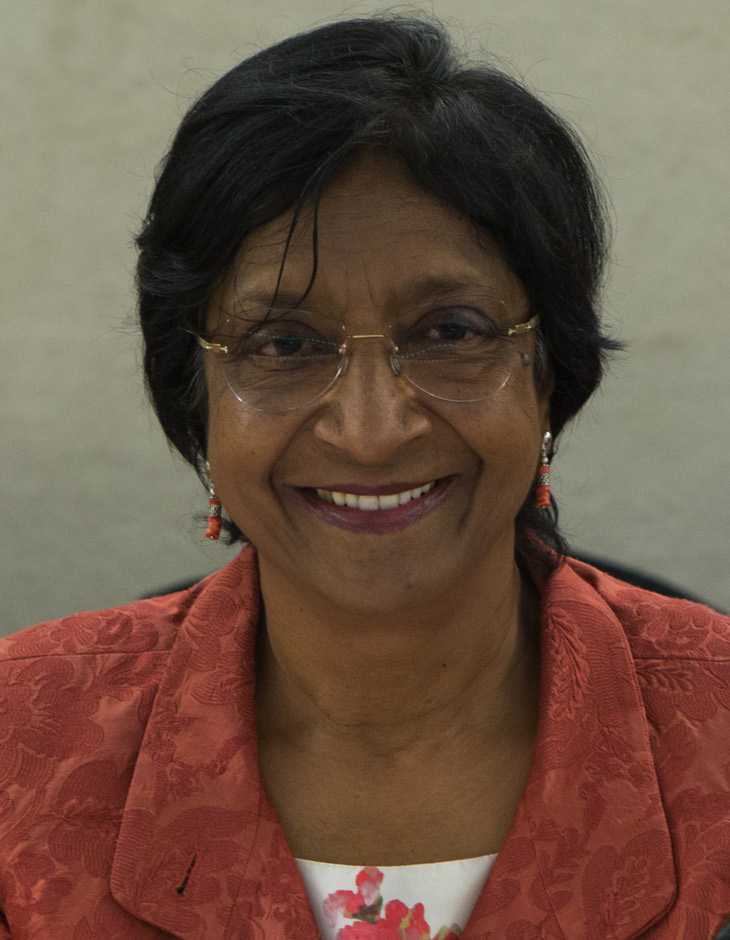
The Norwegian Nobel Committee awarded the 2026 Nobel Peace Prize on Friday to Navanethem "Navi" Pillay, the South African jurist who has spent six decades moving between the front lines of her country's anti-apartheid struggle and the bench of the world's highest war-crimes tribunals. The committee said it honoured her for her efforts to promote peace and international law, describing her as someone who "with exceptional courage and integrity has led the way towards a more comprehensive global legal order."
Pillay, 85, learned of the award while attending an event in Nuremberg, the German city where the post-war tribunals that first codified crimes against humanity were held. She told reporters there that she initially thought the news "must be a joke" and, as a lawyer and a judge, wanted to verify it before reacting. She later dedicated the honour to "all of the survivors of international crimes."
The numbers
The Norwegian Nobel Committee selected Pillay from a field of 287 candidates for the 2026 prize, comprising 208 individuals and 79 organisations. The prize carries a cash award of 12 million Swedish kronor, roughly $1.2 million, along with a gold medal and diploma to be presented at a ceremony in Oslo on December 10. This year's prize is the 125th Nobel Peace Prize since the award was first given in 1901; the committee has declined to make an award at all on 19 occasions over that span.
A career that began under apartheid
Pillay was born in 1941 to a family of Indian Tamil descent in Durban, under South Africa's system of racial segregation. In 1967 she became the first woman to open a law practice in what was then the province of Natal, and went on to defend Nelson Mandela and other activists prosecuted by the apartheid state. She was later the first woman of colour appointed to South Africa's High Court.
Her international career, detailed in the Nobel Committee's biographical notes on this year's laureate, took her to the UN International Criminal Tribunal for Rwanda, where she served as a judge and later as president, and where the tribunal established for the first time that rape and sexual violence could constitute both crimes against humanity and genocide. She subsequently sat as a judge on the International Criminal Court and, from 2008 to 2014, served as the United Nations High Commissioner for Human Rights. She is currently an ad hoc judge at the International Court of Justice case in which Myanmar stands accused of genocide against the Rohingya.
The Gaza finding that shadowed the announcement
Until this year, Pillay chaired the UN Independent International Commission of Inquiry on the Occupied Palestinian Territory, a body established by the Human Rights Council and separate from the UN Secretariat. Last September, the commission she led concluded that Israel was committing genocide in Gaza, finding that senior Israeli officials, including Prime Minister Benjamin Netanyahu, had incited its commission. Israel rejected the findings as politically motivated and declined to cooperate with the inquiry.
The Nobel committee's chair, Jørgen Watne Frydnes, said at the announcement that the panel was not taking a position on whether genocide had occurred in Gaza, calling that a matter for international courts to determine, and that the committee had "great faith" in Pillay's professionalism and integrity as the commission's chair. The citation itself does not mention Gaza by name, instead praising her broader record of enlarging "the scope and impact of international law" through decades on the bench.
The choice nonetheless drew an immediate rebuke from Jerusalem. Israel's foreign ministry said the award had legitimised "anti-Israel hatred and prejudice" and suggested Pillay would be a leading candidate for a prize recognising falsehoods. The UN's human rights chief, Volker Türk, took the opposite view, calling the award "a collective win for human rights and for all those seeking justice and accountability."
Who is affected
The award lands at a moment when the institutions Pillay has served — the International Criminal Court, the International Court of Justice and the ad hoc tribunals that preceded them — face sustained political pressure, including sanctions the United States has imposed on ICC officials and judges over the court's investigations into Israeli and American conduct. South Africans connected to the anti-apartheid legal movement, survivors of the Rwandan genocide whose cases Pillay helped prosecute, and Palestinian and Israeli communities watching the unresolved Gaza litigation at the ICJ and ICC are among those most directly tied to her record. More broadly, the committee framed the prize as a message to judges and prosecutors worldwide who it said are increasingly facing sanctions and attacks for pursuing accountability cases against powerful states.
Reaction
Beyond Israel's objection, reaction to the award was largely celebratory. South African President Cyril Ramaphosa called the award "a profound tribute to the veteran jurist's courage, integrity and lifelong commitment to justice," while European Commission President Ursula von der Leyen congratulated Pillay for confronting "some of humanity's darkest chapters." ICC President Tomoko Akane said the recognition "carries particular significance" given the pressures currently facing the international legal order.
"This award strengthens my conviction that we must stand together in defence of the rule of law, in defence of independent courts, and an international legal order based on principle," Pillay said after the announcement.
Pillay also used the moment for levity, joking to applause from a crowd in Nuremberg that "if you clap a little bit more, I may share this prize with Trump" — a reference to US President Donald Trump's public campaign for the honour, after Venezuelan opposition figure María Corina Machado, last year's laureate, presented Trump with her own medal following the fall of Nicolás Maduro's government in January.
What happens next
The formal prize ceremony will take place in Oslo's City Hall on December 10, the anniversary of Alfred Nobel's death, alongside the other 2026 Nobel laureates. Pillay's term on the Gambia v. Myanmar case at the ICJ continues, as does the broader push by rights groups for the ICC and ICJ to advance cases connected to the Gaza war and other conflicts her former commission examined. Analysts who study the prize's history noted that past peace laureates, from Mandela to the various UN institutions previously honoured, have had mixed records in translating the recognition into immediate policy change, and this year's award is unlikely to alter the positions of Israel or the United States toward the international courts Pillay has spent her career building.

UN Security Council Adopts First Resolution on Children, War and the Digital Age

Drone strike on disputed Abyei market kills dozens as UN warns death toll will keep rising

Portugal Arrests 55 as Housing Protesters Retake Cleared Squares
