South Korea's Exports Hit Record $120.9 Billion as AI Chip Boom Accelerates
Semiconductor shipments crossed $60 billion in a single month for the first time in September, putting Seoul within reach of $1 trillion in annual exports as memory-chip prices keep climbing.
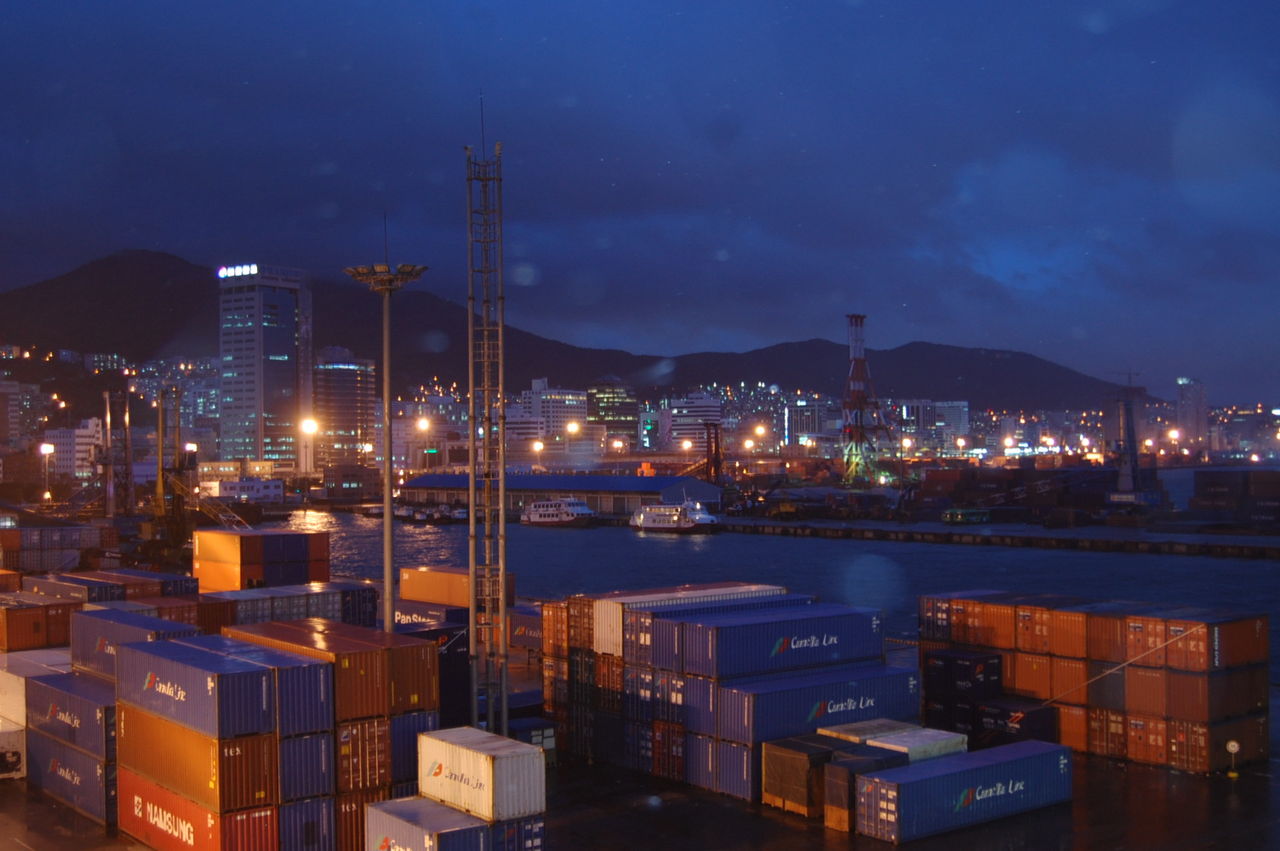
South Korea's exports surged to a record $120.94 billion in September, the first time monthly shipments have topped $120 billion, as a global boom in artificial-intelligence infrastructure drove unprecedented demand for the country's memory chips. The figure, up 83.5 percent from a year earlier, was released Thursday by the Ministry of Trade, Industry and Resources, which compiles the monthly data from customs clearance records.
Imports rose 26.0 percent to $71.09 billion, leaving a trade surplus of $49.85 billion — also a record and the first month the surplus has exceeded $40 billion. Daily average exports, a figure economists watch to strip out calendar effects, came to $5.63 billion, more than double the year-earlier pace.
The numbers
Semiconductors were the engine of the surge. Chip exports reached $60.3 billion in September, up 262.8 percent from a year earlier and the first time the category has crossed $60 billion in a single month, according to shipment data cleared through the Korea Customs Service. Memory chips — the high-bandwidth and DRAM products used to train and run large AI models — accounted for most of that gain, while sales of system chips grew more modestly.
Behind the dollar figures is a sharp rise in prices rather than volume alone. The going rate for a 16-gigabit DDR5 module rose from $37.50 in May to $48.00 in September, while 128-gigabit NAND flash climbed from $26.50 to $30.60 over the same stretch, a price trajectory consistent with broader export-price trends tracked on the government's national statistics portal. Samsung Electronics and SK Hynix, the world's two largest memory chipmakers, have both reported selling out capacity months in advance as hyperscale cloud operators race to build out data centers.
- China: $26.01 billion, up 122.7 percent
- United States: $24.33 billion, up 137.0 percent
- ASEAN: $21.29 billion, up 92.6 percent — the first time this bloc has exceeded $20 billion
- European Union: $8.65 billion, up 20.9 percent
For the first nine months of the year, cumulative exports reached $814.5 billion, up 56.8 percent, already exceeding all of 2025's $709.3 billion total. The nine-month trade surplus stands at $252.5 billion. The Korea Times reported that the ministry now needs roughly $185.5 billion more in the final quarter to cross $1 trillion in annual exports for the first time.
How the chip boom took hold
September marked the 12th consecutive month of year-on-year export growth and the third month this year above $90 billion, following a record $102.0 billion in June and $98.25 billion in August. The acceleration traces to the rollout of generative AI systems by major technology firms over the past two years, which has driven demand for the kind of high-bandwidth memory chips that feed AI accelerators. Xinhua noted that the price of memory products has risen for eleven straight months, a cycle industry analysts describe as the tightest supply of DRAM and NAND in more than a decade.
Not every sector shared in the gains. Automotive exports fell 5.5 percent in September after a steeper 29.8 percent drop in August, which the ministry has attributed to shifting production schedules and brief labor disruptions at assembly plants. Shipbuilding exports have also been volatile month to month, reflecting the lumpy delivery schedules of large vessel orders rather than a change in demand.
Who stands to gain, and who is exposed
The export boom is concentrated in a narrow slice of the economy. Semiconductors alone now make up roughly half of all outbound shipments, a dependence that leaves South Korea's trade balance unusually sensitive to swings in global chip prices and to the capital-spending plans of a handful of American cloud computing companies. Workers and suppliers tied to Samsung's and SK Hynix's fabrication plants, concentrated around Pyeongtaek and Icheon, are the most direct beneficiaries, while firms in combustion-engine autos and traditional shipbuilding face a comparatively sluggish year.
Internationally, the numbers are a leading indicator of how much of the AI infrastructure build-out is actually reaching Asian chip suppliers. Exports to the United States rose faster than to any other major partner tracked separately, reflecting both chip shipments tied to American data-center projects and a wave of South Korean investment commitments in U.S. manufacturing. According to the Aju Business Daily, shipments to Southeast Asian markets also crossed $20 billion for the first time, underscoring how regional assembly hubs are absorbing a growing share of Korean components.
What officials are saying
Trade, Industry and Resources Minister Kim Jeong-gwan said the pace of growth put the government's long-standing goal of $1 trillion in annual exports within reach for the first time, while flagging risks that could still interrupt the run.
"Annual export achievement of $1 trillion is now anticipated," Kim said, cautioning that protectionist trade measures and tensions in the Middle East remain significant variables.
Reaching that threshold would put South Korea alongside the United States, China and Germany as one of only a handful of economies to export $1 trillion worth of goods in a single year, a milestone the ministry has framed as evidence that its industrial base has shifted decisively toward semiconductors and AI-related hardware.
What happens next
With three months left in the year, the ministry's own arithmetic shows exports would need to average well above $60 billion a month to hit the $1 trillion mark, a pace broadly in line with recent months but not guaranteed. Analysts are watching several swing factors: whether memory chip prices keep climbing as suppliers ration scarce manufacturing capacity, whether Washington follows through on tariff threats that have unsettled exporters across Asia, and whether a broader slowdown in China's economy dents demand for Korean intermediate goods. The ministry said it would continue monitoring those risks as it finalizes support measures for smaller exporters squeezed by a stronger won and higher shipping costs heading into the fourth quarter.
Ministry of Trade, Industry and Resources — September 2026 Export-Import Trends
The Korea Times — Korea's Sept exports hit record $120.9 bil. on robust chip sales
Xinhua — S. Korea's exports hit record high in September on record-breaking AI chip demand
Aju Business Daily — Korea's Sept exports hit fresh monthly high, annual top $800B

G20 trade ministers wrap Milwaukee summit as tariff tensions simmer

Flydubai Co-Pilot Stabs Captain, Tries to Crash Israel-Bound Jet; Passengers Wrestle Back Control

Pakistani airstrikes in Afghanistan kill 22 militants, Islamabad says; Kabul reports nine civilians dead
