Yemen's Deadliest Week in Years Pushes Fighting Toward the Red Sea's Narrowest Gate
Government forces and Iran-backed Houthi fighters have killed nearly 190 people in Taiz and Hodeidah provinces this week, the worst clashes since a 2022 truce began collapsing, as Houthi units press toward high ground overlooking the Bab al-Mandab strait.
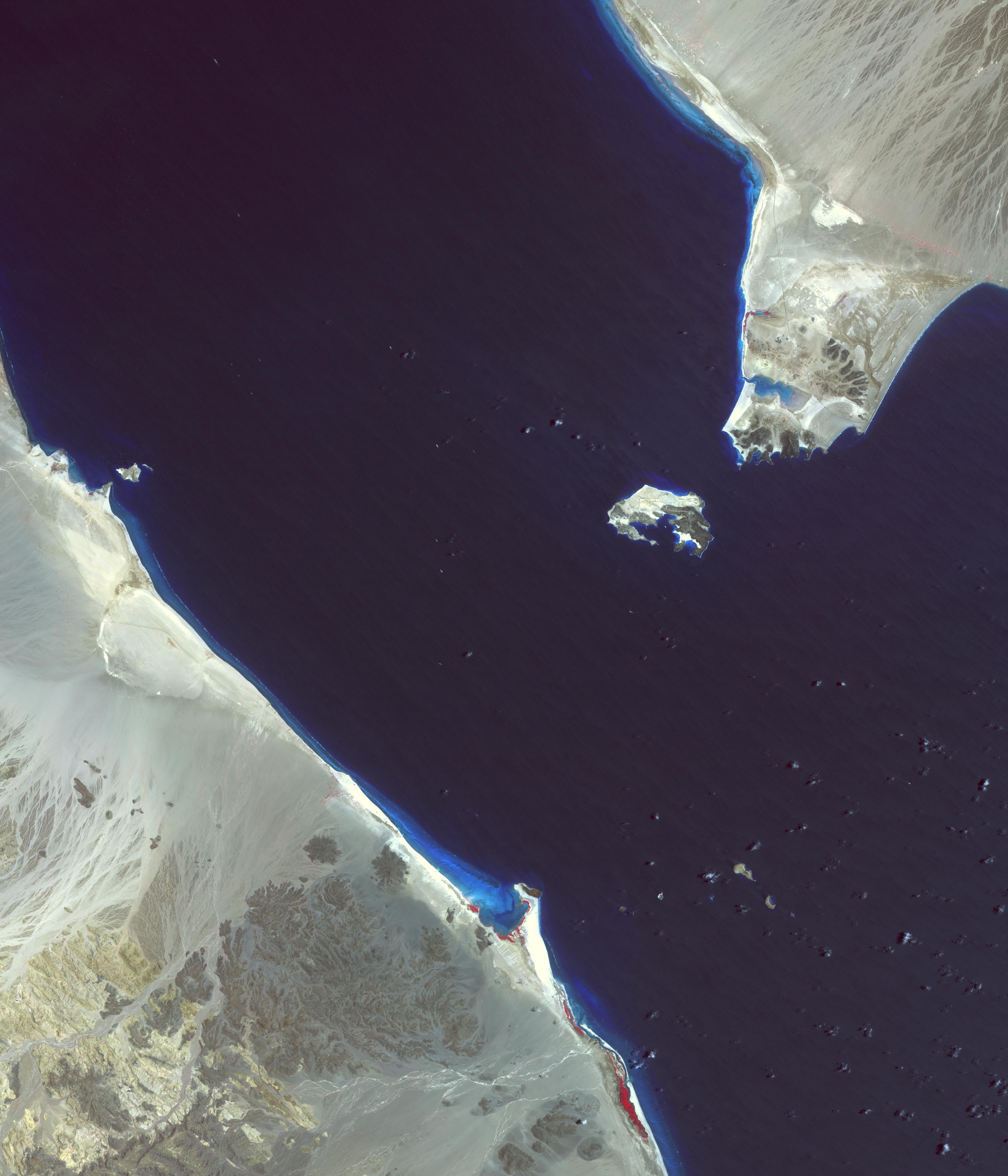
Yemen's government and the Iran-backed Houthi movement fought their bloodiest week of the year along the western coast this week, with the death toll from clashes in Taiz and Hodeidah provinces reaching at least 189 by Saturday, military and medical sources told Agence France-Presse. The surge in violence, the worst since a UN-brokered truce began fraying in 2023, has pushed Houthi units toward high ground overlooking the Bab al-Mandab strait, the narrow Red Sea gateway through which a large share of the world's seaborne oil and container traffic still passes.
Separately on Saturday, a Houthi ballistic missile struck a crowded stretch of the Heijah al-Abd road south of Taiz city, killing at least four civilians and wounding nine others, according to Yemen's state-run Saba news agency, cited by Al Jazeera. The strike landed as government troops said they had seized high ground on the Haifan front that overlooks Houthi supply routes, while Houthi forces claimed a military base further west in Taiz province.
The Numbers
Of the 189 dead recorded through Saturday, AFP's sources counted 66 government soldiers, 62 Houthi fighters and one civilian, a toll that had stood at roughly 129 only days earlier. The count is on top of a separate round of fighting on September 3, when at least 25 to 30 combatants were killed on front lines between the port town of al-Makha, also known as Mocha, and Taiz city, according to Xinhua and Al Jazeera reporting that day. Houthi forces fired at least 14 ballistic missiles and multiple drones at populated districts in Taiz and Hodeidah provinces earlier in the week, Yemen's Army Media Centre said.
The humanitarian toll is climbing just as fast. Nearly 1,800 families, on the order of 10,000 to 12,000 people, fled their homes in Taiz province in roughly 48 hours this week, aid workers told Al Jazeera, as shelling emptied displacement camps in the Maqbanah and Jabal Habashi districts. In Hodeidah, dozens more families were driven from the Hays district by repeated shelling. Those figures sit on top of a nationwide caseload that United Nations agencies put at roughly 5.2 million internally displaced people and more than 22 million Yemenis, out of a population of about 34 million, in need of humanitarian assistance even before this week's fighting, according to Yemen's Ministry of Social Affairs and Labour, cited by The National.
How the Truce Unraveled
Yemen has been split since 2014 between the internationally recognized government, now led by an eight-member Presidential Leadership Council based in Aden, and the Houthi movement, or Ansar Allah, which controls Sanaa and most of the densely populated north. A UN-mediated truce reached in April 2022 halted major front-line fighting for more than four years even after its formal terms expired, but the ceasefire has been eroding since 2023, when Houthi missile and drone attacks on shipping in the Red Sea, launched in solidarity with Palestinians in Gaza, drew US and allied airstrikes on Yemen and hardened battle lines at home.
That erosion accelerated sharply this summer. The UN special envoy for Yemen, Hans Grundberg, told the Security Council in August that Houthi attacks in Marib and Hadramawt provinces, along with renewed strikes on Red Sea shipping, had raised the odds of all-out war to their highest point since the 2022 truce took hold. Briefing the Council on August 13, Grundberg said intensifying military activity on multiple fronts was pulling Yemen toward what he called a "vortex" of wider regional conflict, according to a UN press summary of that session, in which Council members including Bahrain and Pakistan condemned Houthi attacks on commercial vessels.
"Yemen today faces a greater risk of renewed large-scale conflict than at any point since the UN-brokered truce of April 2022," Grundberg said in an August 7 statement.
This week's fighting marks the clearest sign yet that his warning is being borne out. Government officials say the current push is a Houthi attempt to sever the coastal road linking Taiz city to al-Makha, cutting the government's supply line to the coast and opening a path to high ground above Bab al-Mandab, from which the group could threaten shipping more directly than it already does from further north. Rashad al-Alimi, chairman of the Presidential Leadership Council and Yemen's internationally recognized head of state, warned that any Houthi push toward the strait would become, in his words reported by Gulf News, a "harsh war of attrition" for the group, vowing that government forces would not allow Iran's objectives for the waterway to be realized.
Who Is Affected
The immediate toll falls on residents of Taiz, Yemen's third-largest city and a longtime front line that has been informally besieged by Houthi forces since 2015, and on the coastal communities around Hodeidah and al-Makha. Displaced families described being forced to move with only what they could carry. Communications have also suffered: aid workers said phone and internet networks were down across parts of the combat zone this week, hampering both rescue efforts and reporting on casualties.
The strain extends well beyond the front lines. Yemen already has one of the world's largest humanitarian caseloads, and aid agencies operating in Houthi-held territory have scaled back in recent months over security incidents, including raids on UN premises and the detention of staff. A renewed nationwide war would compound a crisis in which, as of earlier this year, roughly 18 million Yemenis were acutely food insecure, according to UN-linked assessments cited by Yemeni officials this week.
Beyond Yemen, the fighting's geography matters to a much wider public. Bab al-Mandab is one of the world's most important oil and shipping chokepoints: the US Energy Information Administration has estimated that more than 6 million barrels a day of crude oil and refined products have moved through the strait in normal years, most of it bound from Gulf and Asian suppliers toward Europe, according to the EIA's chokepoints analysis. Container traffic through the adjoining Suez Canal route has already been depressed for two years by Houthi attacks on commercial vessels; a Houthi foothold on high ground overlooking the strait would give the group a further option to threaten passing ships without relying solely on missiles and drones fired from further inland.
The Houthi side has framed the offensive as retaliation for government and Saudi-led coalition strikes rather than as territorial conquest. Yahya Saree, military spokesman for the Houthi-led armed forces, said this week that drone and missile strikes were targeting "Saudi enemy gatherings and vehicles on several fronts," a formulation the group has used consistently to describe its campaign against government-aligned units it links to Riyadh.
Government officials, in turn, say they have gone on the offensive rather than simply defending existing lines, reporting more than 100 military operations against Houthi positions in a single recent 24-hour period. International reaction has been more muted than the scale of the fighting might suggest, with attention in the region this week dominated by US-brokered diplomacy over Ukraine and separate US strikes on Iran-linked targets in the Gulf. Even so, aid workers on the ground told Al Jazeera that families remain trapped directly on the front lines in urgent need of safe passage, and that emergency relief stocks in the area are already severely depleted.
What Happens Next
Neither side has signaled willingness to step back. Government commanders have described their counteroffensive around the Haifan front and south of al-Jarrahi as an attempt to reverse Houthi gains rather than a one-off response, suggesting the fighting could continue for days or weeks. Houthi leaders have given no indication they intend to abandon the push toward the coast, and their attacks this week extended across a wide arc from Marib in the east to Hodeidah on the Red Sea, complicating any quick, localized ceasefire.
Diplomatically, the burden falls again on Grundberg's office, which has spent months warning that a negotiated "off-ramp" remains available even as the window for one appears to be narrowing. The Security Council is due to receive further briefings on Yemen this month. For now, residents of Taiz and Hodeidah are the ones absorbing the consequences of a truce that, in practice if not on paper, appears to have finally given way.
Gulf News, citing AFP military and medical sources, "Yemen sees worst clashes in years as fighting kills 129" / updated toll of 189, Sept. 5, 2026.
Al Jazeera, "At least four killed in Houthi missile strike near Yemen's Taiz," Sept. 5, 2026, and "Houthi attacks on Yemen's Taiz escalate, triggering new displacement wave," Sept. 4, 2026.
The National, "Yemen government appeals to support thousands of people displaced by renewed war," Sept. 5, 2026.
UN Office of the Special Envoy for Yemen (OSESGY) and UN Security Council press summary (press.un.org), statements of Aug. 7 and Aug. 13, 2026; US Energy Information Administration chokepoints analysis.

Drone strike on disputed Abyei market kills dozens as UN warns death toll will keep rising

Portugal Arrests 55 as Housing Protesters Retake Cleared Squares

Britain to Send RAF Typhoon Jets to Shield Saudi Arabia From Houthi Strikes
