OPEC+ holds oil output steady for October as Strait of Hormuz standoff drives prices higher
The producer group paused six straight months of supply increases as the Strait of Hormuz remains effectively closed, sending Brent crude near $96 a barrel and pushing U.S. diesel to a record price at the pump.
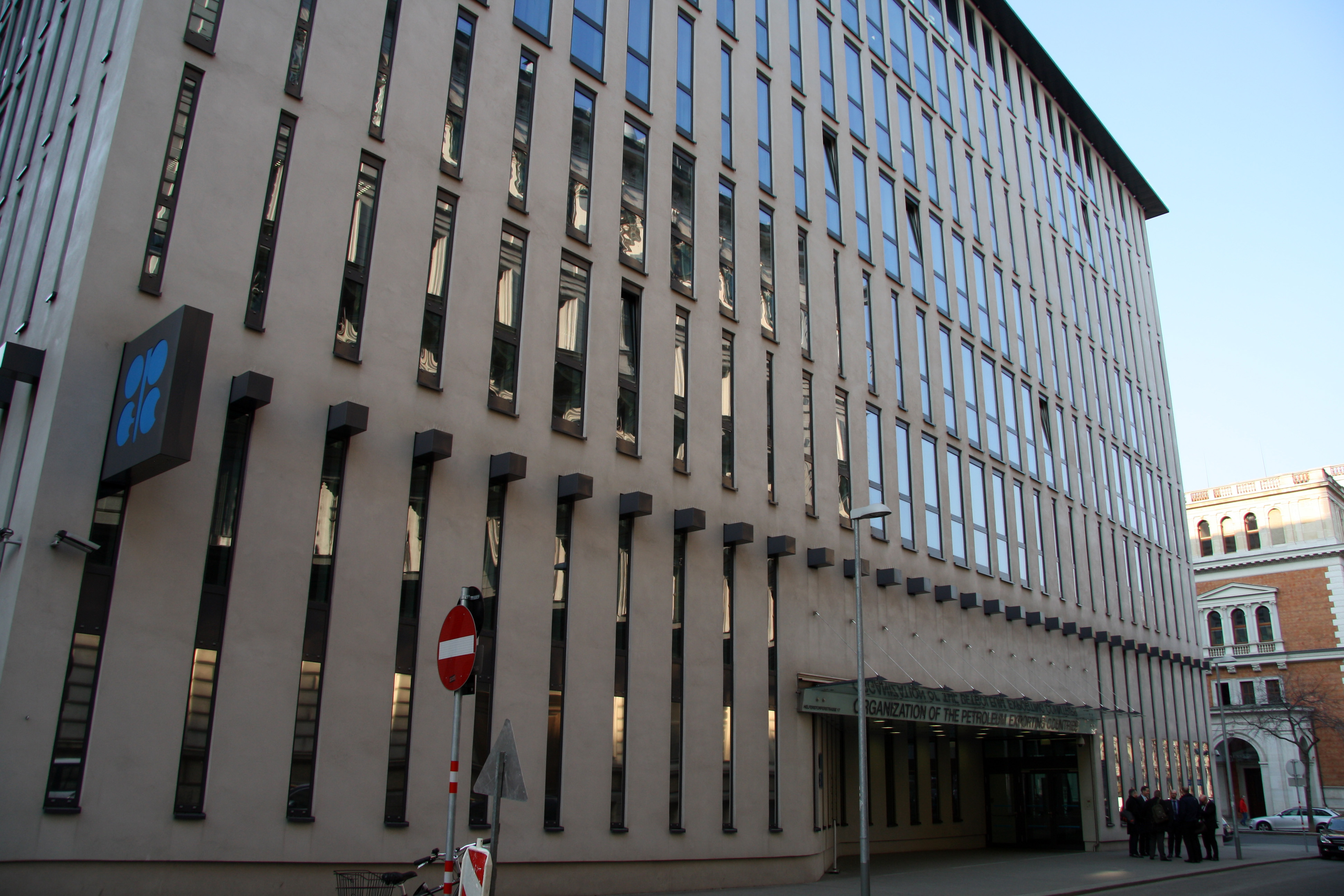
OPEC+ agreed to hold oil production quotas unchanged for October, pausing a run of six consecutive monthly output increases as the Strait of Hormuz remains effectively shut and prices climb toward levels not seen since the spring. The decision, reached in an online meeting of the group's seven core members, marks the first month since April that the producer group has not added barrels back to the market.
Saudi Arabia, Russia, Iraq, Kuwait, Algeria, Kazakhstan and Oman took part in the call, which Reuters reported had been expected for days as delegates signaled they wanted to avoid adding supply into a market already struggling to move crude out of the Persian Gulf. The pause leaves the group's formal quotas where they landed after the 188,000 barrel-a-day increase OPEC+ approved in August, which completed the unwinding of roughly 1.65 million barrels a day in voluntary cuts the group first imposed in 2023.
The numbers
Brent crude was trading near $96 a barrel heading into the meeting, up roughly 8 percent for the week, while West Texas Intermediate hovered around $91, according to CNBC's markets coverage. The rally has been driven less by OPEC+ policy than by the physical disruption in the Gulf: the Strait of Hormuz, which normally carries about a fifth of the world's crude oil and liquefied natural gas, has been effectively closed since fighting between the United States and Iran resumed in late February, with daily tanker transits falling from more than 100 to a handful.
The squeeze has already reached American filling stations. Retail diesel hit a national average of $5.85 a gallon this past week, a record that eclipses the previous high set in mid-2022, pushing up freight and delivery costs across the economy. On the supply side, the Energy Information Administration's weekly inventory report showed U.S. commercial crude stocks at 411.7 million barrels as of the week ended August 28 — about 6 percent below the five-year seasonal average — even as refiners ran at 96.1 percent of capacity to keep up with demand.
How the standoff developed
OPEC+ spent the first eight months of 2026 doing the opposite of what it did this week, steadily restoring output that had been idled since 2023 as it tried to claw back market share from U.S. shale producers. That strategy assumed a roughly stable Middle East. It has instead unfolded against a war that has taken more than 11 million barrels a day of regional production offline at points this year, according to EIA's most recent long-range forecast, which flagged the Hormuz closure as the dominant force in its price outlook months before this week's escalation.
The group itself has also changed shape. The United Arab Emirates, an OPEC member for nearly six decades, exited the wider OPEC+ coalition in May, leaving the seven-country "V8" minus one to manage a market where the physical chokepoint, not the cartel's spreadsheet, is setting prices. Adding to the uncertainty, OPEC+ has yet to resolve a more consequential and slower-moving dispute: a review of each member's production capacity that will set new baseline quotas for 2027, a process expected to dominate the group's agenda once the immediate crisis eases.
Who is feeling it
The immediate cost is landing on anyone who buys diesel or jet fuel. Trucking and logistics companies are passing higher fuel surcharges through to shippers, and airlines are watching jet-fuel costs rise in tandem with crude. Domestically, the price spike is a mixed blessing for U.S. shale producers in Texas and North Dakota, who benefit from higher realized prices even as elevated diesel costs raise their own drilling and completion expenses. Gulf producers, meanwhile, are collecting higher revenue per barrel on the oil they can still export, partially offsetting the volumes lost to the closed strait.
Petrochemical producers and airlines, which rely on stable jet-fuel and feedstock costs to plan months ahead, are among the corporate customers most exposed to the spike, since both industries typically hedge fuel costs only partially and pass the rest through to customers with a lag. For the Federal Reserve, the timing is awkward. Policymakers meet September 15-16 to weigh an interest-rate move, and a sustained run-up in energy prices complicates any read on where headline inflation is heading just as officials debate whether recent labor-market strength gives them room to hold rates or cut.
Oil analysts have been quick to note that the group's decision, while closely watched, has limited practical effect while the strait remains blocked.
"OPEC+ currently has very limited power over the physical oil market," said Jorge Leon, an analyst at Rystad Energy. "The group can change production targets on paper, but it cannot guarantee that those barrels will be produced or actually reach the market."
That view was echoed elsewhere in the market commentary that followed the announcement, with several analysts framing the "unchanged" decision less as a deliberate policy choice than as an acknowledgment that there is little additional oil OPEC+ members can realistically move to market while the Gulf shipping lane stays closed.
What happens next
OPEC+ is scheduled to reconvene on October 4 to revisit the question, and the group's language left open the possibility of further pauses if the strait remains impassable. In the nearer term, the EIA's next Short-Term Energy Outlook, due September 9, will give the first official U.S. government price forecast to fully incorporate this week's price surge and the diesel record. Traders are also watching for any sign of a diplomatic breakthrough between Washington and Tehran that could reopen the strait — the single variable that, more than any OPEC+ quota, will determine whether crude keeps climbing or starts to retreat. Until then, analysts say, the group's monthly meetings are likely to keep producing the same headline: quotas unchanged, with the real decisions being made by warships and tanker captains in the Gulf rather than by ministers on a video call.

CoreWeave upsizes convertible bond sale to $3.7 billion as AI data-center costs mount

Bank of England Holds Rates at 3.75% as Three Policymakers Push for Immediate Hike

SEC clears five-year path for trading tokenized U.S. stocks on blockchain venues
