Bose recalls 635,000 speaker batteries after reports of overheating and fire
The Consumer Product Safety Commission says lithium-ion battery packs sold with Bose's S1 Pro and S1 Pro+ portable speakers can overheat and ignite. The recall landed the same day regulators warned about a second, unrelated battery product whose online sellers have not agreed to pull it from shelves.
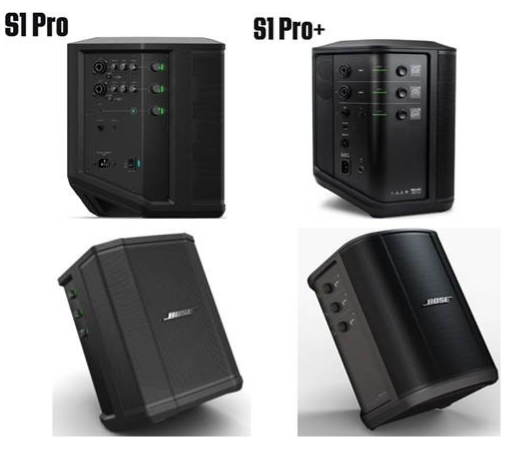
Bose Corporation is recalling roughly 635,000 lithium-ion battery packs sold with its S1 Pro and S1 Pro+ portable Bluetooth speaker systems after the packs were found to overheat and, in some cases, catch fire, the U.S. Consumer Product Safety Commission announced Thursday.
The recall notice covers battery packs sold both as part of the all-in-one speaker systems and separately as replacement accessories, going back to December 2017. No injuries have been reported, but the agency says it has received seven reports of packs melting, smoking or catching fire, six of which caused property damage.
The scope of the recall
The S1 Pro and S1 Pro+ are compact, battery-powered public-address speakers that Bose markets to musicians, presenters, fitness instructors and small businesses as a portable alternative to a full sound system, a use case the company and audio retailers such as Pro Acoustics USA describe as covering everything from classrooms to weddings. About 634,759 of the recalled battery packs were sold in the United States and another 35,400 in Canada, according to CPSC. Individual battery packs retailed for $100 to $160, while complete speaker systems sold with a battery included cost about $700. They were sold at Bose stores, Best Buy and other retailers, and online at Amazon, Bose.com, BestBuy.com and Walmart.com.
Consumers can identify an affected pack by the 17-digit serial number printed on a label on its underside. Packs are included in the recall if that number begins with one of seven prefixes: 083723, 078352, 084105, 078591, 078592, 084106 or 086409.
- Remove the battery pack from the speaker and stop using it immediately.
- The speaker itself can still be used safely while plugged into AC power, with the battery removed.
- Register the pack's serial number at Bose's recall site to receive a free replacement.
- Do not throw the battery in household trash or a standard recycling or retail battery-drop bin; check with a local household hazardous-waste center about safe disposal of a recalled lithium-ion battery.
Who is affected, and what Bose is offering
Bose, based in Framingham, Massachusetts, is directing owners to a dedicated recall page where they can submit a pack's serial number and request a free replacement. The company has not issued a separate public statement beyond the recall filing itself. This is not the first time Bose has recalled audio equipment over fire concerns: in 2023, the company recalled roughly 884,000 Acoustimass, Lifestyle and Companion bass modules made before 2006, after the company logged 21 reports worldwide of the modules igniting or melting, though CPSC again recorded no injuries in that case.
Because the S1 Pro line has been sold continuously since 2017 and the battery packs are also sold separately as accessories, the recall can reach owners who never registered a speaker purchase with Bose and may not see a notice unless they check the serial number themselves.
A second battery warning, and a seller that refused to act
The Bose recall was one of ten product recalls CPSC posted the same day, several involving lithium-ion batteries, underscoring how often the technology that now powers everything from power tools to toddler bottle sterilizers is also triggering safety actions. The agency separately issued a public safety warning, rather than a formal recall, for about 210,000 HAIARA-brand W5 Pro power banks sold on Amazon and Newegg since January 2025. CPSC said it has logged roughly 600 reports of fire, explosion or other thermal incidents tied to those power banks, including three burn injuries and nine reports of property damage — far more incidents than in the Bose case.
The HAIARA notice is a warning rather than a recall because, CPSC said, the manufacturer has not responded to the agency's requests, and among the Amazon sellers of the product, only one, Mitrytech, agreed to a recall; another, Woot, refused, and a third did not respond. CPSC can press for a formal recall against a manufacturer or retailer, but its leverage over third-party online marketplace sellers has been a persistent point of friction. The agency sued Amazon in 2021 over its handling of hazardous third-party listings, and in 2024 an administrative judge ordered Amazon to carry out recalls of roughly 400,000 unsafe products — including defective carbon monoxide detectors and hair dryers without shock protection — sold through its platform by independent sellers; Amazon has said it plans to appeal. Thursday's HAIARA warning shows the same dynamic persisting with battery-powered electronics specifically, a product category where a defect can turn from a nuisance into a fire within seconds.
In September, CPSC recalled about 51,000 Blue Cactus Company battery packs for reclining chairs, also sold on Amazon, after four reports of batteries overheating, smoking or igniting — another sign that battery-related recalls tied to e-commerce sellers have been a recurring feature of the agency's casework this year.
What happens next
For now, Bose's case is a conventional, cooperative recall: the company is offering free replacements and has not disputed CPSC's findings. Owners who are unsure whether their pack is covered are directed to check the serial number against the listed prefixes before continuing to use it, and in the meantime can keep using the speaker itself on wall power. Consumers who experience a battery incident with any product, Bose's or otherwise, can file a report at SaferProducts.gov, the federal database CPSC uses to track emerging hazards before they grow into recalls the size of Thursday's. CPSC gave no timetable for when the HAIARA situation might escalate from a warning into a mandatory recall order.

New York City Marathon runner's death highlights rare muscle-breakdown disorder

Flu season arrives early as a mutated H1N1 strain drives hospitalizations to a 15-year high for this point in the year

Brad's kale chips recalled nationwide after FDA confirms thallium contamination