A ferry sank off Cyprus because nobody was responsible for regulating it
The Filo Jet capsized off northern Cyprus after eight years of documented, unrepaired safety defects went unchecked by a board that had stopped functioning. That is the predictable result of a 52-year non-recognition standoff that puts the island's north outside both EU and international maritime law.
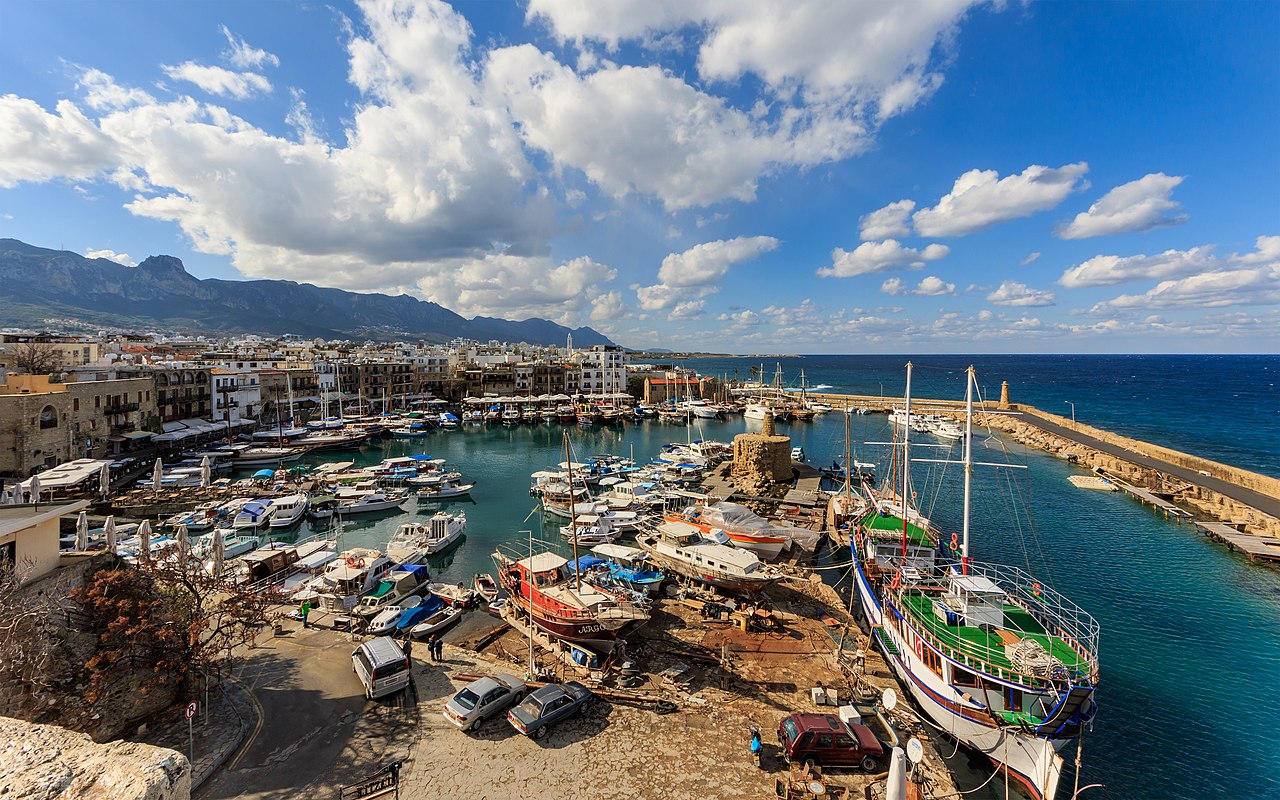
Divers are still working the wreck of the Filo Jet at 554 meters below the surface of the eastern Mediterranean, six kilometers off the harbor of Kyrenia. As of Saturday, the confirmed death toll from the ferry's capsizing stood at 13, with 15 people still unaccounted for a week after the boat went down. The catamaran had left Kyrenia for the Turkish port of Taşucu carrying 267 people, roughly double what a vessel that size is meant to hold on a good day, though investigators have not yet said crowding caused the sinking. What they have said is worse: the ferry had been declared unfit to sail eight years earlier, and the body responsible for policing vessels like it had not functioned in years.
This is not simply a story about a badly maintained boat and a captain who allegedly ignored warnings as his ship took on water. It is a story about what happens to public safety when a piece of land answers to no internationally recognized government at all. The Filo Jet sailed from a port in northern Cyprus, territory that has been outside the control of the Republic of Cyprus since 1974 and that only one country on Earth, Turkey, recognizes as a state. That fact is not incidental to the disaster. It is close to the cause of it.
What the wreck exposed
The outline of the sinking is now well established. On August 30, the Filo Jet capsized after being struck by successive waves roughly four nautical miles out, rolled over, and went down in minutes. Passengers who survived told investigators that exit doors were locked, that crew ignored early warnings about water intake, and that the captain left the vessel before ensuring passengers had. An expert report commissioned as part of the criminal probe faulted the master for failing to reduce speed once the hull began taking on water and found no distress call was sent promptly. The captain, seven crew members and the operating company's managing director have since been arrested on charges of causing death through negligence.
The more damning material concerns the ship itself. Built in France in 2001 and originally named IrisJet, the vessel changed flags repeatedly over two decades before sailing under Cyprus registration since 2024. A 2018 survey by the classification society Turk Loydu found 29 deficiencies and concluded the vessel, then still called IRIS JET, was "not fit to trade." A 2024 court ruling found those defects had gone unaddressed. Reporting on the disaster's aftermath found that the board responsible for surveying and certifying vessels flagged in northern Cyprus had not functioned for between three and five years, because retiring members were never replaced. A ferry with known engine and steering faults and missing certificates was cleared to depart with 267 people aboard because there was, in effect, no one left whose job it was to say no.
A safety regime with no sovereign behind it
It is tempting to read this as ordinary bureaucratic rot, the kind that shows up in port authorities everywhere. But the deeper problem in northern Cyprus is structural, not merely careless. The Turkish Republic of Northern Cyprus is not recognized by the United Nations, the European Union, or any state besides Turkey. The Security Council settled this decades ago: under Resolution 550 of 1984, member states are called upon not to recognize any Cypriot state other than the Republic of Cyprus and to treat secessionist attempts as legally invalid. That resolution was written to isolate a breakaway administration politically. Four decades on, it also means that administration cannot, on its own authority, accede to the international conventions that keep ferries from sinking.
The International Maritime Organization's Safety of Life at Sea Convention, the foundational treaty governing ship construction, equipment and operation, binds flag states that are IMO members. Northern Cyprus cannot be one, because it is not a state anyone but Turkey acknowledges. Nor does the other layer of oversight that might have caught the Filo Jet's defects reach that far: when Cyprus joined the European Union in 2004, the accession treaty's Protocol 10 suspended application of EU law, including the bloc's maritime safety directives and port-state inspection regime, in precisely the areas the Republic of Cyprus government does not control. The north of the island is, on paper, EU territory. In practice, it is a hole in the EU's regulatory map. A ferry leaving Limassol or Piraeus answers to Brussels and to the IMO. A ferry leaving Kyrenia answers to whichever local body happens to still be staffed, which for years was apparently none.
Who was on board
This is not an abstraction for the people who actually ride these boats. Fares between Kyrenia and the Turkish coast run roughly €40 to €60 one way, a fraction of a flight, and the route functions as the workhorse link for Turkish Cypriots and mainland Turks who commute, study, or ship goods across a stretch of water that a plane ticket would put out of reach. Asım Akansoy, an opposition member of the Turkish Cypriot assembly, made this point directly after the sinking, arguing it reflects a weakened, unstaffed state apparatus that has not conducted a census since 2011 and cannot properly inspect its own ports.
"This maritime accident is an issue that should not be viewed as an isolated incident," Akansoy said.
He added that the disaster "disproportionately harmed low-income and working-class people who tend to use maritime transport." That is the pattern in almost every ferry disaster in the developing world, and it is jarring to see it recur on the doorstep of the European Union, on a route serving a population that, under different political arrangements, would already carry EU passports and EU-standard consumer protections. The political fallout has been immediate: Turkish Cypriot Prime Minister Ünal Üstel fired his transport minister on September 2, and the minister's party responded by quitting the governing coalition, leaving the local government's parliamentary majority in doubt in the middle of the criminal investigation into its own agencies.
The counterargument, and its limits
The obvious objection is that recognition would not have saved anyone. Flagged, IMO-member, EU-regulated shipping has its own catalogue of disasters, from the Estonia to the Costa Concordia to the ferries that periodically sink in the Aegean under Greek and Turkish flags alike. Corruption, cut corners and captains who ignore warnings are not unique to unrecognized statelets; a recognized government can neglect its inspectorate just as easily as an unrecognized one. On this view, the Filo Jet is a story about one company, one captain, one lapsed local board, and generalizing to sovereignty is an overreach.
That argument proves less than it claims. Recognized states that neglect maritime safety still answer to external pressure: EU member states are subject to port-state inspection regimes, European Maritime Safety Agency audits, and infringement proceedings from Brussels when directives go unenforced — mechanisms that exist because a recognized government sits on the other end of them to be pressured. Northern Cyprus has no such counterpart. There is no Brussels desk that can open a file on it, no IMO member-state channel through which peer states apply the routine, unglamorous pressure that keeps flag registries honest elsewhere. The lapsed inspection board did not go unreplaced because Turkish Cypriot officials are uniquely careless; it went unreplaced because no external authority had standing to insist otherwise. The sovereignty gap does not manufacture negligence from nothing, but it removes the guardrails that catch negligence everywhere else, and that is precisely what the 2018 survey and the eight years of inaction that followed it show.
What should follow
Nobody serious is proposing that the international community suddenly recognize northern Cyprus to fix a ferry inspectorate; the politics of the island's division run far deeper than shipping safety, and Resolution 550 will not be revisited over this. But the fifty-two-year-old freeze on recognition should not be allowed to double as an excuse for a permanent freeze on technical safety cooperation. There is no legal reason a functional arrangement could not cover flag-state survey standards for the specific vessels running fixed routes between two IMO member states, Turkey and, notionally, Cyprus. The European Union already runs a parallel technical and financial-aid track for the Turkish Cypriot community; extending that track to fund and train an independent, professionally staffed vessel-survey board is a narrower ask than resolving Cyprus's sovereignty dispute, and a far cheaper one than another Filo Jet. Turkey, which exercises effective control over the north, bears the most direct obligation to ensure ships leaving its client territory's ports are seaworthy, and the criminal prosecution now under way should be allowed to reach up the chain of command rather than stopping at the bridge. Thirteen people are confirmed dead and fifteen more are still missing in 554 meters of water because a government nobody recognizes could not, or would not, keep a functioning safety board on the books. Recognition is a fight for diplomats. Making sure the next ferry out of Kyrenia has working brakes on its engine is not, and there is no excuse for waiting on the former to fix the latter.
Turkish Minute — Northern Cyprus ferry death toll rises to 13, with 15 still missing
Al Jazeera — Ferry carrying 260 people capsizes off northern Cyprus coast
European Union / EUR-Lex — Protocol No 10 on Cyprus, Act of Accession 2003
United Nations Security Council — Resolution 550 (1984) on Cyprus

Opinion: Congress Had a Year of Warning on ACA Premiums. It Spent It on Gridlock.
Opinion: Voters Are Furious About Prices. Neither Party Is Telling Them Why.