Opinion: Novo Nordisk's earnings undercut the case against drug price controls
The company that makes Ozempic and Wegovy just raised its full-year guidance for the second time since a government-brokered price deal and new Medicare coverage took effect. That is a hard fact for anyone who predicted negotiated prices would choke off the obesity-drug boom.
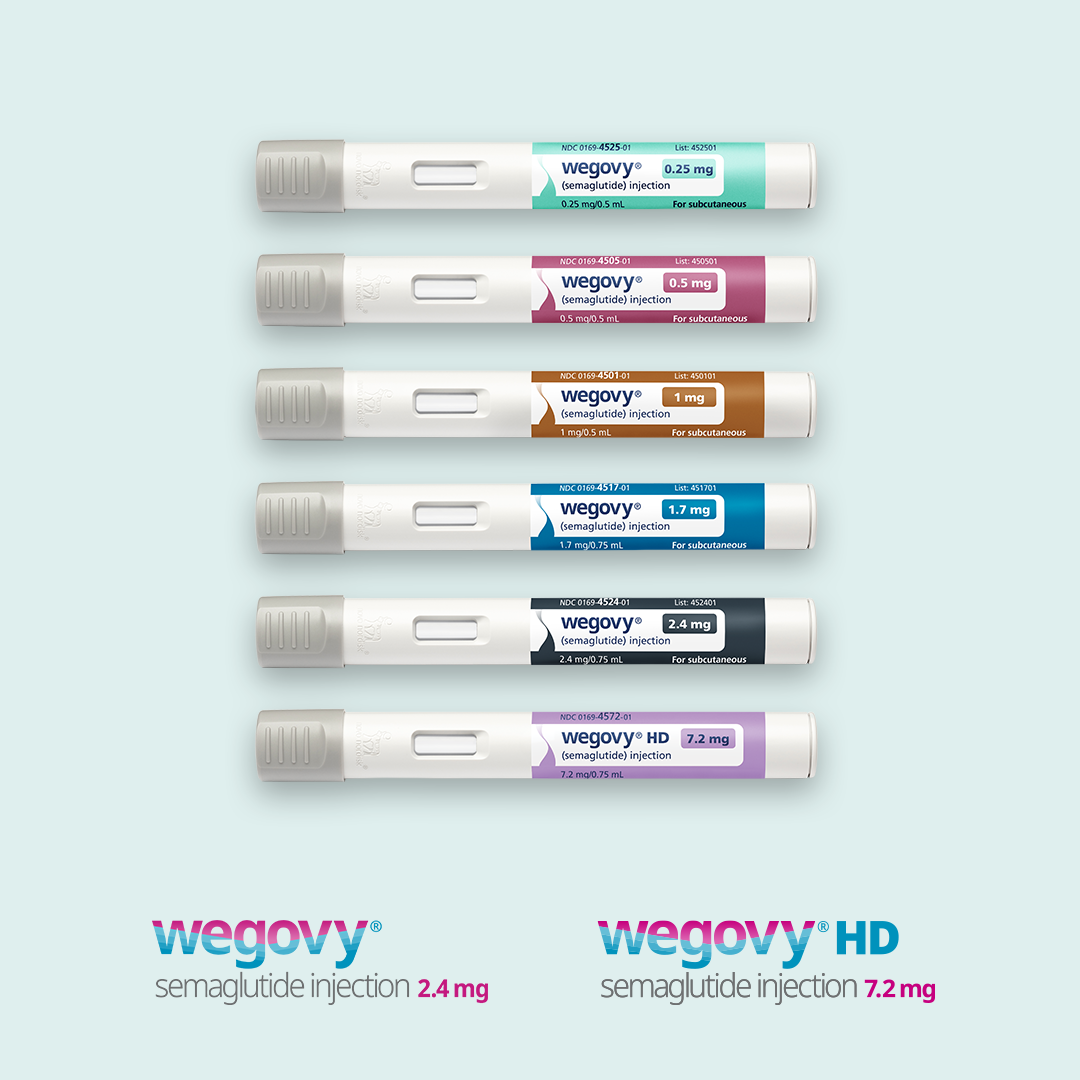
On Nov. 4, Novo Nordisk, the Danish company behind Ozempic and Wegovy, filed its third-quarter 2026 results with U.S. securities regulators. Buried in the filing is a fact that deserves more attention than it has gotten: the company raised its full-year sales and profit guidance for the second time since a government-brokered deal forced it to cut prices and accept new Medicare constraints a year ago. That is an awkward outcome for the people who argued, at the time, that negotiating down the price of a blockbuster drug class would choke off the investment behind it.
What the filing actually shows
The figures in this section come directly from the company's own report and are not in dispute. Third-quarter net sales were 79.2 billion Danish kroner, up 4 percent at constant exchange rates. Adjusted operating profit rose 27 percent at constant exchange rates to 31.7 billion kroner, though that figure is flattered by a weak year-earlier quarter that included roughly 9 billion kroner in one-time restructuring costs; a cleaner gauge, nine-month adjusted operating profit, was up a more modest 8 percent. Sales across Novo's obesity-care portfolio, which spans Wegovy in both injectable and pill form, grew 22 percent in the quarter and 20 percent over nine months.
- Full-year 2026 guidance for adjusted sales growth was raised to a range of -2% to +2% at constant exchange rates, up from -6% to 0% set in August.
- The quarter included 8.7 billion kroner in non-cash impairments: 4.6 billion tied to a failed cardiovascular trial and 4.1 billion tied to shrinking the manufacturing network.
- The oral Wegovy pill has been dispensed more than 8 million times in the U.S. since its January launch and still holds a majority of new patient starts in the branded obesity-drug market.
Set against that growth, Novo took those 8.7 billion kroner in non-cash impairment charges this quarter. Of that, 4.6 billion kroner relates to ziltivekimab, an anti-inflammatory drug whose Phase 3 ZEUS cardiovascular trial, in more than 6,300 patients, failed in July to show any reduction in heart attacks, strokes or cardiovascular death. The remaining 4.1 billion kroner relates to what the company calls right-sizing its manufacturing network. Chief executive Mike Doustdar said in the filing that "we delivered a stronger-than-expected third quarter and are raising our full-year outlook."
"We delivered a stronger-than-expected third quarter and are raising our full-year outlook." — Mike Doustdar, Novo Nordisk president and CEO, in the company's Nov. 4 earnings report
The deal that was supposed to hurt
This is where interpretation enters, and it should be labeled as such. A year ago, the Trump administration announced that Novo Nordisk and its rival Eli Lilly had agreed to a most-favored-nation pricing arrangement covering their GLP-1 diabetes and obesity drugs, including Ozempic, Wegovy, Mounjaro and Zepbound. Cash-pay prices for injectable Wegovy were set to fall toward roughly $245 a month over time, oral versions were priced from around $149 a month, and the companies accepted a government price of $245 a month for Medicare and Medicaid purchases, with beneficiaries' copays capped at $50. In exchange, the companies received three years of tariff relief. The Centers for Medicare and Medicaid Services turned that commitment into an actual program on July 1, when it launched the Medicare GLP-1 Bridge, an 18-month demonstration running through the end of 2027 that gives qualifying beneficiaries obesity-drug coverage for $50 a month outside the normal Part D benefit.
The industry argument against that kind of arrangement, made loudly when it was first announced, was straightforward: government-set prices would depress the returns that justify the research spending behind drugs like these, and would eventually show up as less innovation, less investment, or a weaker company. It was not an unreasonable prediction, and Novo's own shares fell on the day the deal was announced. A year and several quarterly reports later, the evidence for that prediction is thin. Novo did not stop investing in its pipeline; it ran the 6,300-patient cardiovascular trial through to a conclusion and is still running two related outcome trials, with results expected in the first half of 2027. It did not retreat from new products, either: it launched the oral Wegovy pill in the U.S. in January and has since expanded it to seven more countries, and it launched an oral version of Ozempic in May, with weekly new prescriptions for it now running roughly double pre-launch levels.
The number that argues the deal worked, not just that it didn't fail
There is a more interesting data point buried in the product table, and it suggests the price deal did what it was designed to do rather than simply failing to cause harm. Revenue from the oral Ozempic pill fell 10 percent at constant exchange rates in the quarter even as new prescriptions for it roughly doubled. Revenue from injectable Ozempic fell 5 percent and from injectable Wegovy fell 2 percent. Rising prescriptions paired with falling revenue per product is close to a textbook signature of lower realized prices: more patients being treated for less money each, which is the explicit goal of a government price cap, not a side effect to apologize for.
What this does not prove
None of this means the deal was free, and it would be dishonest to present it that way. Novo Nordisk has cut about 9,000 jobs, roughly 11 percent of its global workforce, with about 5,000 of those cuts in Denmark, in a restructuring that new chief executive Mike Doustdar announced in September 2025, two months before the pricing deal was even signed. Those cuts were driven primarily by competition from Eli Lilly, not by the price agreement, and blaming them on Washington would be inaccurate. But the 4.1 billion kroner manufacturing impairment taken this quarter is a continuation of that same downsizing a year later, and it is fair to ask whether a manufacturing network built for an earlier era of injectable-only hypergrowth is now being trimmed partly because lower prices and a shift toward pills changed the shape of demand. The filing does not say so explicitly, and this page cannot claim certainty on that point. What is certain is that the workers who lost jobs in Denmark bore a real cost that the earnings beat elsewhere in the filing does not erase.
It is also worth being honest about what one company's results can and cannot prove more broadly. Novo Nordisk operates in a market with few close analogues: a genuinely novel drug class, enormous unmet demand, and a direct competitor in Eli Lilly racing to match it, including with its own oral pill, Foundayo, which the Food and Drug Administration approved in April under an expedited review program in 50 days, the fastest approval of a new drug since 2002. A price deal imposed on a company fighting that hard for market share, with that much pricing power to begin with, may land very differently than the same policy applied to a drug with fewer competitors or a smaller total market. Generalizing from Ozempic and Wegovy to the rest of the pharmaceutical industry would be its own kind of overreach, and nothing here should be read as an argument for applying this model unmodified to, say, oncology or rare-disease drugs with a handful of patients and no rival manufacturer.
What the quarter does settle, at least for this one case, is the specific and testable claim that was made loudly a year ago: that cutting the price of these drugs and expanding Medicare coverage for them would necessarily gut the company that makes them. Novo Nordisk's own numbers, filed with regulators this week, point the other way. The company is selling more of its signature drugs to more people for less money per prescription, and it is more optimistic about the rest of the year than it was three months ago. Whether that trade is good for American patients on net, or whether the savings in Washington are worth the jobs lost in Bagsværd and Kalundborg, remains a genuinely open question. Whether it has destroyed Novo Nordisk's business does not.

Opinion: The Fed chair Trump handpicked just defied him on interest rates

Texas Republicans lost because of who they nominated, not where the country stands

Opinion: Australia's central bank just sent mortgage holders the bill for a war they're not in
