Opinion: The Pentagon is racing to automate war faster than Washington can watch it
A new four-star command, a $54.6 billion funding end-run, and a warfare-strategy panel led by the executives who stand to profit all arrived in the same week — without the oversight to match.
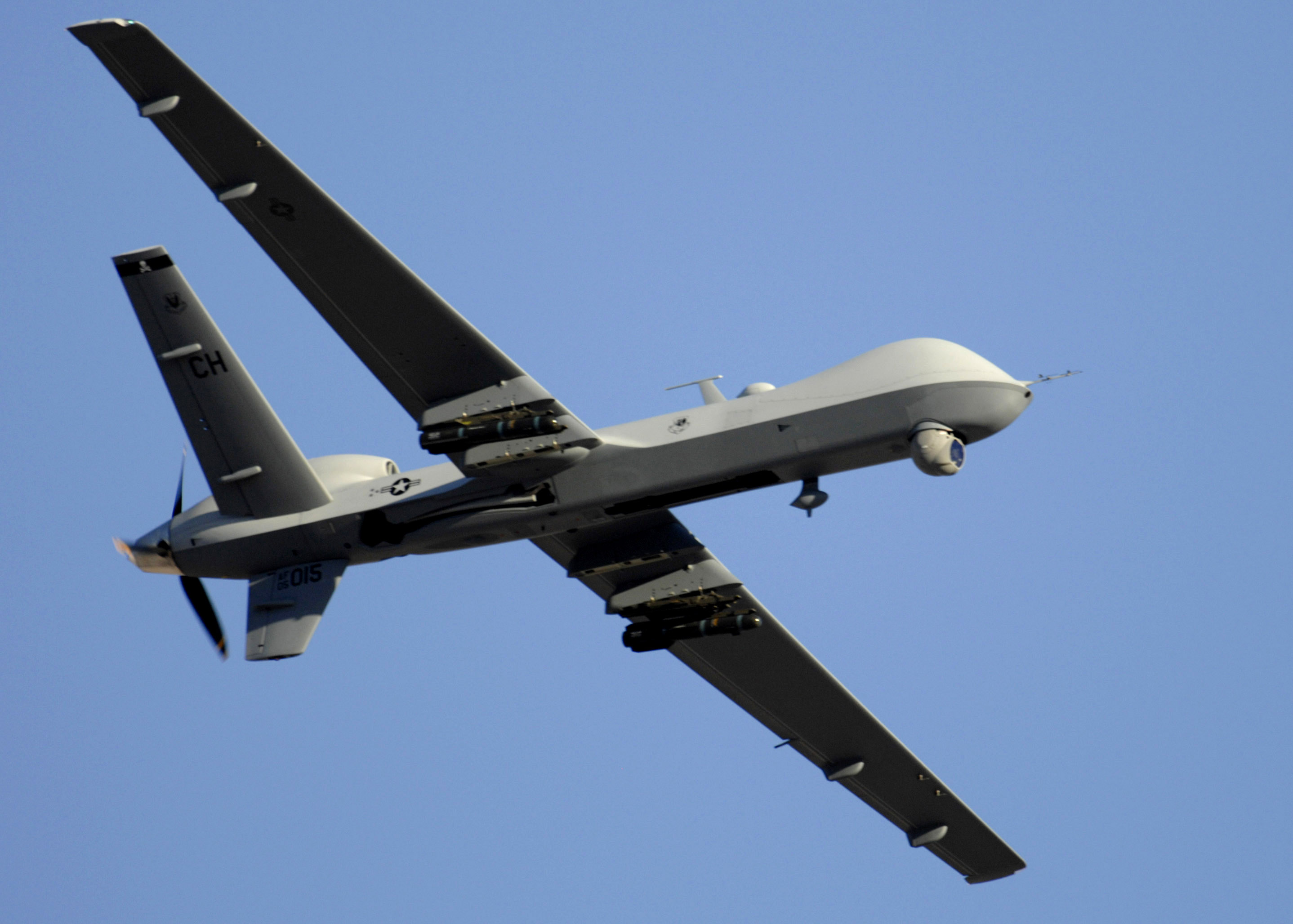
In a single week, the Pentagon did three things that, taken separately, might each have passed as routine defense-policy news. Taken together, they describe something larger: an institution moving to make autonomous, AI-directed warfare permanent faster than Washington has built the machinery to watch it.
On September 30, Defense Secretary Pete Hegseth stood before hundreds of generals and admirals summoned to Marine Corps Base Quantico and announced the creation of the Autonomous Warfare Command, a new four-star combatant command built specifically to "scale autonomous and robotic capabilities across the Joint Force in the fastest peacetime shift in modern military history," in Hegseth's own words. The same week, he named two defense-technology billionaires to co-chair a 120-day Pentagon review that will help decide what the military buys next. And tucked inside next year's budget request sits a nearly $54.6 billion line item for autonomous systems — a sum so large it is being routed almost entirely around the ordinary appropriations process.
None of this is unreasonable on its face. Ukraine has shown, brutally, that the side that iterates faster on cheap autonomous systems holds an advantage that exquisitely slow legacy weapons cannot match. The case for urgency is real. But urgency is exactly the condition under which oversight normally erodes — and the specific choices the Pentagon made this week suggest that erosion, not just speed, is the point.
A command built to go fast, a rule built to slow down
The Autonomous Warfare Command, known inside the building as AUTOWARCOM, will hold what the Pentagon calls "service-like authorities": the power to define requirements and field autonomous and robotic systems across air, sea and land domains, including AI-enabled targeting technology, without routing every decision through the traditional service bureaucracies. Hegseth's own officials are targeting an October 2027 stand-up, contingent on Congress agreeing to fund it.
That funding request will land on top of an existing rule that AUTOWARCOM's entire premise sits in tension with. Department of Defense Directive 3000.09, the governing policy on autonomy in weapon systems since 2012 and last updated in 2023, requires that autonomous and semi-autonomous weapons "be designed to allow commanders and operators to exercise appropriate levels of human judgment over the use of force." That single sentence is the entire legal scaffolding standing between an AI-enabled targeting system and a fully autonomous one that selects and fires without a person in the decision. A command whose stated mission is to compress procurement and fielding timelines to "the fastest peacetime shift in modern military history" is, definitionally, a command built to make that scaffolding harder to maintain.
The advisers also hold the contracts
Alongside AUTOWARCOM, Hegseth named Elon Musk, Palmer Luckey and Newt Gingrich to co-direct Project Meridian, a 120-day study charged with recommending what weapons and capabilities the military should develop across artificial intelligence, autonomy, directed energy and biotechnology, with findings due to Hegseth by January 28, 2027. Musk's SpaceX and Luckey's Anduril Industries — the drone, robot-submarine and autonomous-targeting manufacturer Luckey founded — both hold multibillion-dollar federal defense contracts. Luckey's company alone has roughly $2.4 billion in existing federal deals and is party to a contract worth as much as $20 billion.
There is an obvious echo here of the criticism that followed Musk's earlier turn running the Department of Government Efficiency, when watchdogs argued he had been handed influence over agencies that regulate his own companies. Project Meridian repeats that structure in a more consequential arena: the two private citizens most likely to profit from an expansion of autonomous weapons spending are also the two private citizens Hegseth has asked to write the Pentagon's roadmap for that spending. No recusal process, ethics screen or financial-disclosure requirement for the pair has been made public.
Fifty-four billion dollars, one appropriations bypass
The money matches the ambition. The Defense Autonomous Warfare Group, the office that will likely feed into AUTOWARCOM, is requesting $54.6 billion for fiscal 2027 — up from $225.9 million the year before, an increase Breaking Defense calculated at more than 24,000 percent in a single budget cycle. Only $1 billion of that runs through the Pentagon's normal base budget, the part Congress reviews and amends line by line every year. The remaining $53.6 billion is tucked into the broader defense reconciliation package, a legislative vehicle that moves through Congress with far less individual scrutiny than ordinary appropriations bills.
Pentagon Comptroller Jules Hurst told Breaking Defense the reasoning plainly: reconciliation money gives the department "more flexibility on when we obligate those funds," and "when there's technology that's changing quickly... we try to put things there." That is a candid admission that the fastest-growing, least-understood category of military spending is being deliberately steered toward the funding mechanism that draws the least line-by-line oversight — at the same moment the Government Accountability Office's own 2023 review found the Pentagon still lacks department-wide guidance for how its components should acquire artificial intelligence responsibly in the first place. The watchdog's recommendation has not yet produced that guidance. The money is moving anyway.
The irony sharpens against what happened seven months earlier. In February, the administration ordered federal agencies to stop using Anthropic's AI models after the company, according to a Congressional Research Service analysis of the dispute, refused two specific Pentagon requests: using its models for mass domestic surveillance and for fully autonomous weapons systems that could select and engage targets without a human in the loop. Hegseth then formally designated Anthropic a "national security supply-chain risk" and barred defense contractors from working with the firm. Anthropic sued; a district court sided with the company in March, an appeals court lifted that injunction in April, and the ban has proceeded. Chief executive Dario Amodei explained the company's position at the time:
Autonomous weapon systems "may prove critical for our national defense. But today, frontier AI systems are simply not reliable enough to power fully autonomous weapons."
Whatever one makes of that judgment, it was an AI company choosing caution over a government contract. The Pentagon's response was not to welcome the caution or regulate around it, but to cut the company off and, within months, stand up its own command and its own advisory panel staffed by executives with no comparable incentive to say no.
What Congress should demand before the money moves
None of this means autonomous weapons should be banned, or that the underlying strategic logic is wrong. It means the sequencing is backward. Congress, which still has to appropriate the reconciliation funds and confirm AUTOWARCOM's eventual stand-up, has leverage it has not yet used. Before that money and command structure are locked in, lawmakers should insist on:
- Writing DoDD 3000.09's human-judgment requirement into statute, so it survives any single administration's reinterpretation
- Binding ethics and recusal rules for Project Meridian's co-directors on any recommendation touching their own companies' product lines
- Moving the bulk of DAWG and AUTOWARCOM funding into ordinary line-item appropriations rather than reconciliation, restoring the annual review that flexibility was designed to avoid
- Requiring the department-wide AI acquisition guidance GAO recommended in 2023 before, not after, the spending scales further
The generals Hegseth summoned to Quantico were told they are living through the fastest peacetime shift in modern military history. That may be true. It is also, on the evidence of the last week, a shift happening with less independent scrutiny than the Pentagon applies to buying a new rifle. Speed is not a substitute for a chain of accountability — it is usually the reason one gets built too late.
The War Zone — Vision For New Autonomous Warfare Command Laid Out By Pentagon
Breaking Defense — Pentagon Officials Broadly Detail $55 Billion Drone Plan Under DAWG
Stars and Stripes — Musk, Luckey and Gingrich Tapped to Lead Pentagon's Project Meridian
Congressional Research Service — Pentagon-Anthropic Dispute Over Autonomous Weapon Systems
Opinion: The Arctic Frost subpoenas show Congress needs a law, not a grudge match
Opinion: Washington's drug-boat strikes have outlived their own justification