Opinion: The Supreme Court struck down Trump's tariffs. Washington simply replaced them.
Eight months after the justices ruled that emergency powers do not let a president tax imports, the refund process is still rejecting a fifth of all claims — while a new tariff regime, built on a different statute, has already taken the old one's place.
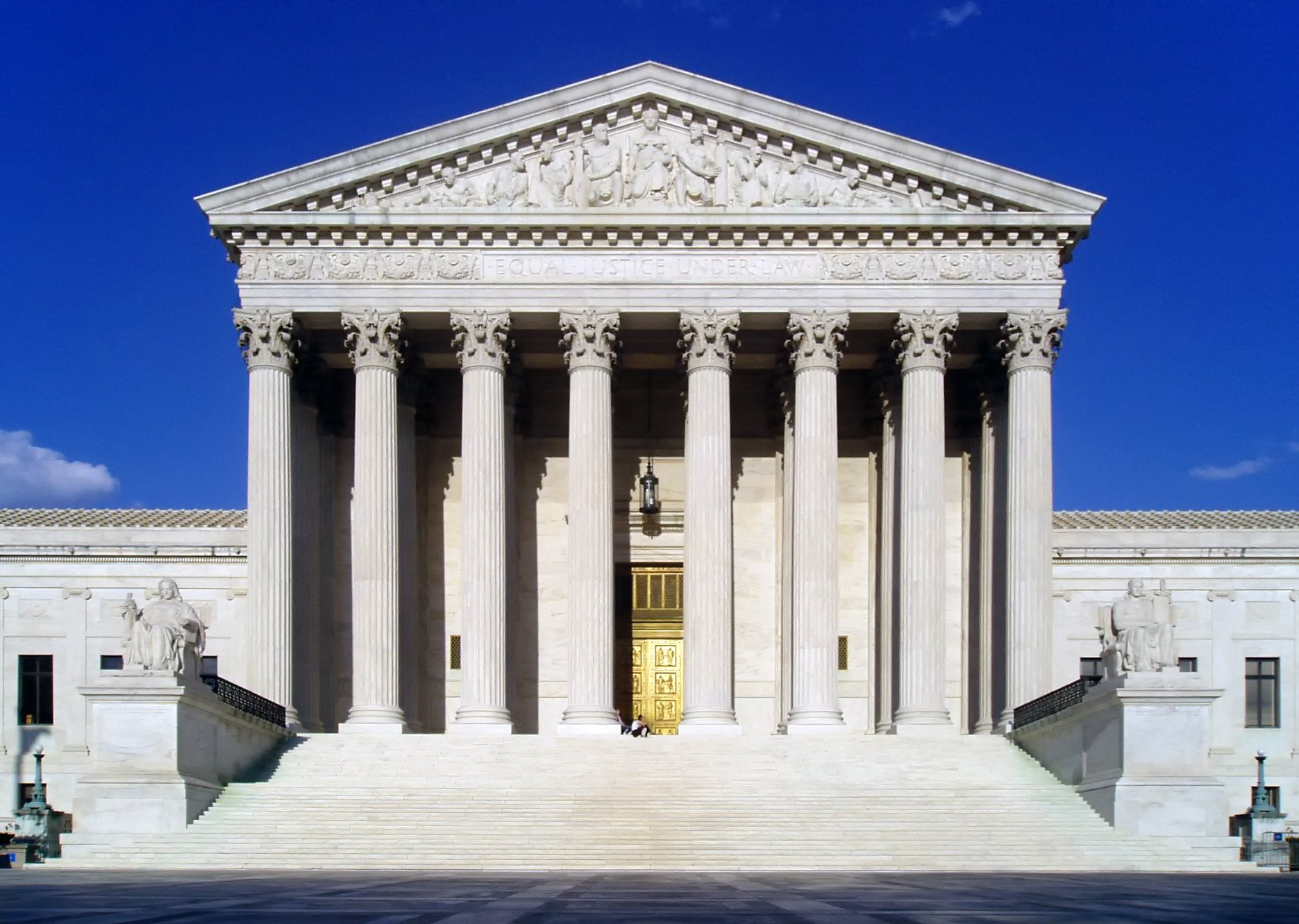
On October 6, U.S. Customs and Border Protection quietly opened the third and final phase of its system for refunding the tariffs the Supreme Court declared unlawful in February. Eight months after that ruling, the episode has become a case study in how little a court victory can accomplish against a president determined to keep collecting money from imports — and how quickly an administration can swap one legal theory for another to keep the practice going.
A refund machine that still can't finish the job
The numbers tell their own story. CBP estimates it assessed roughly $166 billion in duties under the International Emergency Economic Powers Act between February 2025 and February 2026, before the Supreme Court ruled 6-3 in Learning Resources v. Trump that the statute does not give a president the power to impose tariffs at all. As of mid-September, the agency had accepted about $134.7 billion in potential and certified refund claims, and had sent roughly $122 billion, including interest, to the Treasury for payment, according to a court declaration described in trade-press accounts of the case. Of the 27.2 million import entries claimed through CBP's refund portal, 6.1 million were rejected outright — many because importers missed a 90-day window for reopening entries that had already been finalized, a detail laid out in reporting on the October 6 rollout. The newly opened third phase helps only importers who sued the government and obtained an individual court order; everyone else whose entries were "finally liquidated" is still out of luck.
That bureaucratic grind is the direct result of a fight the government has waged, phase by phase, since the ruling came down. Judge Richard Eaton of the Court of International Trade, who was assigned all of the consolidated IEEPA refund cases, ordered in March that every importer of record who paid the tariffs was entitled to the benefit of the Supreme Court's decision, not just those who had filed their own lawsuits. The government resisted that order at nearly every turn, arguing that reopening finalized entries would require burdensome manual review and that non-litigants should have to sue on their own. Eaton rejected those arguments, but the dispute over which entries count as "final" — and therefore outside the refund system's reach — is still being litigated.
How Washington got here
The underlying ruling was, in constitutional terms, a significant check on executive power. The Court held that IEEPA, a 1977 statute meant for sanctions and asset freezes, cannot be stretched to cover tariffs the president simply wants to impose. A House fact sheet on the refund process, posted by Rep. Joaquin Castro's office, lays out the basic mechanics for constituents seeking money back: the entitlement is real, even if claiming it is not simple.
But the ruling's practical bite lasted about as long as it took the White House to find another statute. The administration's response arrived within days: a proclamation imposing a 10 percent global tariff under Section 122 of the Trade Act of 1974, a provision meant for short-term balance-of-payments emergencies and capped by law at 150 days. That tariff took effect February 24, four days after the IEEPA ruling, and functioned as a bridge — not because it solved any new crisis, but because it bought time while the administration decided what would come next.
The replacement was already waiting
The Court of International Trade ruled in May that the Section 122 tariff, too, exceeded the administration's statutory authority, though it limited relief to the three named plaintiffs. The Federal Circuit stayed that ruling pending appeal, so the surcharge kept running until its 150-day clock simply expired on July 24. The administration did not wait for the appeal, or for Congress, before replacing it. The U.S. Trade Representative's office announced, in a July 23 press release, that it was finalizing new tariffs of 10 to 12.5 percent on imports from 60 economies under Section 301 of the same 1974 law, citing those countries' failure to enforce bans on forced-labor goods. The new duties took effect the very next morning — the same day the old ones expired — and, unlike the Section 122 surcharge, they carry no statutory sunset date.
Section 301 is a more procedurally legitimate tool than IEEPA; it requires an investigation and findings, and USTR's forced-labor determination followed one. But the net effect for most importers is close to indistinguishable from what came before: a tax on imports, set unilaterally by the executive branch, that most goods from most trading partners now pay in one form or another.
Who actually bears the cost
The businesses fighting this in court are mostly small. Burlap & Barrel, a spice importer that sued over the Section 122 tariff with the nonprofit Liberty Justice Center, filed a second suit the day the forced-labor tariffs took effect, arguing USTR exceeded its authority by applying near-uniform duties to imports from almost every covered country rather than targeting specific labor abuses, according to a case summary from the Civil Rights Litigation Clearinghouse. Co-founder Ethan Frisch described the posture plainly when the company filed its first suit:
"We've never sued anybody ever, let alone the President of the United States."
Frisch's company and others like it say the tariffs mostly fall on American importers and consumers, not on foreign governments, which is precisely the argument courts have now validated once for IEEPA and partially for Section 122. Larger importers with litigation budgets can chase court orders through CBP's refund portal; a small spice company or toy importer without a standing legal team is more likely to miss the 90-day reopening window or simply absorb the loss, as the original lawsuit's backers argued when they went to court in March.
The check that wasn't enough
None of this means the courts were wrong, or that litigation was pointless. The Supreme Court correctly read a statute that was never meant to authorize tariffs, and Judge Eaton's refund order, however contested, has already pushed over $100 billion back toward the Treasury for disbursement. But the sequence — IEEPA struck down, Section 122 invoked within days, Section 122 struck down in turn, Section 301 invoked the moment it expired — shows the limits of judicial review as the only check on tariff power. Courts can rule on the statute a president cites. They cannot stop a White House from simply citing a different one the following week, especially when several plausible statutes exist and Congress has shown no appetite to reclaim the tariff authority it delegated away decades ago.
That is the real lesson of this saga, and it points past the courthouse. Congress, not the Court of International Trade, holds the constitutional power to set tariffs, and only Congress can close the statutory gaps that let an administration treat trade law as an à la carte menu. Until lawmakers do that — by narrowing Section 301's use for broad, country-wide duties, or by writing clearer limits into Section 122 — the pattern on display since February will likely repeat: a court ruling, a brief interregnum, and a new proclamation ready to go.

Opinion: Congress Had a Year of Warning on ACA Premiums. It Spent It on Gridlock.
Opinion: Voters Are Furious About Prices. Neither Party Is Telling Them Why.