The Postal Service has no business deciding whose ballot gets delivered
A rule requiring the U.S. Postal Service to screen mail ballots by barcode is before the Supreme Court for a third time in six weeks — a fight less about fraud than about who controls American elections two months before voters decide control of Congress.
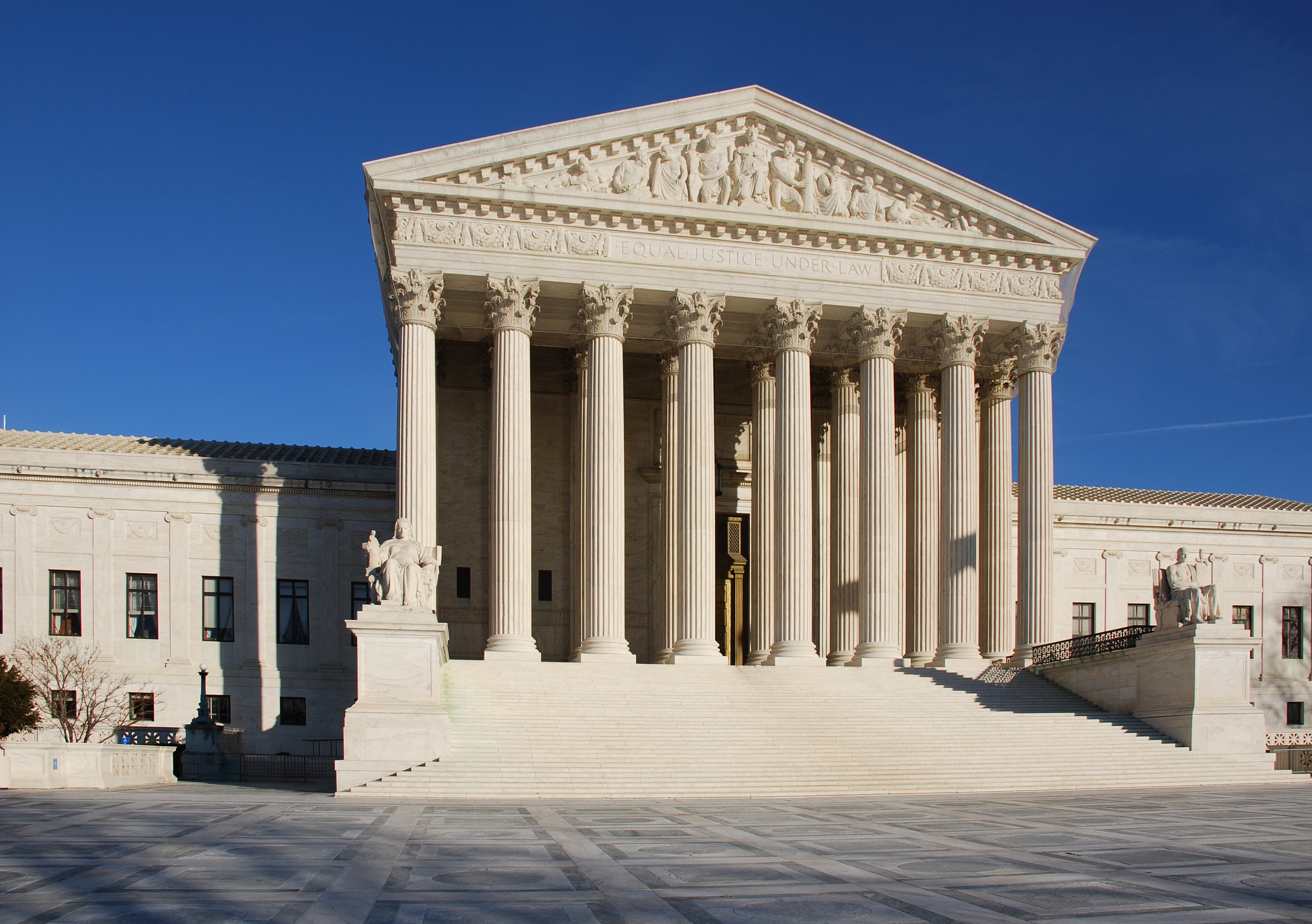
For the third time in six weeks, the Trump administration has asked the Supreme Court to let the Postal Service decide whose mail-in ballot gets delivered this November. The emergency application, filed September 6 and docketed as No. 26A305, asks the justices to lift a federal judge's injunction against a rule requiring every state that mails out ballots to upload voters' names, addresses and a unique postal barcode to a new federal portal before Election Day mail can move. Ballots addressed to voters missing from that Postal Service list, or sent in envelopes that fail the agency's design review, would not be delivered.
A rule built on an unproven premise
The rule took effect in the Federal Register on August 26, implementing an executive order President Trump signed in March directing agencies to tighten mail-voting security before the midterms. U.S. District Judge Indira Talwani in Massachusetts blocked it twice: first with a temporary restraining order on August 27, then with a preliminary injunction on September 4, after concluding that the government had not shown that ballot fraud moving through the mail is a real, measurable problem rather than a hypothetical one. Twenty-three state attorneys general, the District of Columbia and Pennsylvania's governor sued to stop the rule, arguing it would strip states of authority the Constitution assigns to them.
"The USPS's interest in correcting an unsubstantiated problem through likely unconstitutional means is dwarfed by the overwhelming risk of pervasive disenfranchisement of citizens who need access to mail ballots in order to vote," Judge Talwani wrote.
Solicitor General D. John Sauer told the justices the opposite is true: the rule imposes "only modest envelope-design and addressee-information requirements," is aimed at "a particularly pernicious species of fraud," and any delay risks "permanent harm" because, in the government's words, "the election is so soon." That last argument inverts the logic courts normally apply. Federal judges have long been wary of changing election rules close to a vote, precisely the reasoning the administration is now trying to use in reverse — to force a last-minute change through rather than to preserve the status quo.
Who actually runs elections
The dispute is less about fraud than about who gets to write election rules at all. The Constitution's Elections Clause gives that authority to state legislatures, subject to override by Congress — not to a federal agency acting on a presidential directive. USPS is not an elections body; it delivers mail, and under this rule it would also gatekeep who receives an official ballot, based on lists it compiles itself and a design standard it alone approves. States, not a mail carrier, currently decide who is eligible to vote absentee and verify signatures against voter rolls, work already governed by state law and, per the agency's own guidance, historically left entirely to them.
The practical stakes are large. Oregon, Washington, Colorado, Utah and Hawaii run elections almost entirely by mail; millions more voters in states like California, according to the lawsuit its attorney general filed, rely on absentee ballots by choice. North Carolina had already begun mailing ballots on September 4 — less than sixty days before the November 3 election — when the fight over the rule reached its first Supreme Court filing. A new federal portal, untested at national scale, would have to onboard tens of thousands of local election offices correctly on the first try or ballots would simply stop moving. That is not a hypothetical harm; it is the mechanism by which valid, timely-mailed ballots go undelivered.
A fair reading of the other side
The administration's underlying concern is not frivolous. Chain-of-custody weaknesses in mail voting are a legitimate subject for scrutiny, and a barcode system that let election offices track a ballot's location is, in the abstract, a reasonable modernization. Sauer's brief to the Court, as SCOTUSblog reported, frames the rule as routine mail-handling standardization rather than a takeover of election administration, and notes that USPS already runs a similar tracking system for other classes of mail. If Congress had legislated a uniform ballot-tracking standard after hearings and input from state election officials, that would be a defensible policy choice reasonable people could debate on the merits.
That is not what happened here. The rule was written by an agency, under a presidential order, finalized in August and meant to bind fifty states' worth of election administration by a November deadline, with no evidence in the record — Judge Talwani's finding, unrebutted so far — that the fraud it targets is more than theoretical. Timing compounds the problem: a system this complex, deployed for the first time under a fixed and unmovable deadline, is a plausible new source of the very kind of error mail-voting critics claim to worry about, only now imposed from Washington rather than left to states that have run these systems for years.
What the Court should do, and what comes after
The Supreme Court, which set a Wednesday deadline for the states to respond to the government's latest application, should decline to disturb Judge Talwani's injunction while the underlying Elections Clause claim is litigated on the merits. Emergency, unexplained orders on the shadow docket are a poor vehicle for resolving a genuine constitutional question about which branch and which level of government controls federal election mail — a question that deserves full briefing, oral argument and a reasoned opinion, not a one-paragraph stay granted weeks before ballots go out.
Beyond this case, the better fix is legislative. If Washington believes ballot mail needs uniform tracking standards, Congress has the constitutional authority to write them, with input from the state officials who will have to implement them and enough lead time to test the system before it is used. An executive order and an agency rulemaking, finalized ten weeks before a midterm that will decide control of Congress, is the wrong tool regardless of the merits of the underlying idea. The Postal Service delivers the mail. Deciding whose vote counts should remain, as it has for two centuries, a decision made closer to the voter than that.
Federal Register — Ballot Mail for Federal Elections, final rule
Supreme Court of the United States — Docket No. 26A305
NBC News — First midterm ballots go in the mail amid uncertainty over Trump's executive order
SCOTUSblog — Trump administration again appeals mail-in ballot dispute to the Supreme Court

The Companies Building AI Just Admitted They Don't Trust Themselves

TSA's new gate pass concedes 25 years of security theater — but only for paying members

The chairman hired to cut rates is being forced to raise them instead
