Chief Justice Roberts Freezes Order Forcing FCC to Rule on Campaign Ad Rates Before Midterms
A Fourth Circuit panel accused the FCC of “gamesmanship” and ordered it to decide within 48 hours who gets discounted political ad rates. Chief Justice John Roberts froze that order Thursday, leaving the question of which committees get the cheapest airtime before Nov. 3 unresolved.
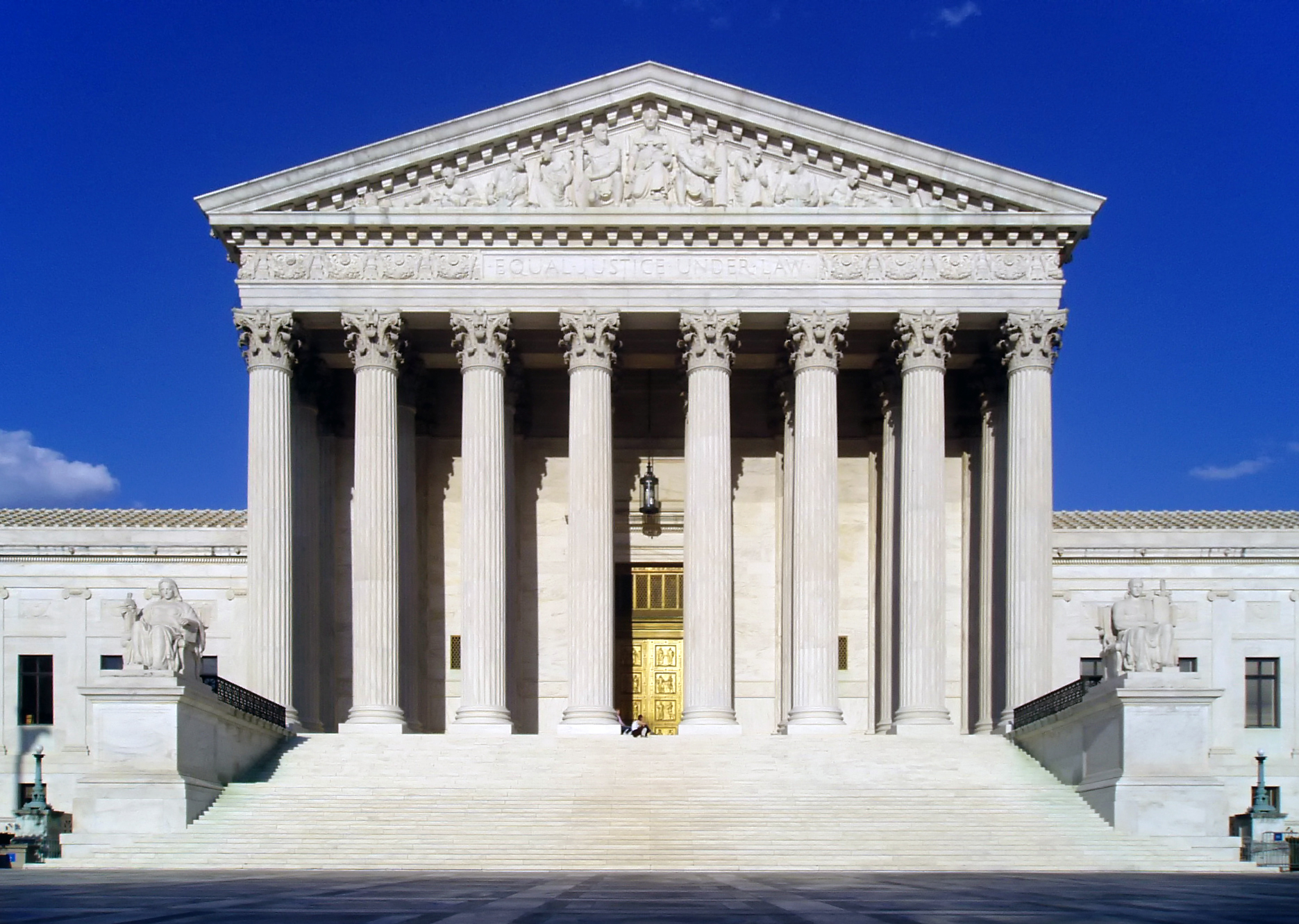
Chief Justice John Roberts has temporarily blocked a federal appeals court order that would have forced the Federal Communications Commission to rule within 48 hours on a dispute over discounted political advertising rates, pulling the Supreme Court back into a fight over the ground rules for the final weeks of the 2026 midterm campaign.
Roberts acted Thursday, Oct. 8, hours after the U.S. Court of Appeals for the Fourth Circuit ordered the FCC to resolve, by noon Friday, Oct. 9, a five-month-old challenge to agency guidance that extends broadcasters' cheapest advertising rate — known as the “lowest unit charge,” or LUC — to political parties and joint fundraising committees, not just individual candidates. In an order posted to the Supreme Court's public docket, Roberts stayed the Fourth Circuit's judgment “pending further order of the undersigned or of the Court” and gave the challengers until 5 p.m. Eastern time on Saturday, Oct. 10, to respond.
The dispute, now in its fourth round of emergency litigation since March, pits four Democratic candidates in competitive 2026 races against the national Republican campaign committees over a technical-sounding question with real financial stakes: whether party committees and joint fundraising vehicles that include non-candidates can buy broadcast airtime at the same rock-bottom rate reserved by statute for candidates themselves.
What the Fourth Circuit Ordered
The case traces back to a March 30 notice from the FCC's Media Bureau stating that the lowest-unit-charge requirement — which under 47 U.S.C. § 315(b)(1)(A) obligates broadcasters to sell airtime to “a legally qualified candidate” at their most favorable rate during the 45 days before a primary and 60 days before a general election — also covers political parties engaged in coordinated spending with candidates and joint fundraising committees that include party or other non-candidate members. Four federal candidates targeted by Republican committee spending — former Ohio Sen. Sherrod Brown, Georgia Sen. Jon Ossoff, former North Carolina Gov. Roy Cooper, all running for Senate, and Michigan Rep. Kristen McDonald Rivet, running for reelection — argued the notice contradicts the plain statutory text and lets outside spenders flood the airwaves with discounted ads aimed at them.
The candidates filed an application asking the full five-member commission (currently operating with just three sitting commissioners, two Republicans and one Democrat) to overturn the notice on April 29. When the FCC did not act, they went to the Fourth Circuit, which ruled on Aug. 25 that the agency had “constructively denied” their application and set the notice aside. The Supreme Court stayed that ruling on Sept. 4, finding the appeals court likely lacked jurisdiction while the commission's review remained pending — and that the Republican campaign committees would suffer irreparable harm from losing discounted rates just as the statutory 60-day window opened. Justice Ketanji Brown Jackson dissented, writing the committees were “not likely to succeed on the merits.”
That left the FCC's review application still pending. When the commission still had not ruled more than five months after it was filed, the candidates asked the Fourth Circuit to compel a decision through a writ of mandamus. On Oct. 7, Judges Robert King and James Wynn granted it, writing in their order that the commission “has thumbed its nose at Congress's statutory commands and the settled principle of judicial review” and that “its gamesmanship must end.” The panel set the noon Friday deadline and invoked Marbury v. Madison in accusing the agency of “an assault on our Constitution's separation of powers.” Judge J. Harvie Wilkinson dissented sharply, calling the ruling “chaotic with a capital C” and a “direct affront to the Supreme Court's stay order,” warning that flipping the rules again would leave “neither parties nor candidates nor broadcasters” able to plan their advertising buys.
The Numbers Behind the Fight
- The statutory discount window runs 60 days before the Nov. 3 general election — meaning it has already been in effect for roughly five weeks.
- The candidates' application for FCC review was filed April 29 and remained pending at the agency for more than five months, a delay the Fourth Circuit's majority called central to its decision to grant mandamus.
- The FCC is currently operating with only three of its five seats filled; the panel's lone Democrat, Commissioner Anna Gomez, has twice formally dissented from the agency's handling of the matter.
- This is the fourth time in roughly five weeks that the same underlying dispute has reached an appellate-level stay request, following the Sept. 4 Supreme Court stay, the Sept. 18 Fourth Circuit deferral order, and the Oct. 7 mandamus ruling.
Who Is Affected
The immediate parties are the four Democratic candidates and the two national Republican campaign arms, the National Republican Congressional Committee and the National Republican Senatorial Committee, which intervened in the case and told the Supreme Court in their stay application that the Fourth Circuit's order was “a flagrant abuse of the extraordinary writ of mandamus.” But the practical effects reach broadcasters nationwide, who must decide station by station whether to honor discounted rates for party-funded ads or risk having to unwind contracts if the legal landscape shifts again before Election Day. Solicitor General D. John Sauer told the justices that the Fourth Circuit's repeated interventions treated the commission as “not an inconvenient road-bump for the Fourth Circuit to jump over or blast through,” arguing the agency needed room to complete its own review process without being forced into a 48-hour deadline.
Commissioner Gomez, the FCC's lone Democrat, has argued that whichever way the agency ultimately rules, the uncertainty itself is damaging. In her August dissent from a related Media Bureau order, cited in the Fourth Circuit's opinion, she wrote that “nothing about this proceeding was handled correctly” and warned separately that expanding the discount to party committees risked unleashing a “flood of dark money into broadcast advertising ahead of the midterm election.”
“The Media Bureau upset the status quo with the Public Notice's novel interpretation of the LUC requirement, the Commission then took no action for months on the Federal Candidates' pleas for urgent review, and still today the Commission continues to conjure one excuse after another for further delay.”
That line, from Judges King and Wynn's Oct. 7 order, captures the majority's exasperation with an agency they say has stalled for political convenience. Judge Wilkinson's dissent took the opposite view, arguing the panel itself had repeatedly signaled the FCC lacked authority to act and then punished the agency “for sloth when it supposedly lacked jurisdiction, and then condemned for industry when it obeyed our instructions.”
What Happens Next
The immediate question is procedural: Roberts' administrative stay is not a ruling on the merits of either the mandamus order or the underlying rate dispute. It simply pauses the Fourth Circuit's 48-hour clock while the full Supreme Court, or the Chief Justice acting alone, decides what to do next. The candidates' response is due by 5 p.m. Eastern on Saturday, and a further order could come at any point afterward — from a full dismissal of the FCC's application to an extended stay that leaves the underlying legal question unresolved until after Nov. 3, which is effectively what happened the last time the dispute reached the justices. The Fourth Circuit's underlying question — whether party committees and joint fundraising vehicles with non-candidate members are entitled to the same statutory discount as candidates — has still never been decided on the merits by any court; every ruling to date has turned on jurisdiction, timing, or administrative procedure. For more background on the underlying regulatory dispute, the Campaign Legal Center's case tracker has followed the litigation since the candidates' initial petition.
With three weeks left before the midterms, broadcasters, campaigns and party committees are left making advertising decisions under a legal regime that could change again with little notice. Whatever the Supreme Court does with the FCC's stay application, the deeper dispute over who qualifies for the cheapest airtime in American elections appears unlikely to be settled before voters go to the polls.
SCOTUSblog — Federal Communications Commission v. Brown case page
Inside Radio — Supreme Court Halts Fourth Circuit Ruling On Political Ad Rates
The Epoch Times — Chief Justice Blocks Deadline in Dispute Over Cheap Political Ads
U.S. Court of Appeals for the Fourth Circuit — In re Brown, No. 26-2230, Oct. 7, 2026 order

Democrats Bet $163 Million on Making the Midterms About Trump

Trump Invokes Executive Privilege to Shield Kennedy Center Records From Lawmaker's Lawsuit

Fired FBI Employees From Trump Documents Case Sue Patel Over 'Unlawful' Terminations