DOJ Charges 28 Green-Card Holders in California, Moves to Block 20,000 Mail Ballots
The Justice Department's criminal charges and emergency court filing escalate a monthslong fight with California over noncitizen voting, as the state and Los Angeles County refuse to set aside ballots without proof the voters are ineligible.
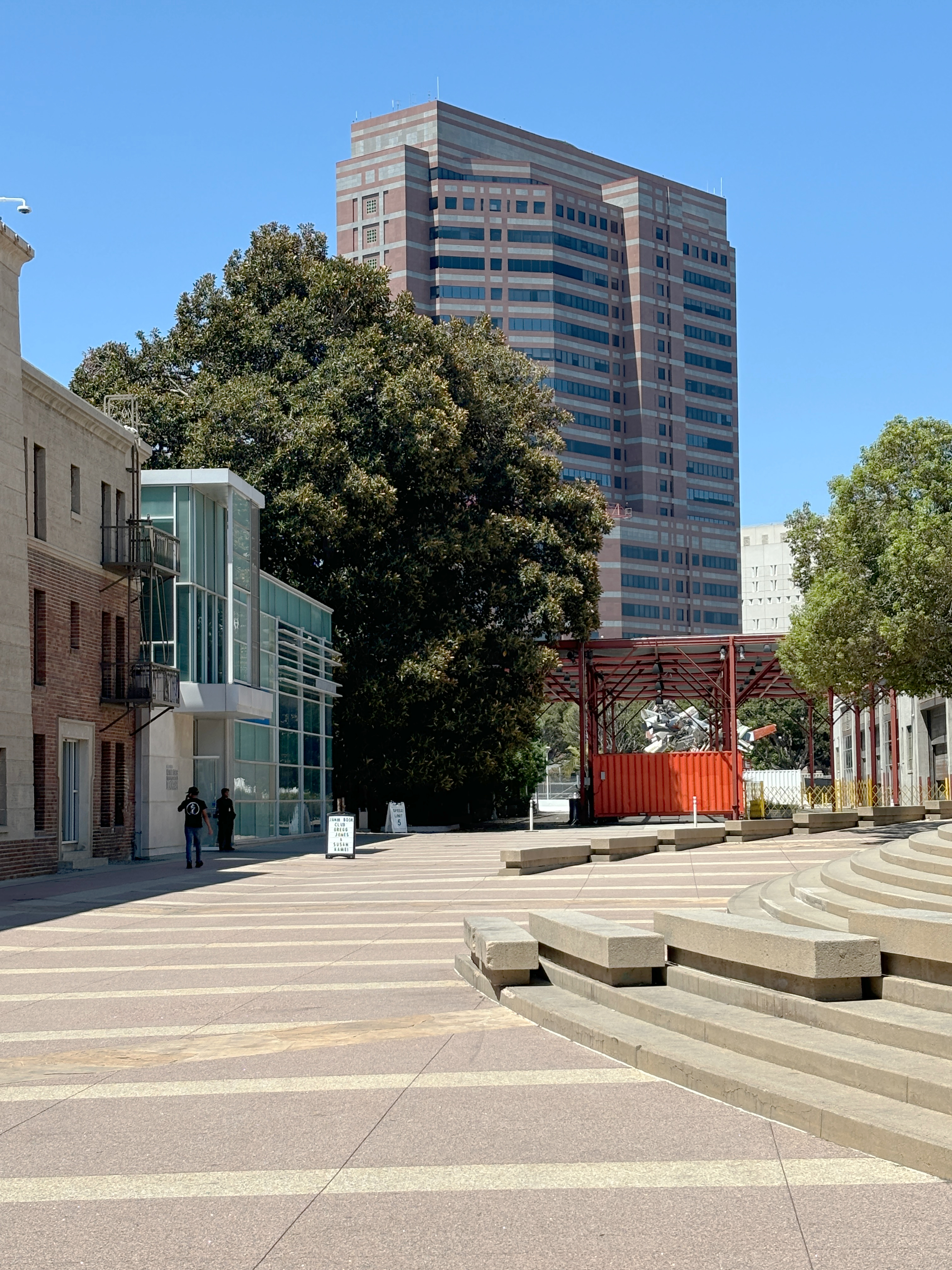
The Justice Department escalated its confrontation with California's election system on Monday, announcing criminal charges against 28 green-card holders accused of illegally registering to vote or voting in U.S. elections, while separately asking a federal judge to block the state from counting mail ballots returned by thousands of voters the department calls "likely noncitizens."
The charges mark a sharp widening of a dispute that has been building since the summer and now threatens to collide directly with ballot counting in the November 3 midterm elections.
What the charges allege
All 28 defendants are lawful permanent residents whose names appeared on a list of roughly 20,000 voters the department handed to California election officials last week on a password-protected flash drive, according to Justice Department officials. Most are accused of making false statements on naturalization applications, which ask whether an applicant has previously registered to vote or claimed to be a U.S. citizen; a number do not appear to have actually cast a ballot, and some registered more than two decades ago.
"This Department of Justice will not look the other way while noncitizens vote in federal elections," Acting Deputy Attorney General Trent McCotter said at a press conference announcing the charges. "Unfortunately the same can't be said for California and L.A. County."
Bill Essayli, the First Assistant U.S. Attorney for California's Central District, rejected the idea that the registrations could be innocent bureaucratic mistakes. "It's not something that just happens to you," Essayli said. "They either attested to it when they got a driver's license, or they went out of their way to file a voter registration form, and they swore under oath that they were a citizen." Officials said the 28 cases bring the total number of noncitizens charged with voting or registration crimes nationwide over the past seven weeks to 113, spread across 20 states.
The fight over 20,000 ballots
The charges arrived alongside a more consequential legal move: an emergency request, filed in the federal lawsuit the department brought against California on October 15, asking a judge to order the state to set aside and not count mail ballots from the roughly 20,000 people on its "likely noncitizen" list until their citizenship can be verified. "Once illegally cast ballots are counted and commingled with lawful votes, the resulting harm may be impossible to remedy," the department wrote in its filing.
California has refused to comply, arguing the request is both legally baseless and procedurally reckless given that voting is already underway. The Secretary of State's office says the state's own citizenship requirements for registration are robust, and officials have pointed out the Justice Department has not proven the people on its list are actually ineligible. In an October 13 letter to McCotter, Secretary of State Shirley Weber wrote that "the extraordinary measures you demand are contrary to both federal and state law," and that "withholding ballots from some duly registered voters and segregating and refusing to tabulate voted ballots submitted by others is an unprecedented suspension — and even denial — of voting rights."
Los Angeles County's assistant county counsel, Peter Bollinger, made a similar argument in his own letter to the department, writing that county officials "are not authorized to, or are prohibited from, taking the actions requested in your letter under both federal and state law," and noting that the department's list included voters from outside Los Angeles County entirely. Both California and the county have cited the National Voter Registration Act, a federal law that bars states from systematically removing voters from their rolls in the 90 days before a federal election specifically to prevent erroneous, rushed purges.
How the dispute got here
The confrontation traces back to a summer speech by President Trump on election integrity and escalated sharply this month, when the Department of Homeland Security delivered the list of 20,000 names to Los Angeles County with a 48-hour deadline to investigate them — a deadline local officials said was unworkable and declined to meet. The federal government sued days later. On Friday, McCotter went further, warning California officials in a letter that they could face criminal prosecution themselves for "knowingly processing ballots cast by individuals identified by federal agencies as noncitizens." President Trump amplified the threat that evening on Truth Social, writing that officials "will all go to jail for a long period of time."
There are also open questions about how the administration arrived at its numbers. A Department of Homeland Security letter to California in July had alleged a far larger pool of up to 190,000 potential noncitizens on the rolls; McCotter said the 20,000 figure represents the subset the department has the "most confidence" in after cross-referencing government databases. California has pushed back that it has not been given the underlying methodology, and the department has in turn blamed the state for refusing to hand over full voter-roll data, including partial Social Security and driver's license numbers. According to federal filings, 26 judges across the country have so far rejected the department's demands for that data in parallel cases.
"Given that there's over 20 million registered voters in California, this is quite a small number of allegations," said Rick Hasen, an election-law professor who runs UCLA's Safeguarding Democracy Project. "And we don't know how many of these allegations will even pan out."
Who is watching, and why it matters beyond California
Hasen said he sees three distinct risks in the campaign: that eligible voters could be wrongly disenfranchised, that it could erode public confidence by suggesting noncitizen voting is a bigger problem than evidence shows, and that it "is going to be used as some sort of pretext to try to seize ballots or interfere after the election is over." Noncitizen voting has never been documented as a widespread problem in American elections, and research on past cases has often found it traces to bureaucratic errors rather than intentional fraud — New Jersey disclosed this summer that a software glitch at its motor vehicle agency had registered more than 6,000 noncitizens to vote without their intending to.
Election officials outside California say they are tracking the standoff closely. Dana Lewis, the Republican county recorder for Pinal County, Arizona, said local officials nationwide have been comparing notes the way they did after the FBI raided an elections office in Fulton County, Georgia, in January. "When this impacts another jurisdiction, you automatically have to feel that," Lewis said. "If it's happening in Georgia, if it's happening in Colorado or California, we're all watching." A half dozen voting- and civil-rights groups have already moved to intervene in the California case to argue the department's demands are unlawful, and several election-law scholars have said publicly they expect the lawsuit itself to fail in court, given that the Constitution gives states primary authority over administering their own elections.
What happens next
A federal judge has not yet ruled on the department's request to block California from counting the disputed ballots, and officials on both sides expect the fight to continue through Election Day. For now, ballots from the 20,000 flagged voters remain in the state's processing pipeline, and the 28 newly charged defendants are set to make initial court appearances in the coming weeks. Los Angeles County's top elections official, Dean Logan, urged voters this fall not to let the dispute discourage them from casting ballots. "Don't be distracted by the litigation. Don't be distracted by the mis- and disinformation," Logan said. "Because if you're not voting, none of the rest matters, right?"

Supreme Court Declines to Hear Fired NLRB Member's Removal Challenge, Cementing Trump's Agency Authority
Trump uses antisemitic slur defending Sen. Marshall at Kansas rally

Mahmoud Khalil asks Supreme Court to decide if courts can hear his detention case
