Jack Smith set to testify publicly for first time before Senate Judiciary on 'Arctic Frost' records fight
Former special counsel Jack Smith appears Tuesday before the Senate Judiciary Committee, capping a yearlong standoff over his public testimony and facing Republican allegations that his investigators improperly obtained phone and text records from dozens of lawmakers.
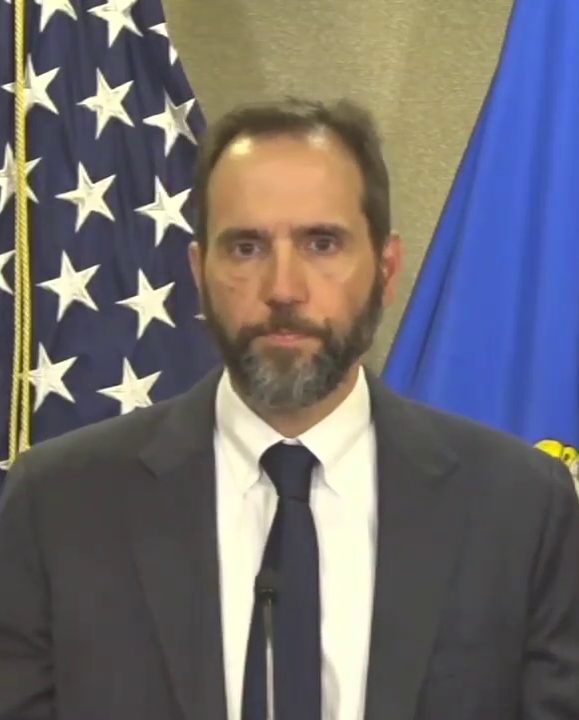
Jack Smith, the former special counsel who indicted Donald Trump twice and then watched both cases collapse after the 2024 election, is set to appear Tuesday morning before the Senate Judiciary Committee for his first sworn testimony to that panel — a hearing Republicans have built around allegations that his investigators improperly seized the phone and text records of dozens of members of Congress.
The session, titled "Oversight of Jack Smith's Abuse of Authority and the Targeting of Republicans and Related Matters," is scheduled to begin at 9 a.m. in Hart Senate Office Building Room 216, with Smith as the sole witness. It caps nearly a year of wrangling between Judiciary Chairman Chuck Grassley, an Iowa Republican, and the committee's Democrats over whether and when Smith would testify publicly about "Arctic Frost," the code name for the FBI's investigation into efforts to overturn the 2020 election.
What investigators say they collected
The scale of the records fight is central to Tuesday's hearing. According to a Judiciary Committee Republican release, Smith's office issued 197 subpoenas covering more than 430 named Republican individuals and entities, including 34 people and 163 businesses, seeking communications and records tied to fundraising, media contacts and White House advisers such as Stephen Miller, Dan Scavino, Jared Kushner and Lara Trump. Grassley has separately said investigators subpoenaed phone toll records tied to a dozen senators and obtained text-message content involving more than 40 members of Congress, including Sens. Mike Lee, Cory Booker, Tom Cotton and Grassley himself.
A House Judiciary Committee majority staff report released last week goes further, asserting that prosecutors obtained toll records from at least 17 Republican lawmakers and text-message content involving 44 members of Congress overall, and that a "filter team" meant to screen out material protected by the Constitution's speech-or-debate clause was bypassed in some instances. The report also says Rep. Scott Perry of Pennsylvania was the only lawmaker whose phone was physically seized, and that at least one telecommunications agent told investigators he was never informed whose numbers he was subpoenaing.
Democrats on the committee reject the "targeting" framing. Toll records — logs of calls and texts, not their content — were obtained through grand jury subpoenas, a routine investigative tool, to trace contacts among people Trump spoke with as he tried to overturn his 2020 loss, according to a statement from ranking member Dick Durbin of Illinois previewing the hearing. Durbin's statement notes that some of the lawmakers whose records were pulled, including Grassley, were not targets of the investigation themselves but had exchanged calls or texts with people who were.
A yearlong standoff over public testimony
Smith was appointed special counsel in November 2022 to investigate Trump's efforts to reverse the 2020 election results and his retention of classified documents after leaving office. The inquiries produced a four-count indictment in the election case and a 40-count indictment in the documents case; both were dismissed in late 2024 under a longstanding Justice Department policy against prosecuting a sitting president once Trump won reelection. Smith resigned from the department in January 2025 and testified behind closed doors before the House Judiciary Committee that same month.
Durbin's statement says Smith first asked to testify publicly under oath before the Senate Judiciary Committee in October 2025, and that Democrats renewed the request in February 2026, only for Republicans to hold what Durbin called "wasteful hearings" on related matters instead of scheduling Smith directly. Grassley, for his part, said in March that the committee would not bring Smith in until its "investigative record" was "entirely ready," a position that pushed the appearance back by months. Volume II of Smith's final report, covering the classified-documents case, remains under seal pursuant to an order from U.S. District Judge Aileen Cannon in Florida.
Grassley has framed the hearing as overdue accountability. "Jack Smith must answer for what he did to hundreds of Republican groups and individuals," he said in the statement announcing the invitation, calling the investigation "deeply flawed" and describing it as a "weaponized" effort against conservatives. Sen. Josh Hawley of Missouri has said his concerns center on "spying on members of Congress, violating DOJ procedures."
"Jack Smith asked Republicans … for the opportunity to testify under oath to the Judiciary Committee nearly a year ago — back in October 2025," Durbin said in his statement previewing the hearing, arguing the delay reflected Republicans' reluctance to let Smith speak rather than any lack of interest on his part.
Who is affected
The immediate parties extend beyond Smith and the committee. Lawmakers named in the House report as having had toll records collected, along with congressional staff and outside advisers swept into the subpoenas, have pressed for fuller disclosure of what was obtained and how it was used. Telecommunications carriers that responded to the subpoenas have separately been called before a Judiciary subcommittee this year over how they verified and complied with the requests. The hearing also lands amid an active dispute over the unsealed portions of Smith's investigative record, with further document fights before Judge Cannon still pending.
- Jack Smith — sole witness, testifying publicly under oath to the full committee for the first time
- Sen. Chuck Grassley (R-Iowa) — committee chairman, leading the oversight push
- Sen. Dick Durbin (D-Ill.) — ranking member, pressing to keep the focus on Smith's underlying findings
- More than 40 members of Congress reportedly swept into subpoenaed phone and text records, per the House Judiciary report
What happens next
Tuesday's hearing is expected to run for several hours, with Smith facing questions from Grassley and other Republicans about the scope and sequencing of the subpoenas, and from Durbin and Democrats about the underlying evidence in the election-interference case and the threats Smith has said his investigators and witnesses faced. Coverage of the hearing is being streamed live by the Senate Judiciary Committee and PBS NewsHour, and Roll Call reported that senators on both sides were preparing extensively in advance, anticipating a contentious exchange over both the records dispute and the substance of Trump's 2020 conduct.
Beyond Tuesday, the committee's Republican majority has signaled the Arctic Frost inquiry will continue, including further review of telecommunications carriers' role in complying with the subpoenas and possible additional document releases. Democrats have said they intend to use the hearing to put Smith's findings on the record before the sealed portions of his report remain locked behind Judge Cannon's order indefinitely. Whatever emerges, the hearing is likely to sharpen, rather than resolve, the partisan dispute over how the Justice Department pursued a sitting president's predecessor — and over how Congress itself was swept into that inquiry.

Senate nears final passage of bill rewriting NCAA pay and antitrust rules

Record diesel prices push rural Republicans into open break with Trump on exports
ICE Sweeps Through Kansas Beef Country Draw Rare GOP Pushback as Senate Race Tightens
