Trump holds off on robotics and machinery tariffs, orders trade talks instead
A proclamation signed Wednesday concludes that imports of robots and industrial machinery threaten national security, but it directs negotiations rather than immediate duties, with a 180-day deadline to report back.
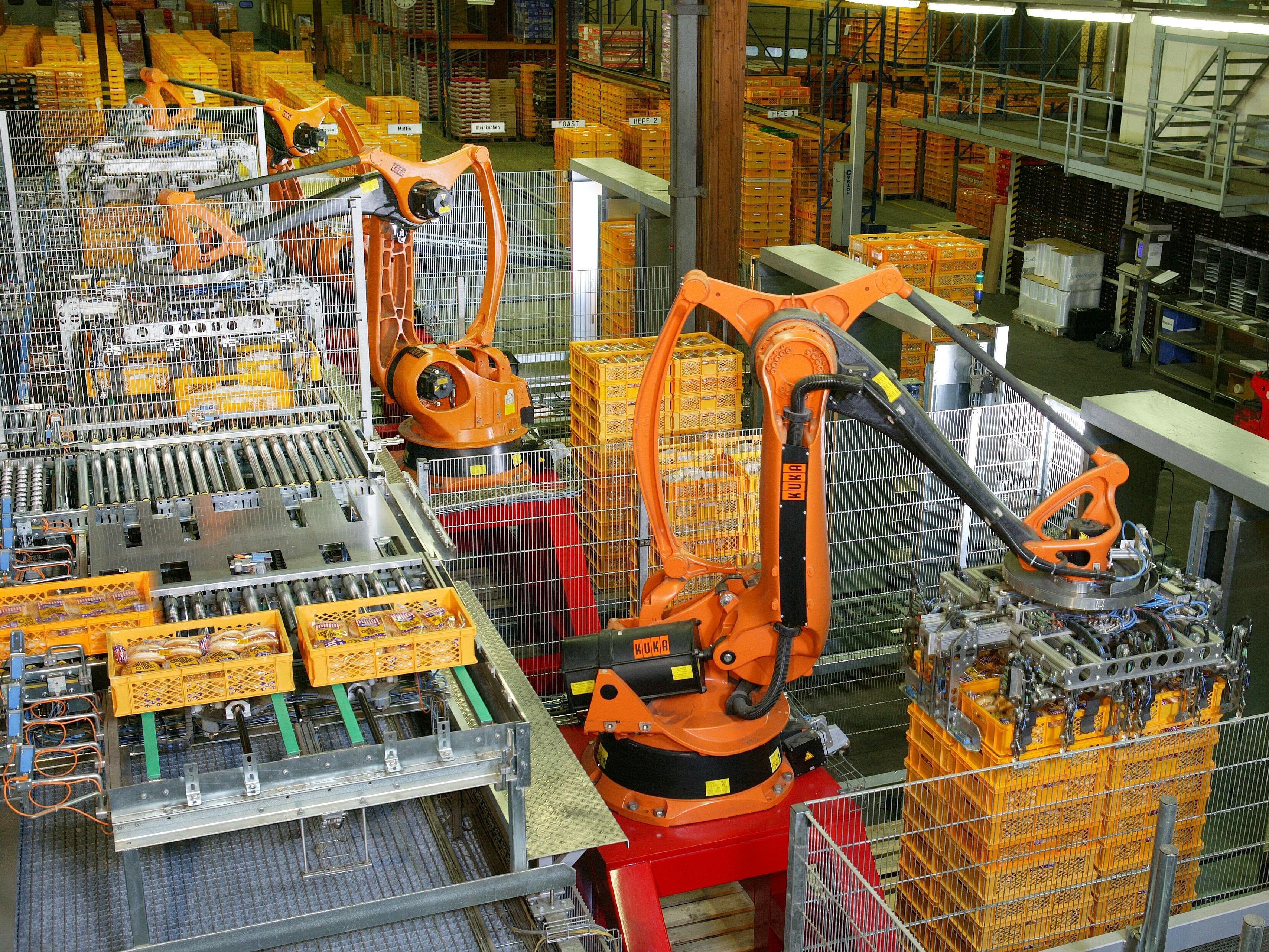
President Trump signed a proclamation on Wednesday declaring that imports of robots, industrial machinery and their components pose a threat to national security, but rather than imposing tariffs immediately, he ordered trade officials to spend the next six months trying to negotiate the problem away.
The proclamation, issued under Section 232 of the Trade Expansion Act of 1962, adopts a Commerce Department finding that the United States has become too reliant on foreign-made robotics and machinery for its defense industrial base, critical infrastructure and factories. It directs Commerce Secretary Howard Lutnick and U.S. Trade Representative Jamieson Greer to jointly pursue agreements with trading partners "to address the threatened impairment of the national security" the imports are said to pose, according to the text. No tariff rate, product list or effective date accompanies the action.
What the proclamation does, and does not, do
The document stops short of the tariff announcements that have characterized much of the administration's trade agenda over the past two years. Instead, it instructs Lutnick and Greer to negotiate with any trading partner they consider appropriate and to report back to the president within 180 days, a deadline that falls in late April 2027. A fact sheet released alongside the proclamation says the president may still turn to tariffs, duties, quotas or fees, or to an incentive program meant to spur domestic production, "depending on the outcome of such negotiations."
The fact sheet frames the move as part of a broader pattern. Since returning to office, the administration has used Section 232 to impose or adjust tariffs on steel, aluminum, copper, automobiles and trucks, timber and lumber, semiconductors, pharmaceuticals, polysilicon and drones. Robotics and industrial machinery add a new, and economically significant, category to that list.
The numbers behind the finding
The administration's rationale leans heavily on the scale of the sector. The proclamation states that robotics and industrial machinery underpinned roughly $7.1 trillion in U.S. manufactured goods shipments in 2024, and about $86 billion in domestic equipment production that same year. It describes the technology as "indispensable to virtually all modern manufacturing," citing uses in building aircraft, ships, tanks, munitions and other defense systems, as well as in all sixteen sectors the government designates as critical infrastructure.
Despite that scale, the proclamation asserts that "the United States produces less robotics and industrial equipment than it consumes," and that import reliance has grown over the past decade and is projected to keep rising. It also raises a cybersecurity concern distinct from the usual tariff rationale of jobs or capacity, warning that foreign-sourced systems "routinely process and store sensitive data" and could create vulnerabilities inside American factories and defense plants.
A yearlong investigation, and a legal backdrop
Wednesday's action is the outcome of an investigation Commerce opened on September 2, 2025, with the Bureau of Industry and Security publishing a Federal Register notice three weeks later seeking public comment under docket BIS-2025-0257. That notice defined the inquiry's reach broadly: CNC machining centers, turning and milling machines, grinding equipment, stamping and pressing machinery, industrial ovens and autoclaves, laser and water-jet cutting tools, and robots ranging from fixed factory arms to autonomous, humanoid, quadruped and ground-based systems. Drones were carved out because they are the subject of a separate Section 232 probe.
The choice of Section 232, which requires an agency investigation and a public comment period before any tariff can follow, also reflects a legal reality the administration has had to navigate this year. In February, the Supreme Court ruled 6-3 that the International Emergency Economic Powers Act does not authorize the broad, fast-moving tariffs the administration had imposed on dozens of countries, forcing officials to rely more heavily on slower statutes such as Section 232 and Section 301 that are seen as more legally durable even though they move at a different pace.
Industry has already made its case
Manufacturers, automakers and technology companies spent much of the past year lobbying against tariffs on this particular category, and they got, for now, a negotiation period instead. The Computer & Communications Industry Association and four other technology trade groups wrote to the White House on October 2 warning that broad Section 232 duties on semiconductors, robotics and other technology inputs "would increase the cost" of building chip plants, data centers and robotics production lines. "Tariffs at this point will be counterproductive," CCIA Vice President for Digital Trade Jonathan McHale said, as noted in the association's own account of the letter, urging the administration to weigh the effect on the country's ambitions in artificial intelligence.
The Association for Advancing Automation, a trade group representing roughly 1,400 robotics and automation companies, had made a related argument in a comment letter filed with Commerce during last year's comment period. Its president, Jeff Burnstein, wrote that the group believed "the US should not impose tariffs on countries whose robots and key components are crucial" to building up American robotics manufacturing, and argued the government should instead "adopt a comprehensive national robotics strategy to regain leadership in this vitally important industry," according to trade publication Robotics 24/7.
What happens next
For now, importers of industrial robots and factory machinery face no new duties, and the proclamation's practical effect will depend on negotiations that have not yet been described in public. Lutnick and Greer have until roughly late April to report on their progress, and the proclamation leaves them free to negotiate with "any country," without naming trading partners it expects to be at the table. The Commerce Department is also directed to keep monitoring import volumes and to flag any developments that might justify faster action.
Whether that six-month window produces agreements that satisfy the administration's stated security concerns, or ends instead with the tariffs, quotas or fees the proclamation keeps in reserve, will shape costs across a manufacturing and defense supply chain the government itself values in the trillions of dollars.

Kansas Senate race becomes priciest in state history as ad spending tops $84 million

Justice Department pushes to delay certification of Alaska's Senate race as judge sets Thursday deadline

Judge Orders New Hearing After Trump Vows to Defy Order Blocking D.C. Golf Course Overhaul
