NASA's Lucy spacecraft enters Jupiter's Trojan asteroid region five years after launch
After traveling more than 2.2 billion miles since its 2021 launch, NASA's solar-powered Lucy probe has become the first spacecraft to reach the swarm of primitive asteroids sharing Jupiter's orbit — though its first close flyby is still about ten months away.

Five years and more than 2.2 billion miles after it left Earth, NASA's Lucy spacecraft has become the first human-made object to enter the region of space occupied by Jupiter's Trojan asteroids, according to a mission update NASA posted on October 28. The spacecraft is not yet close to any single asteroid — its first flyby target is still ten months away — but its arrival in the Trojan swarm closes out the long cruise phase of a mission built to examine some of the oldest, least-altered material left over from the solar system's formation.
Lucy launched on October 16, 2021, on a trajectory designed to use repeated gravity assists from Earth to fling it out toward Jupiter's orbit without carrying the fuel such a journey would otherwise require. According to NASA's mission overview, the spacecraft is now operating more than five times farther from the sun than Earth is, in dimmer light and colder temperatures than it has previously experienced, while still drawing all its power from solar panels — an arrangement no NASA mission has relied on so far out in the solar system. Engineers say the spacecraft and its instruments continue to perform as expected.
What "entering the region" means
The Trojan asteroids are not clustered in a single location that a spacecraft can simply cross into. They occupy two loose, elongated swarms that share Jupiter's orbit around the sun, one trailing roughly 60 degrees ahead of the planet at the L4 Lagrange point and one trailing 60 degrees behind at L5. Both swarms circle the sun at essentially the same distance as Jupiter itself, and the individual asteroids within them are typically millions of miles apart, making the "region" something mission engineers define by tracking, not something a camera could photograph as a boundary.
NASA says it is now confirming Lucy's approach to the L4 swarm — the leading group, which the spacecraft will reach first — by combining radio-tracking data with images the spacecraft takes of background stars to refine its exact position. Because the asteroids are spread out and relatively small, Lucy will not see any of its actual targets as more than points of light until it is far closer to each one.
A long list of targets, most still ahead
Lucy's itinerary covers more ground than any prior single asteroid mission. It has already completed two rehearsal flybys: a November 2023 pass by the small main-belt asteroid Dinkinesh, which turned up a previously unknown small moon later named Selam, and an April 2025 pass by the larger main-belt asteroid Donaldjohanson, which images showed to be an elongated, two-lobed body. Along the way, in September 2025, Lucy also turned its cameras on the interstellar comet 3I/ATLAS as it passed through the solar system, adding an unplanned observation to its résumé.
The real scientific heart of the mission, though, lies in the Trojan flybys still to come. NASA's schedule lists the asteroid Eurybates and its small moon Queta as Lucy's first Trojan target, in August 2027, followed by Polymele in September 2027, Leucus in April 2028 and Orus in November 2028. Lucy will then swing back past Earth in 2030 for a third gravity assist, sending it out to the trailing L5 swarm for a final encounter with the binary pair Patroclus and Menoetius in March 2033 — eight asteroids studied by a single spacecraft, more than any mission has attempted before.
- Launch: October 16, 2021
- Distance traveled as of the October 28, 2026 update: more than 2.2 billion miles
- Completed flybys: Dinkinesh and its moon Selam (2023), Donaldjohanson (2025)
- Next flyby: Eurybates and its moon Queta, August 2027
- Mission end (planned): March 2033, after the Patroclus-Menoetius binary flyby
Why scientists care about the Trojans
Jupiter's Trojans are thought to be debris trapped in place not long after the solar system's giant planets formed, roughly 4.5 billion years ago, and largely undisturbed since. Unlike asteroids closer to the sun, which have been repeatedly heated, resurfaced or broken apart, many Trojans are expected to preserve material and surface features from the era when the giant planets were still settling into their current orbits. NASA describes the population as remnants of the early solar system that could help explain how and where the outer planets formed before migrating to their present positions.
That makes the Trojans useful less for their individual histories than for what they collectively suggest about planetary formation more broadly — a question with relevance well beyond this one solar system, as astronomers increasingly compare the architecture of exoplanetary systems to our own.
"These relics are effectively fossils of the planet formation process," said Hal Levison, Lucy's principal investigator at the Southwest Research Institute, in remarks issued around the mission's five-year anniversary.
Reaction and what comes next
Coverage of the anniversary from independent outlets has largely echoed NASA's own framing of the milestone as a transition point rather than a destination reached. EarthSky, reporting on the five-year mark, noted that Lucy overcame an early setback — one of its two large solar panels failed to latch fully open shortly after launch, requiring mission engineers to work out a fix while the spacecraft was already in flight — before going on to complete its two rehearsal flybys and the comet observation. The outlet also quoted Levison cautioning that the mission's most consequential work remains ahead: "Despite these eventful five years, most of Lucy's mission still lies ahead."
For now, the spacecraft's team is focused on refining navigation as Lucy closes in on Eurybates, the first Trojan it will study up close. Because Trojan flybys happen at high relative speed and the spacecraft gets only a few hours near each target, mission planners are using the current cruise period to rehearse the sequence of imaging and instrument operations that will have to execute correctly in a single pass. No new course correction or instrument activation is expected before the Eurybates encounter itself, now less than a year away.
If the remaining flybys go as planned, Lucy's data on the Trojans' composition, density and surface geology will give researchers their first close look at a population of bodies that has so far been observed only from a distance, through telescopes unable to resolve much more than size, shape and approximate color. Whether that data confirms or complicates existing models of how Jupiter and the other giant planets formed is, mission scientists say, the open question the rest of Lucy's twelve-year journey is designed to answer.
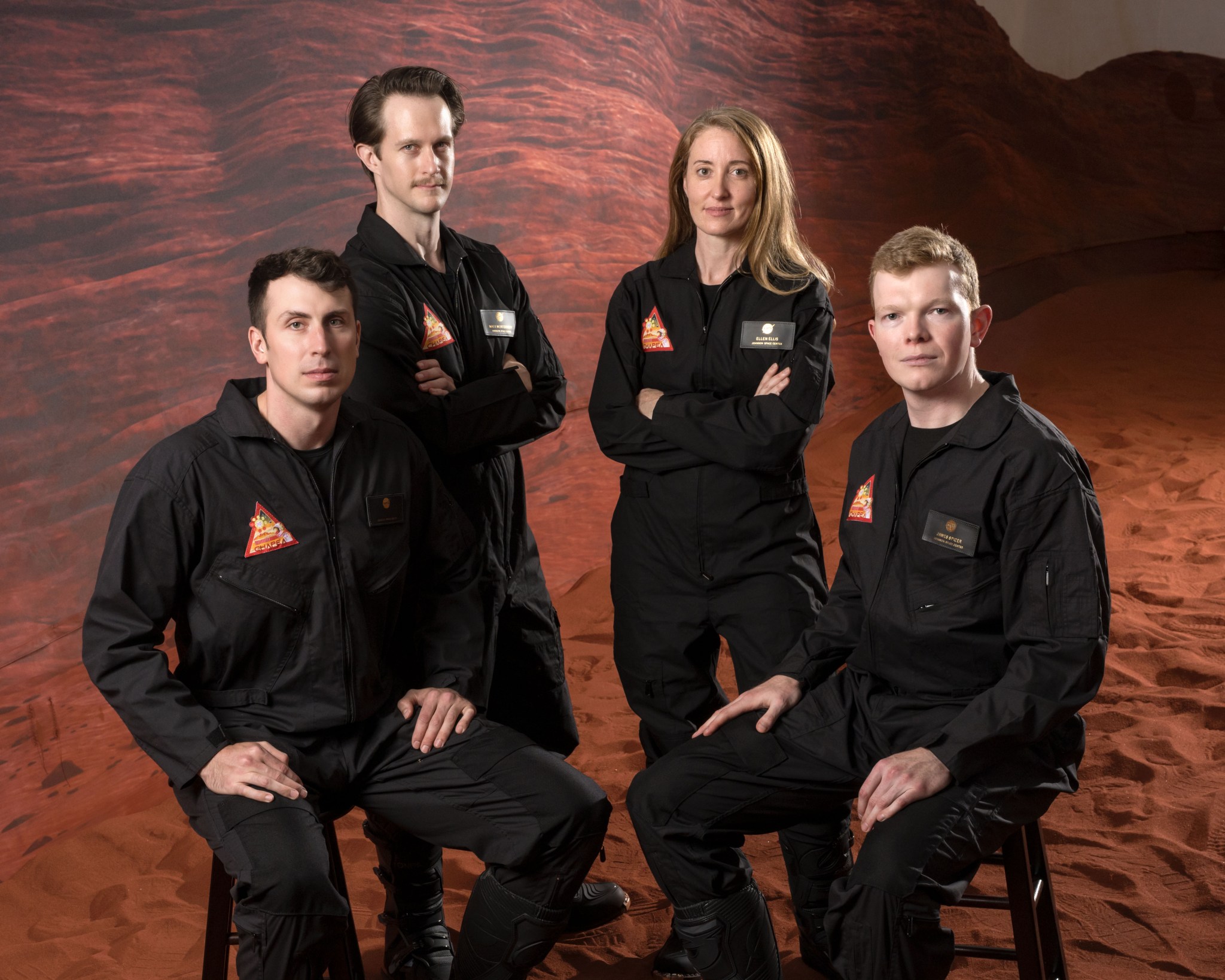
NASA's longest Mars simulation ends Saturday after 378 days in isolation

Shock waves inside giant exoplanets may explain their puzzling close orbits, study finds
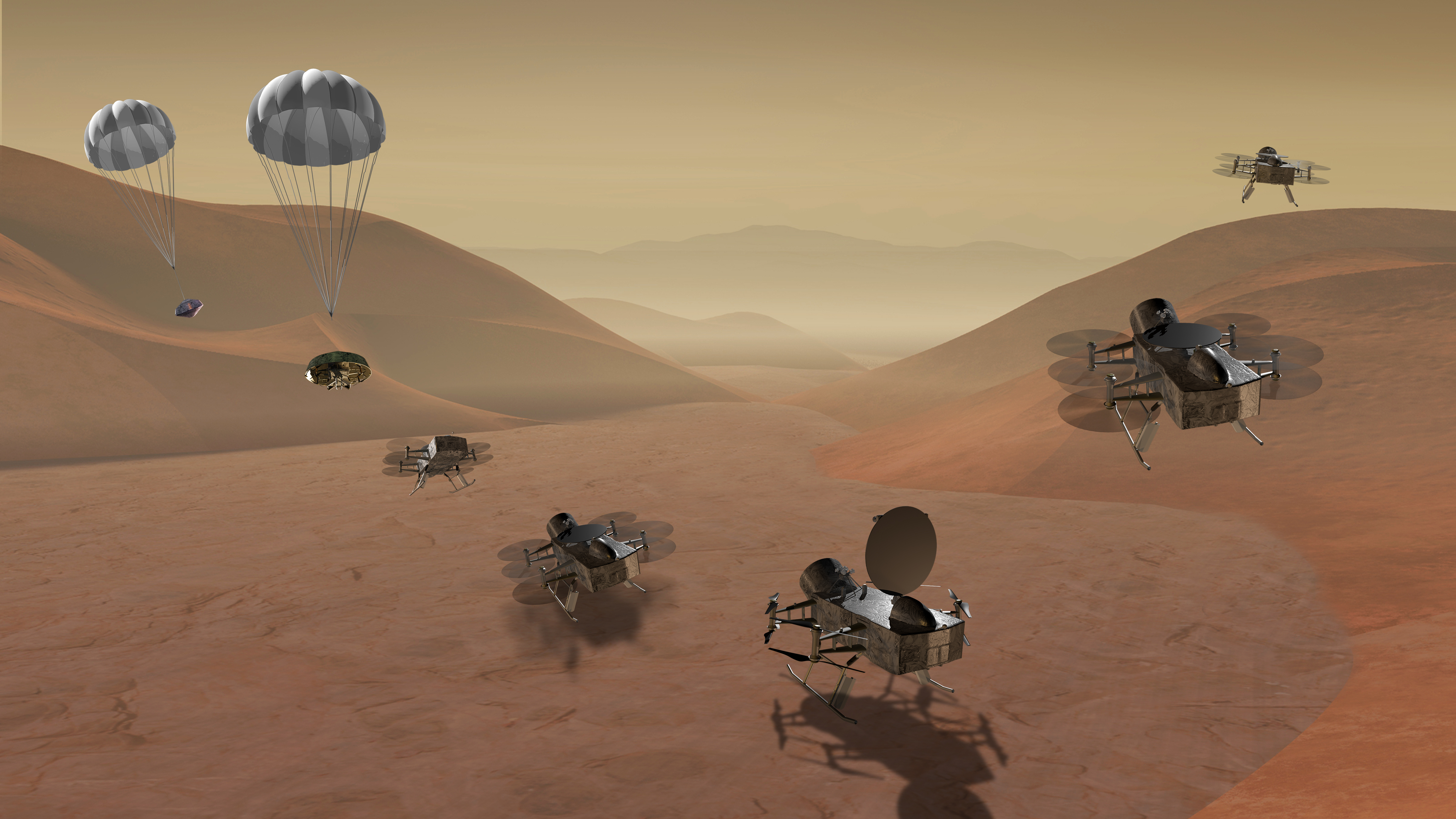
NASA's Dragonfly rotorcraft completes its first full simulated flight ahead of 2028 launch to Titan
