A Texas fossil misfiled for 40 years rewrites how insects got their six legs
A 324-million-year-old specimen collected in West Texas in 1985 and mistaken for a juvenile crustacean has been reclassified as a new stem-insect species with 24 limbs, filling a decades-old gap in the fossil record of how six-legged animals moved from water onto land.
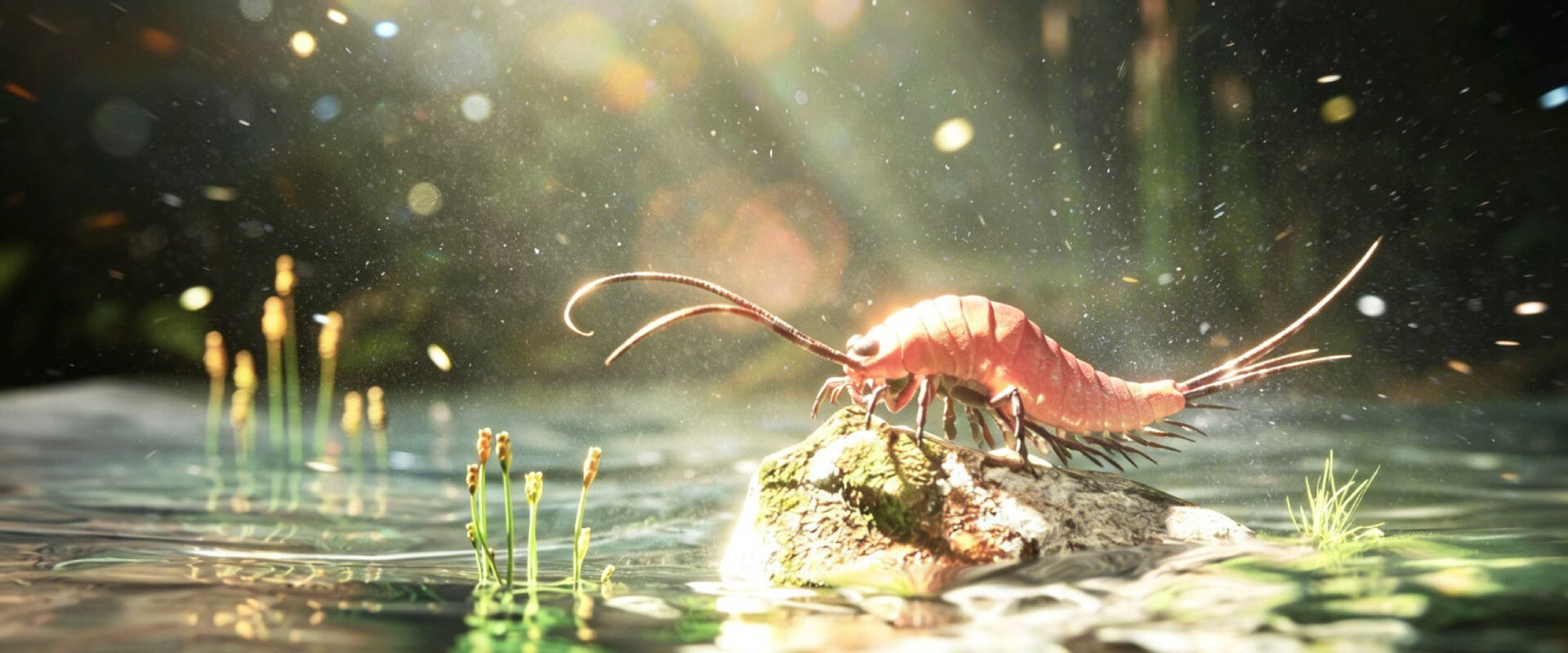
A 324-million-year-old fossil pulled from a shale outcrop in West Texas four decades ago, and then filed away in a museum drawer under the wrong name, has turned out to be the most complete stem-insect ever found from the period when six-legged animals first began colonizing land. The specimen, described this week in the journal Nature as a new species called Chosha praecursor, carried 24 limbs rather than the six that define every living insect, and researchers say it shows that the transition from water to land was gradual rather than abrupt.
The fossil was collected in 1985 from the Tesnus Formation, a band of Late Mississippian shale north of Big Bend National Park in the Marathon Uplift of West Texas, and dates to roughly 324 million years ago. An international team led by Cai Chenyang of the Nanjing Institute of Geology and Palaeontology, part of the Chinese Academy of Sciences, and Erik Tihelka, a joint-training PhD student at the University of Cambridge, published the description along with collaborators from the United States and Spain.
The numbers behind the find
The specimen is an adult female measuring 32.09 millimeters in body length, or nearly 50 millimeters including its trailing tail filaments, according to the research team's release distributed through EurekAlert. Nine of its eleven abdominal segments carried a pair of paddle-like, gill-fringed appendages, in addition to the three pairs of walking legs on its thorax — 24 limbs in total, four times what any modern insect carries. It also had a preserved ovipositor, an egg-laying structure, and long whip-like antennae.
Researchers say the fossil helps close an approximately 80-million-year gap in the hexapod fossil record, the stretch between molecular-clock estimates for when six-legged animals first diverged and the point in the fossil record where diverse, unambiguously terrestrial insects appear. Chosha praecursor sits inside that gap, in strata roughly 324 million years old, and shows anatomy that is neither fully aquatic nor fully terrestrial.
The rock that entombed the animal offers its own clue. The team's release describes the fossil-bearing layer as calcareous claystone concretions formed in near-shore, shallow-water delta-coastal settings, consistent with an animal that moved between submerged and exposed ground rather than living permanently in either. That reading lines up with the anatomy: gill-fringed paddles for swimming, alongside walking legs and a hardened body plan suited to time spent out of the water.
A fossil misfiled for 40 years
The specimen's path to publication took decades. Collected in the 1980s, it was originally classified as a juvenile crustacean and given the name Tesnusocaris goldichi, then placed in a museum collection in San Diego, where it drew little further attention. According to an account carried by Science News, Tihelka came across a line drawing of the fossil in a secondhand Russian paleontology textbook and recognized features inconsistent with a crustacean, prompting the team to re-examine the original specimen using cross-polarized light imaging, a technique that reveals surface detail invisible under standard lighting. That re-analysis uncovered the segmented abdominal limbs and other hexapod features that led to the reclassification.
The genus name, Chosha, draws on ch'osh, the Navajo word for insect, combined with the Latin praecursor, meaning forerunner — a nod, researchers said, to the region where the fossil was found and to the animal's place near the root of the insect family tree, according to details reported by ScienceAlert.
The fossil record of the earliest hexapods has always been thin and contentious. The oldest widely cited candidate for a true insect, Rhyniognatha hirsti, comes from the roughly 400-million-year-old Rhynie chert in Scotland and is known only from a pair of mandibles, leaving its full body plan unknown. Between that Early Devonian fragment and the well-preserved, winged insects of the later Carboniferous coal-swamp faunas lies the gap the new paper addresses. As part of the same study, the authors also re-examined two other obscure Paleozoic specimens — a partial hexapod called Leverhulmia, also from the Early Devonian of Scotland, and an unnamed specimen from the Mazon Creek fossil beds of Illinois — and concluded that both likely belong to the same semi-aquatic lineage as Chosha, rather than to modern insect groups as previously assumed.
Rewriting assumptions about the first insects
Insects make up the majority of described animal species on Earth, and their defining trait — six legs, arranged as three pairs on the thorax — is baked into the group's scientific name, Hexapoda. The new fossil indicates that body plan was not the starting point. Early relatives of today's insects appear to have carried substantially more limbs, gradually losing or repurposing the extra abdominal pairs as their descendants moved fully onto land. The ScienceDaily summary of the findings notes that the paddle-shaped rear appendages and gill-like structures point to an amphibious lifestyle, with the animal likely living at the margin of shallow deltaic waters rather than fully in or out of them.
"It's a funny thing. We call insects 'hexapods,' meaning six legs. But it turns out that the original ones had many more," said Erik Tihelka, the study's co-lead author.
The finding is likely to matter most immediately to entomologists and evolutionary biologists working on the deep history of arthropods, a field that has long been constrained by a thin fossil record from the Devonian and early Carboniferous periods, when the transition to land is thought to have occurred. Museum collections assembled decades ago, before modern imaging techniques existed, are now seen as a likely source of further specimens that may have been misidentified in the same way Chosha was.
What happens next
Tihelka told Science News the fossil demonstrates "there were these transitional forms along the way" before insects settled permanently on six legs, rather than the shift happening in a single evolutionary step. Because the specimen sat misidentified in a museum drawer for roughly 40 years before its re-examination, the authors' re-assessment of two additional Paleozoic specimens in the same paper — previously catalogued as unrelated hexapods from Scotland and Illinois — suggests that other overlooked fossils from the same geological window may be reclassified as researchers revisit older museum collections with modern imaging tools.
The full description, including comparative anatomical analysis against other early hexapods and a revised placement of Chosha praecursor on the hexapod family tree, appears in Nature's print and online editions this week, alongside the reassessed Leverhulmia and Mazon Creek specimens that the same team says belong to the same amphibious lineage.

Deadly hospital fungus survives antifungal drugs by duplicating its whole genome, study finds

China's Chang'e-6 moon rocks suggest a new explanation for the lunar far side's thick crust

NASA Telescopes Trace a Ghostly Radio 'Treble Clef' to a Galaxy-Cluster Collision Hidden Behind the Milky Way
