Ancient Arctic warmth reveals winter sea ice loss has been underestimated, study finds
Using algae chemicals preserved in seafloor mud from a warm period 6,000 years ago, Cambridge-led researchers recalibrated 27 climate models and found future Arctic winter sea ice could shrink by roughly 1 million square kilometers more than current projections show.

Future Arctic winter sea ice loss has likely been underestimated, according to a new study that used algae chemicals preserved in ancient seafloor mud to correct the climate models scientists rely on to forecast the region's future. The research, published by the University of Cambridge, found that by the end of this century the Arctic could lose roughly 1 million square kilometers more winter sea ice than current projections show — an area larger than Texas and California combined.
The study, led by Crystal Fu of the Scott Polar Research Institute at Cambridge, appears in Nature Geoscience under the title "Palaeoclimate constraints tighten future Arctic winter sea ice projections." Fu worked with Cambridge geographer Matthew Osman and mathematician Marco Aquino-López of Mexico's Centro de Investigación en Matemáticas, with funding from the U.S. National Science Foundation and the Cambridge Trust.
What the numbers show
Most climate models, the team found, have been running too warm-friendly when it comes to winter ice — overestimating how much would survive the dark Arctic months. When the researchers recalibrated the models against real-world evidence from Earth's past, that optimism disappeared.
- Future winter sea ice loss projections grew by about 1 million square kilometers once the models were corrected.
- Applying the new weighting to historical simulations "completely eliminated the positive bias" the models previously carried, Fu said.
- Uncertainty in the projections — one of the biggest obstacles to planning for a changing Arctic — was cut by as much as 85 percent.
- The correction draws on the largest database ever assembled of a specific algae biomarker from Arctic sediment cores.
The fix came from comparing 27 climate models against conditions roughly 6,000 years ago, during the mid-Holocene, when a shift in Earth's orbit warmed the Arctic and thinned its sea ice far more than industrial-era greenhouse warming has so far. Because that warming had a different cause than today's, the fact that it still produces a reliable signal is notable. "If it warms, sea ice is going to melt," Fu said, arguing the physics holds regardless of why the warming happens.
Reading the past in algae residue
To reconstruct how much ice covered the Arctic Ocean six millennia ago, the team compiled measurements of IP25, a chemical compound produced only by algae that lives inside sea ice, extracted from ocean-floor sediment cores across the Arctic basin. They paired those measurements with biomarkers left behind by open-water organisms, allowing them to distinguish ice-covered stretches of ocean from open water in the deep past.
Each of the 27 climate models was then tested against that reconstruction and given a statistical weight, using a Bayesian approach, according to how closely its simulated mid-Holocene ice cover matched the sediment evidence. Models that overstated ancient ice cover were judged less trustworthy and down-weighted; the same weights were then carried forward and applied to the models' projections of 21st-century winter sea ice, on the assumption that the physical processes governing ice formation and melt are consistent across different climate states.
Winter sea ice has drawn far less public attention than the more photogenic summer melt that produces record-low September extents most years. Yet according to the Cambridge release, climate models disagree with each other more in winter than in any other season, leaving a wide range of future estimates that policymakers and shipping, fishing and defense planners have had to treat with caution.
Why it matters beyond the Arctic
The stakes extend well south of the Arctic Circle. Diminished winter sea ice has been linked by other researchers to shifts in the jet stream that are associated with colder winters and heavier snowfall across the United Kingdom, northern Europe and North America — a counterintuitive consequence of a warming planet that has fueled public confusion in past cold snaps. The new study's tighter projections give scientists a sharper tool for separating noise from signal in those regional forecasts.
The backdrop is a sea-ice record already trending in one direction. The Arctic's annual winter maximum extent hit 14.33 million square kilometers in March 2025, the lowest in the 47-year satellite record, according to the National Snow and Ice Data Center; the Cambridge team notes that mark was tied again in 2026. Every additional increment of winter ice loss narrows the habitat available to ice-dependent species such as polar bears, ringed seals and walruses, and shortens the operating season for Indigenous communities and vessels that depend on predictable, stable ice.
The paper's authors also flag, more tentatively, that the same recalibration hints at underestimated precipitation changes elsewhere — specifically heavier snowfall over southeast Greenland and increased rainfall in the Mediterranean. The study's authors describe those links as preliminary, but if confirmed they would carry consequences for Greenland ice-sheet mass balance and flood risk in southern Europe.
"By using evidence from the past, we can now produce more reliable maps of where Arctic winter sea ice is likely to disappear," said Marco Aquino-López, a co-author of the study at CIMAT in Mexico.
What comes next
The authors acknowledge the limits of reasoning from one ancient warm period to a very differently caused modern one; linking sediment-derived estimates of ice thousands of years old to 21st-century projections carries uncertainty at both ends of the comparison, and the mid-Holocene Arctic warmed because of slowly shifting orbital geometry rather than greenhouse gas accumulation. Even so, the team argues the agreement between the ice-free physics in both eras makes the correction worth adopting.
Independent reporting on the findings, including a summary from Gizmodo, noted that the revised model weights could soon feed into the next round of international climate assessments, where winter Arctic projections have historically carried wide error bars. The Cambridge team says it now plans to extend the same sediment-based weighting approach to other past warm intervals, including the last interglacial period roughly 127,000 years ago, to see whether the correction holds across additional climate states — and to narrow, rather than simply shift, the range of futures the Arctic's winters could still take.
A Forgotten Particle May Explain Why Matter Outlasted Antimatter
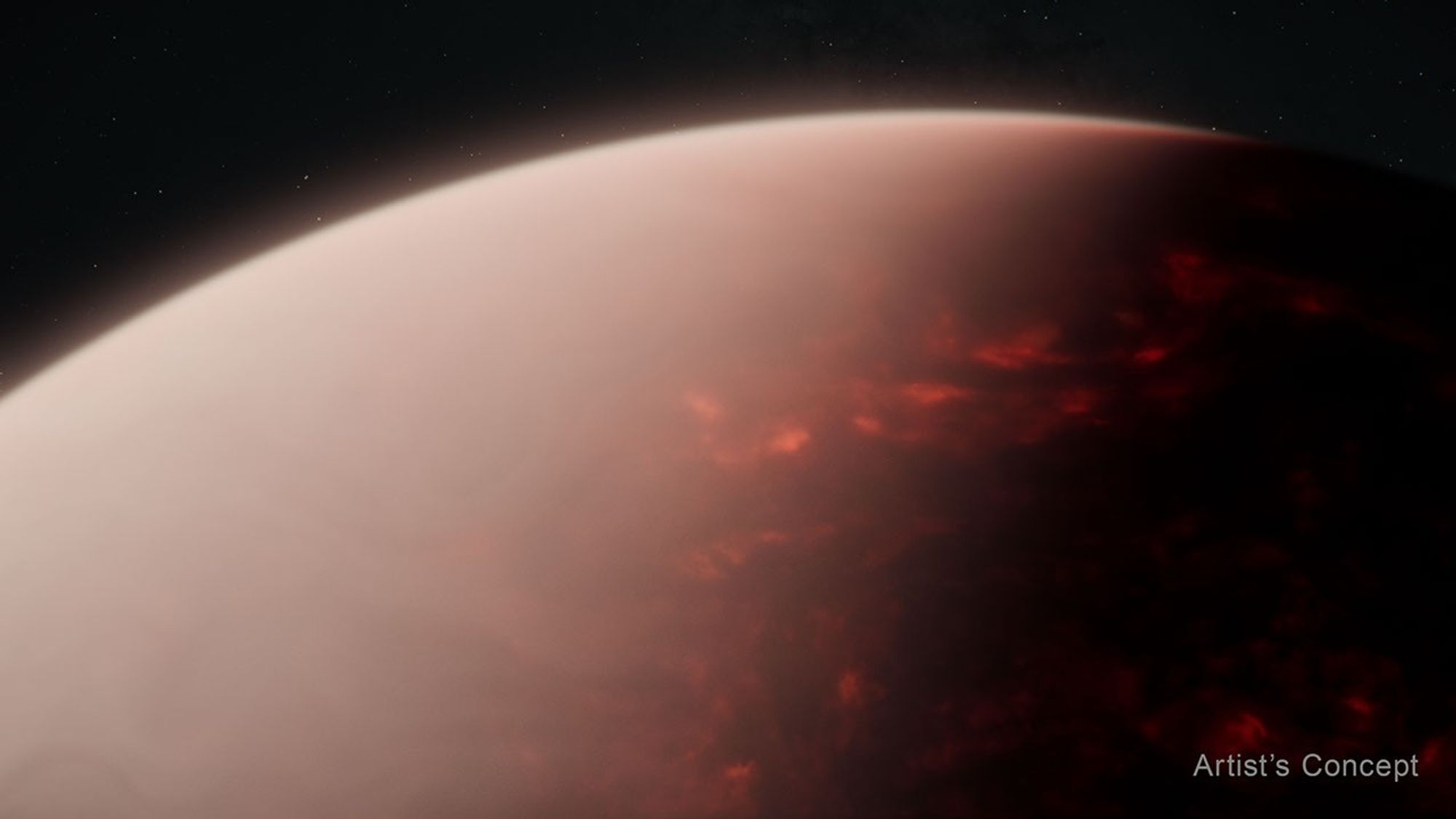
Webb telescope finds a scorched exoplanet that reflects away most of its star's light

Rubin Observatory spots a candidate for the solar system's sixth dwarf planet
