Astronomers confirm youngest planet ever found, still forming around its star
Elias 2-24 b, a Jupiter-sized world less than a million years old, was found hiding in eight-year-old archival telescope data, beating the previous record for youngest confirmed planet by a wide margin.

Astronomers have identified the youngest planet ever confirmed outside our solar system, a Jupiter-sized world less than a million years old that is still gathering material from the disk of gas and dust surrounding its infant star. The discovery, announced by NASA and detailed in a new paper, pushes back the earliest confirmed moment of planet formation ever directly observed and complicates existing models of how giant planets come together.
The planet, designated Elias 2-24 b, orbits a young star roughly 450 light-years from Earth in the constellation Ophiuchus. It was not spotted by a new observation at all, but rather pulled out of archival data that had been sitting, unrecognized, in a telescope's files for years. It is one of more than 6,000 exoplanets confirmed to date outside the solar system, but almost none of those have been caught this early in their formation, while still embedded in the natal disk of gas and dust that birthed them.
The numbers
Elias 2-24 b is estimated to be less than one million years old, a blink of an eye by planetary standards, and roughly the mass of Jupiter. It orbits its star at a distance about 55 times greater than the distance between Earth and the Sun, sitting within a gap carved into the star's surrounding disk of dust and gas. The discovery was made using the Near Infrared Camera 2 instrument paired with adaptive optics at the W. M. Keck Observatory in Hawaii, with the original data captured in 2018 and confirmed through follow-up analysis and additional observations from the Atacama Large Millimeter/submillimeter Array and the European Southern Observatory's Very Large Telescope.
Until now, the youngest confirmed planets were a four-way tie between worlds orbiting the stars PDS 70 and WISPIT 2, all more than five million years old. Elias 2-24 b beats that mark by a wide margin, offering researchers a direct look at a planet still in the earliest stages of assembling itself.
How the discovery was made
The team, led by Andrea Bernardi, a doctoral candidate at Chile's Universidad Diego Portales, did not point a telescope at a new target. Instead, the researchers combed through archival observations of seven young stars previously imaged by Keck's coronagraph, a device that blocks a star's overwhelming glare so that faint objects nearby, like orbiting planets, can be seen. Buried in data collected years earlier, they found a faint point of light near the star Elias 2-24 that moved in a pattern consistent with an orbiting planet rather than a background star or an imaging artifact.
John O'Meara, chief scientist at the observatory, said the find underscores how much remains to be discovered in data astronomers already have in hand, noting that astronomical archives can have a remarkably long shelf life. Cross-referencing the Keck images against measurements from ALMA and the Very Large Telescope allowed the team to confirm the object's planetary nature and pin down both its mass and its position within the gap in the star's dusty disk. That multi-observatory approach, drawing on instruments built for very different purposes, from radio-wavelength mapping of cold dust to optical and infrared imaging, was essential to ruling out the possibility that the faint point of light was simply background contamination or noise in the data.
Who is affected, and why it matters
The discovery matters most immediately to astronomers who build models of how giant planets form, a process that remains only partly understood. Leading theories generally predict that gas giants need at least a few million years to accumulate enough material to reach something close to Jupiter's mass. A confirmed planet already at that scale in under a million years challenges those timelines directly.
"Our planet-formation models already struggled to explain the previous record holders for the youngest known planet... Elias 2-24 b shows us that even our best planet-formation models are still missing some important processes," said Lucas Cieza, a professor at Chile's Instituto de Estudios Astrofísicos and a co-author of the study.
Bernardi described the find as an unusually direct window into an otherwise fleeting stage of a planet's life, since Elias 2-24 b is still visibly accreting material from its surroundings. The paper, published in The Astrophysical Journal Letters, argues that catching a planet in the act of active accretion at such an early age gives theorists concrete data to test against competing models of how gas giants assemble, rather than relying solely on simulations. Outlets including Boing Boing and Tech Explorist noted that the result adds to a small but growing catalog of planets caught mid-formation, each testing the limits of existing theory a little further.
What happens next
Researchers say the next step is targeted follow-up observation of Elias 2-24 b itself, rather than further archival searches, to measure its composition and refine estimates of how quickly it is still growing. The team also plans to revisit archival data from other young stellar systems using the same technique that surfaced this discovery, on the theory that other very young planets may be hiding, unrecognized, in existing telescope archives in the same way Elias 2-24 b was.
More broadly, the discovery is likely to sharpen interest in upcoming instruments designed specifically to image young, embedded planets directly, since much of the evidence for planet formation to date has come from indirect signatures such as gaps and rings in protoplanetary disks rather than the planets themselves. With a confirmed, actively accreting world now available for study at such an early age, astronomers have a rare benchmark against which to test the next generation of formation models, and a reminder that some of the most significant discoveries may already be sitting in data collected years before anyone noticed.
NASA Science — Newfound 'Baby' Planet Smashes Record for Youngest Known World
W. M. Keck Observatory — Youngest Exoplanet Yet Discovered Found Hiding in Keck Observatory Data
The Astrophysical Journal Letters — Elias 2-24 b study (DOI 10.3847/2041-8213/ae9bb6)
Tech Explorist — Astronomers confirm the youngest planet ever found
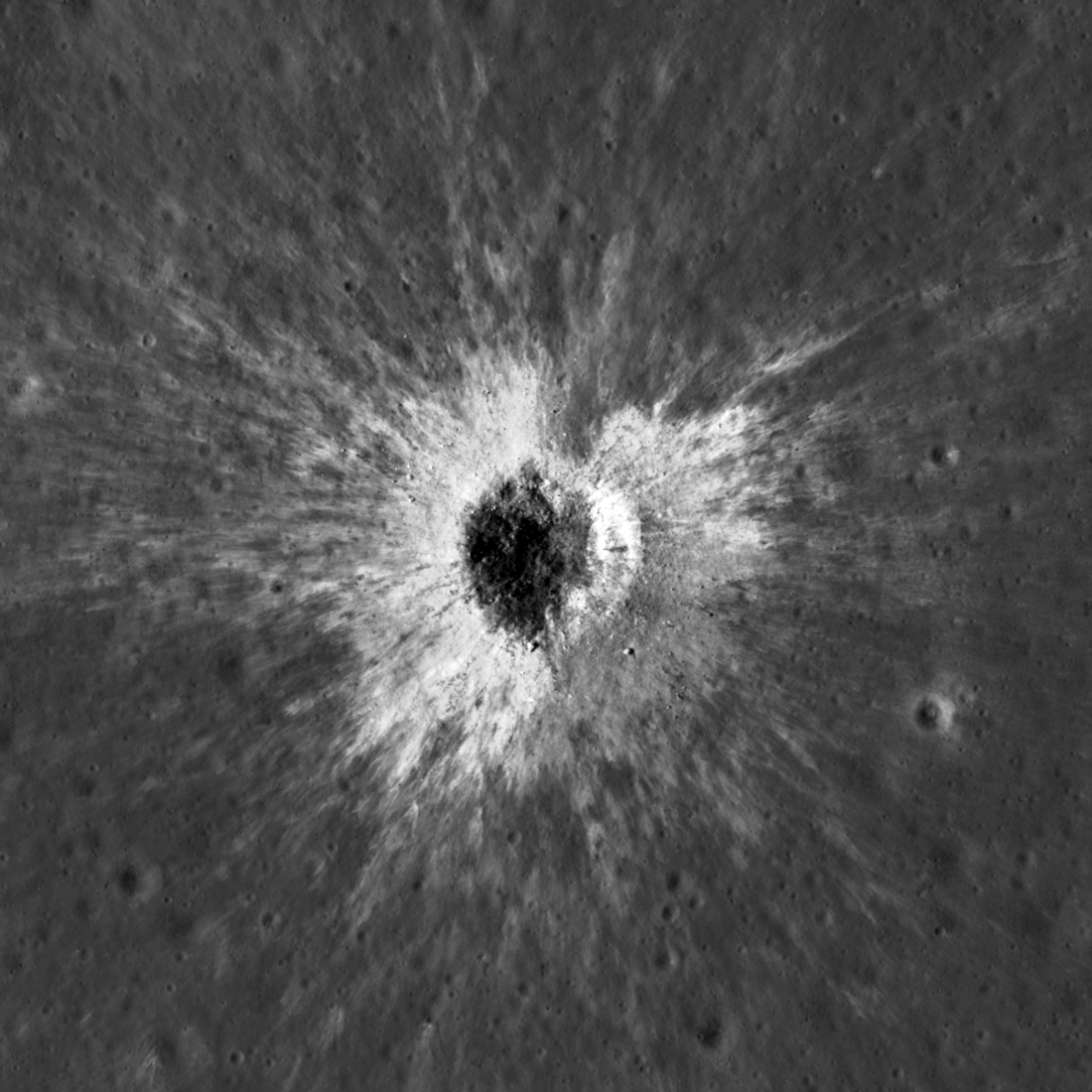
NASA orbiter finds Moon's largest fresh crater, formed just two years ago

Swedish physicists cut quantum computing operation times by more than 1,000-fold

Scientists map more than 1,000 overlooked brain proteins, tying one to Alzheimer's
