Cheap smartphone attachment matches doctors in rural India cataract screening trial
A device costing under £150, clipped onto an ordinary phone, let community health workers screen for cataracts at rural Indian eye camps, with remote doctors agreeing with in-person exams on referrals 96 percent of the time.
A smartphone attachment costing less than £150, including the phone itself, matched the judgment of ophthalmologists examining patients in person when used to screen for cataracts at rural outreach clinics in South India, according to findings presented Sunday at the 44th Congress of the European Society of Cataract and Refractive Surgeons in London. Researchers say the low-cost device could extend cataract screening to rural communities that current outreach models mostly miss.
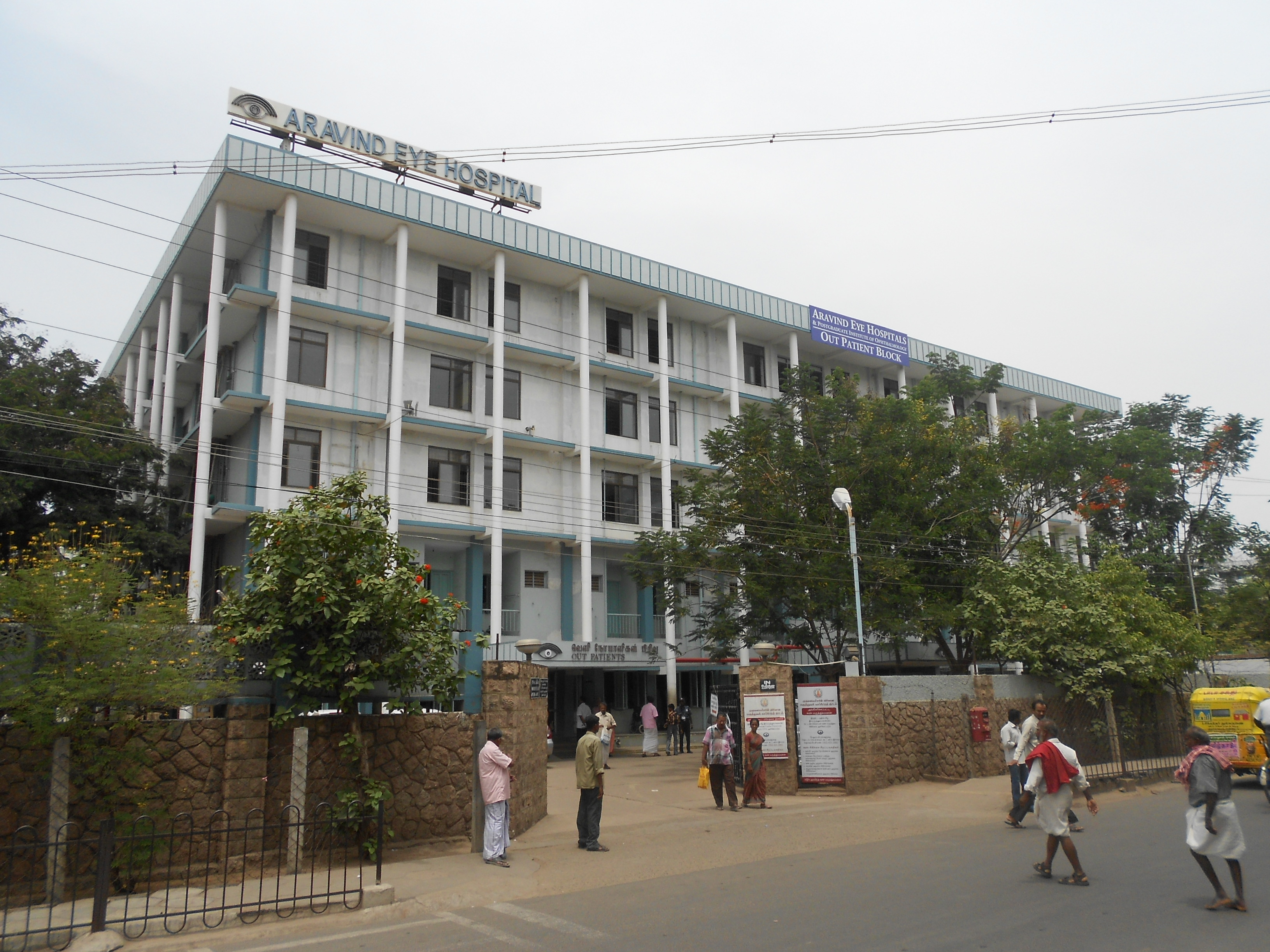
The device, developed by researchers at Johns Hopkins University working with Aravind Eye Hospital in India, clips onto an ordinary smartphone camera. It pairs a magnifying lens with two small LEDs powered by the phone and a silicone eyecup that blocks ambient light, turning the handset into a portable slit-lamp-style imaging tool. Community health workers with no prior ophthalmic training used it to photograph patients' eyes at 19 rural eye camps near Puducherry, in the South Indian state of Tamil Nadu, over several months.
The numbers
The health workers screened 1,093 patients, each exam taking under two and a half minutes per eye after roughly three hours of training. More than 90 percent of the resulting images were sharp enough for a specialist to make a diagnosis. Those images were sent to ophthalmologists working remotely, whose assessments were then compared against the judgments of a separate ophthalmologist examining the same patients face to face at the camp.
The two methods agreed on whether a patient had a cataract in 89 percent of cases, rising to 96 percent agreement for mature, more advanced cataracts. Agreement was lower, at 85 percent, for early or immature cataracts, which are harder to detect from photographs alone. Crucially, when it came to the question that determines what happens to a patient next — whether they needed a hospital referral for further care or surgery — the remote and in-person doctors agreed 96 times out of 100.
A gap in the outreach model
Cataract remains the leading cause of blindness worldwide. The World Health Organization estimates that 94 million people globally live with distance vision impairment or blindness caused by cataracts, and that roughly half of those who need surgery cannot get it, a gap concentrated in low- and middle-income countries. In the United States, cataract is responsible for about half of all cases of low vision, according to the National Eye Institute.
For decades, groups such as the Aravind Eye Care System, one of the world's largest eye-care networks, have tried to close that gap with "eye camps" — temporary clinics where ophthalmologists travel from base hospitals to rural sites on fixed dates to examine and refer patients. But the model has a structural limit: it depends on a specialist physically being present, and on patients being able to travel to the camp on the day it is held.
Dr. Prabhu Krishna Ravilla, a medical officer at Aravind Eye Hospital who presented the findings, said an earlier study at the hospital found that eye camps reached only about 7 percent of local rural residents, and that a third of those who stayed away turned out to need cataract surgery. "Cataract is still the major cause of global blindness, affecting nearly 100 million people worldwide," he said, according to a summary of the presentation distributed by the society, and reaching people who never make it to a camp has remained the harder problem.
Who stands to benefit, and the caveats
The approach is aimed squarely at that missed population: rural residents, often older adults, who live far from a base hospital and cannot easily reach a temporary camp on a given day. If a smartphone image can be captured by a local health worker and reviewed by a specialist elsewhere, patients could in principle be triaged without an ophthalmologist ever visiting in person, or without the patient needing to travel until a referral is confirmed.
The research team also reported that the device correctly identified whether a patient had already had a previous lens implant 97 percent of the time, a detail with practical value, since it affects what kind of follow-up care a referred patient needs. Researchers were careful to frame the technology as a triage aid rather than a diagnostic replacement for a full eye exam.
"This is a promising approach for under-served regions, where access to ophthalmologists can be limited," said ESCRS president Professor Burkhard Dick.
Ravilla said the results should not be read as evidence that remote screening can substitute for a comprehensive eye examination. "These findings challenge the assumption that specialist presence is necessary for accurate cataract screening," he said, while stressing the device's role is as a carefully governed screening and referral tool, not a diagnostic endpoint in itself. The lower, 85 percent, agreement rate for immature cataracts underscores that limitation: subtler cases are the ones most likely to be missed or misjudged from a photograph, even by a trained specialist reviewing it remotely.
The work, presented as a conference abstract rather than a peer-reviewed journal paper, was funded in part by the National Eye Institute, the Microsoft Innovation Acceleration Award and the Johns Hopkins Center for Global Health, along with two endowed ophthalmology professorships at the university. Outside coverage of the presentation, including a summary published by Inside Precision Medicine, noted the device's low cost as central to its appeal for health systems with constrained budgets.
What happens next
Because the findings have not yet gone through peer review, the next step for the Johns Hopkins and Aravind researchers is expected to be publication of the full dataset in a journal, along with larger or longer-running trials to see whether the agreement rates hold up across more health workers, more camps and a wider range of cataract severity. Researchers also flagged immature cataracts, where remote and in-person diagnoses diverged most, as the area most in need of refinement before any wider rollout.
If the approach holds up at scale, Aravind's network in Tamil Nadu, one of the settings that pioneered the eye-camp model itself decades ago, would be a likely proving ground for expanding smartphone-based referral beyond the 19 camps in the initial study, potentially reaching the rural patients who existing camps still miss.

Mercury has shrunk far more than scientists thought, new study finds

ADHD Linked to Sharply Higher Rates of Gut Problems, Largest Review Finds
Physicists Measure Gravity's Effect on a Falling Atom's Quantum Wave for the First Time
