Crows Outpace Primates in Split-Second Decisions, Brain Recordings Show
Recordings from a carrion crow's brain show it can weigh visual evidence and commit to a choice in about a quarter of a second, roughly half the time typically reported for humans and monkeys on comparable tasks.
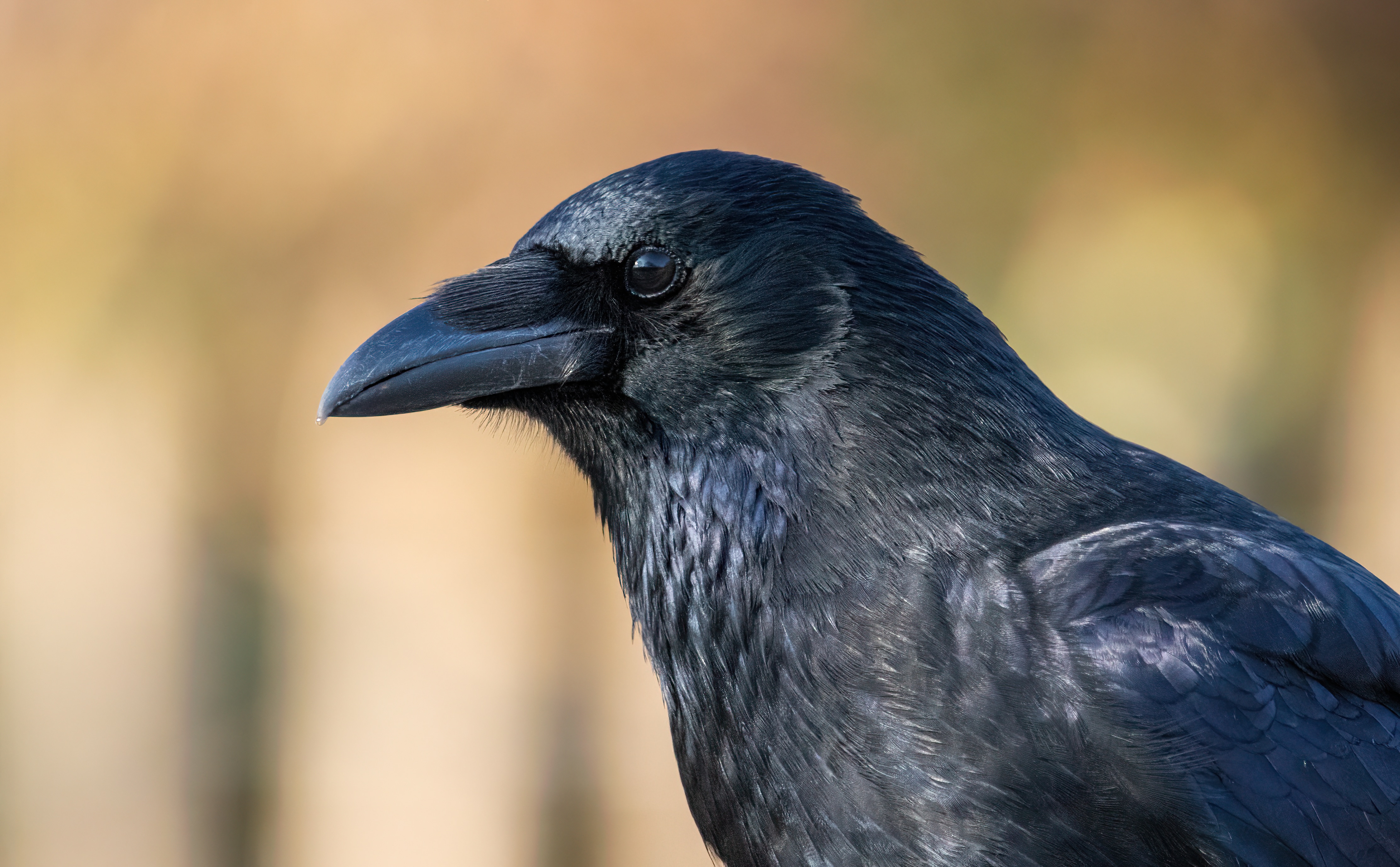
A carrion crow watching a screen full of moving dots needs, on average, about a quarter of a second to decide which way most of them are drifting and to peck the correct side of the screen. That is roughly half the time such judgments typically take in human and primate studies of the same kind of task, according to a study published this week in the journal Science by researchers at the University of Tübingen.
The paper, titled "Ultrarapid decision-making in an avian brain," is the work of doctoral researcher Philipp Schmidbauer and neurobiologist Andreas Nieder at Tübingen's Institute of Neurobiology, and was summarized in the university's own account of the findings. It adds a precise, moment-by-moment account of how a bird's brain weighs visual evidence to a growing body of work from the same lab arguing that crows, despite a brain built on a completely different plan from that of mammals, can match or outperform primates on demanding cognitive tasks.
A quarter-second choice
Two carrion crows were trained on a classic random-dot motion task, familiar from decades of primate neuroscience. White dots moved across a black touchscreen, some coherently in one direction and the rest at random, and the birds had to judge whether the overall drift was to the left or the right, then peck a target on that side for a food reward.
Averaged across trials, the crows committed to an answer in about 235 milliseconds, the study found, while keeping accuracy high. When the motion signal was weak and hard to read, the birds' choices were still better than chance; when it was strong and unambiguous, they got it right nearly 100 percent of the time.
- Average time from stimulus onset to decision and response: about 235 milliseconds
- Point at which neural signals for "left" and "right" began to diverge: about 70 milliseconds after the dots appeared
- Accuracy on unambiguous motion trials: close to 100 percent
- Accuracy on weak, hard-to-read motion trials: above chance level
Watching the decision form inside the brain
While the birds performed the task, the researchers recorded the activity of individual neurons in the nidopallium caudolaterale, or NCL, a region of the bird forebrain that other work from the Nieder lab has mapped as a hub for multisensory input and executive control, broadly comparable in function to the mammalian prefrontal cortex even though it lacks the layered structure of a cortex. Signals tied to the eventual choice began to separate from background activity around 70 milliseconds after the dots appeared, well before the crow responded, and firing rates rose gradually toward a threshold rather than snapping on all at once.
That pattern is the behavioral and neural signature of an evidence-accumulation process: the brain treats each glimpse of the moving dots as a small piece of evidence, piles that evidence up over time and acts once it reaches a critical level. The same framework, often modeled mathematically as a "drift-diffusion" process, has been used for years to describe how primates, including humans, make quick perceptual judgments. The Tübingen team's finding is that crow neurons appear to follow the same basic rulebook, just compressed into a shorter window.
"Even when the patterns of motion were hard to recognize, the crows' decisions were still better than random choices, and with clear signals, they achieved an accuracy of nearly 100 percent," Schmidbauer said, describing the balance the birds struck between speed and reliability.
A different brain, a familiar algorithm
The result is notable because birds and mammals last shared a common ancestor more than 300 million years ago, and their brains evolved along separate architectural lines. Mammals process complex cognition in a six-layered cerebral cortex; birds have no cortex of that kind, relying instead on densely packed clusters of neurons such as the NCL. That the two systems appear to converge on similar decision-making dynamics, despite the structural gulf between them, is read by the authors as evidence that evidence-accumulation is a general computational solution rather than a quirk of mammalian cortical wiring.
It builds directly on earlier headline-making work from the same group. In 2020, Nieder's lab reported in Science that crow brain activity tracked what the animals subjectively perceived, not just what was shown to them, evidence the researchers took as a signature of conscious sensory experience in a non-mammal. In 2024, the lab showed that crows can plan the exact number of calls they are about to make before they start vocalizing. The new study extends that record by showing the birds' speed advantage is not just behavioral folklore about clever corvids, but something that shows up, trial by trial, in the firing of individual neurons.
Why the speed may matter to the animal
Nieder has suggested the crows' rapid decision-making likely reflects ecological demands rather than a general cognitive superiority: birds navigating flight, dodging obstacles and locating food on the wing need to process visual information and commit to a motor response far faster than an animal that can afford to pause and deliberate on the ground. A quarter of a second is not an arbitrary number to a flying animal threading through branches at speed; it is closer to the time budget available before a decision becomes too late to act on.
That framing matters for how the results get interpreted outside the lab. The study is not a claim that crows are smarter than humans or monkeys, nor does it supply exact comparison figures for those species within the paper itself; the "twice as fast" framing used by the university and in coverage of the work refers to the general range of decision times reported in prior primate studies using similar random-dot tasks, not to a new head-to-head experiment involving all three species.
What comes next
The immediate open question, which the researchers flag themselves, is mechanistic: what, at the level of neural circuitry, lets a brain without a layered cortex accumulate and threshold sensory evidence this quickly. Pinning that down would likely require further recordings, comparisons across more bird species, and possibly comparative work in other non-mammalian brains that solve similar problems, such as raptors or cephalopods. For now, the Tübingen group's two study crows have added a concrete number, 235 milliseconds, to a research program that has spent over a decade arguing that the corvid brain, cortex-free as it is, runs cognitive software recognizably like our own.
A Forgotten Particle May Explain Why Matter Outlasted Antimatter

Webb telescope finds a scorched exoplanet that reflects away most of its star's light

Rubin Observatory spots a candidate for the solar system's sixth dwarf planet
