Global Snakebite Death Toll May Be Triple Earlier WHO Estimates, Study Finds
A geostatistical analysis of two decades of data suggests snakebites kill up to 513,000 people a year and disable hundreds of thousands more, far exceeding the World Health Organization's current figures for a disease still classified as neglected.

Snakebite envenoming kills far more people worldwide each year than international health authorities have assumed, according to a study published Tuesday in PLOS Medicine that puts the annual global death toll as high as 513,000, roughly triple the upper bound in current World Health Organization estimates. The paper, led by researchers at the Liverpool School of Tropical Medicine and the University of Kelaniya in Sri Lanka, is the first comprehensive re-estimate of the global burden of snakebite in nearly two decades and is intended to give governments and aid agencies a more accurate baseline as they try to meet a 2030 target to halve snakebite deaths and disabilities.
The researchers, led by Dileepa Ediriweera and Anuradhani Kasturiratne, built low and high estimates from published epidemiological data. Under the low estimate, at least 2.1 million people are envenomed by snakes annually and 274,000 die; under the high estimate, envenomings reach 7 million and deaths reach 513,000. The team also calculated that at least 825,000 people a year survive with severe, permanent disabilities such as amputations and tissue damage. Sub-Saharan Africa accounts for the largest share, roughly 45 to 46 percent of both envenomings and deaths, followed by South Asia at about 27 percent and East Asia and the Pacific at 13 to 16 percent. Low- and middle-income countries bear 56 percent of the global envenoming burden.
How the estimate was built
The WHO's operating figures, in use since the agency adopted its 2019 snakebite strategy, put annual envenomings at 1.8 million to 2.7 million and deaths at roughly 81,000 to 138,000, drawn largely from a 2008 modeling study by an overlapping team of researchers, including several of the same authors. The new paper updates that decade-old baseline with epidemiological data published between January 2007 and March 2025, drawing on 90 sources, 84 of them peer-reviewed, covering envenoming reports from 79 countries and mortality data from 70 countries. The team then used Poisson log-linear geostatistical models, incorporating variables such as minimum temperature variation, urbanization, gender inequality indices, snake species richness and carbon dioxide emissions, to project the burden across all 170 countries where venomous snakes are present.
The gap between the two sets of figures is largely a function of undercounting, the authors say, rather than any actual rise in bites. Snakebite deaths and injuries in rural areas of the countries hit hardest are frequently never recorded by a hospital, a coroner or a national health ministry; many victims are treated by traditional healers or die before reaching care, leaving them out of the vital-registration and hospital-admission data that earlier models leaned on. The new geostatistical approach is designed to correct for that reporting gap by extrapolating from the regions with better data to those without.
Who is affected
The burden falls overwhelmingly on poor, rural communities in tropical and subtropical countries, a pattern consistent with snakebite's 2017 classification by the WHO as a neglected tropical disease. Farmers, herders and agricultural laborers who work barefoot or in the dark are disproportionately bitten, and the same populations often have the least access to antivenom, functioning cold-chain storage or hospitals equipped to manage severe envenoming. Because the authors' models also weighted climate variables such as minimum-temperature variation, the estimates imply that warming trends and land-use change in snake habitats could push the toll higher in coming decades, though the current paper stops short of forecasting future incidence.
Regionally, the toll is concentrated in a handful of species. In South Asia, the so-called Big Four — the Russell's viper, the common krait, the Indian spectacled cobra and the saw-scaled viper — account for the great majority of medically significant bites; India alone reports roughly 46,000 snakebite deaths a year, with the Russell's viper responsible for the largest single share. Saw-scaled vipers, though less lethal per bite than the Russell's viper, range across a vast swath of sub-Saharan Africa, the Middle East and South Asia, helping explain why the new estimates place such a large share of the global burden in Africa even where no single dominant species drives the toll the way Russell's viper does on the subcontinent.
"Snake envenoming is a far greater global crisis than previously recognised," the study's authors wrote in their conclusions, adding that the new figures "establish the critical baseline needed" for tracking progress against the disease.
Reaction and what happens next
Public health specialists covering the paper's release described the scale of the revision as striking given how long the older, lower figures have anchored funding and advocacy decisions. Coverage from outlets including News-Medical and Medical Xpress noted that the authors explicitly frame the work as a tool for prioritizing scarce resources, rather than as a call for panic: the point, they argue, is to give donors and ministries of health an accurate map of where antivenom stockpiles, trained clinicians and prevention campaigns are most urgently needed.
The WHO has run a formal Antivenom Evaluation Programme since December 2015, testing the safety and effectiveness of products sold for use in sub-Saharan Africa and later extending the review to South-East Asia and the Eastern Mediterranean, alongside a Snakebite Information and Data Platform meant to track supply gaps. But the agency's own guidance acknowledges that funding alone will not fix the market: very few countries can produce venom of sufficient quality to manufacture antivenom domestically, so health systems depend on a small number of commercial producers whose output does not always match the venom variants found in a given region. When prices rise, demand falls, prompting manufacturers to cut production further and deepening shortages — a cycle that has already pushed some producers out of the market entirely, on top of weak regulatory oversight in many affected countries that allows substandard antivenoms to circulate.
The paper's lead author, Ediriweera, previously worked on the 2008 estimate that has anchored WHO policy for most of the past two decades, giving the update an unusual continuity: the same broad research lineage is now revising its own earlier numbers upward. One author, David Lalloo of the Liverpool School of Tropical Medicine, disclosed membership on WHO snakebite committees and the Global Snakebite Taskforce, bodies that will likely be among the first to weigh whether the new figures should reset the baseline used to measure the WHO's 2030 target of a 50 percent reduction in snakebite deaths and disability.
- Whether WHO formally adopts the higher figures as its new reference baseline, which would affect how progress toward the 2030 target is measured
- Whether donor governments and organizations shift antivenom and health-system funding toward Sub-Saharan Africa and South Asia, the regions carrying the largest share of the burden
- Further peer review and replication of the geostatistical approach, given that both the low and high estimates carry wide uncertainty ranges
The study was funded by the UK Medical Research Council. It was published in PLOS Medicine, an open-access, peer-reviewed journal.
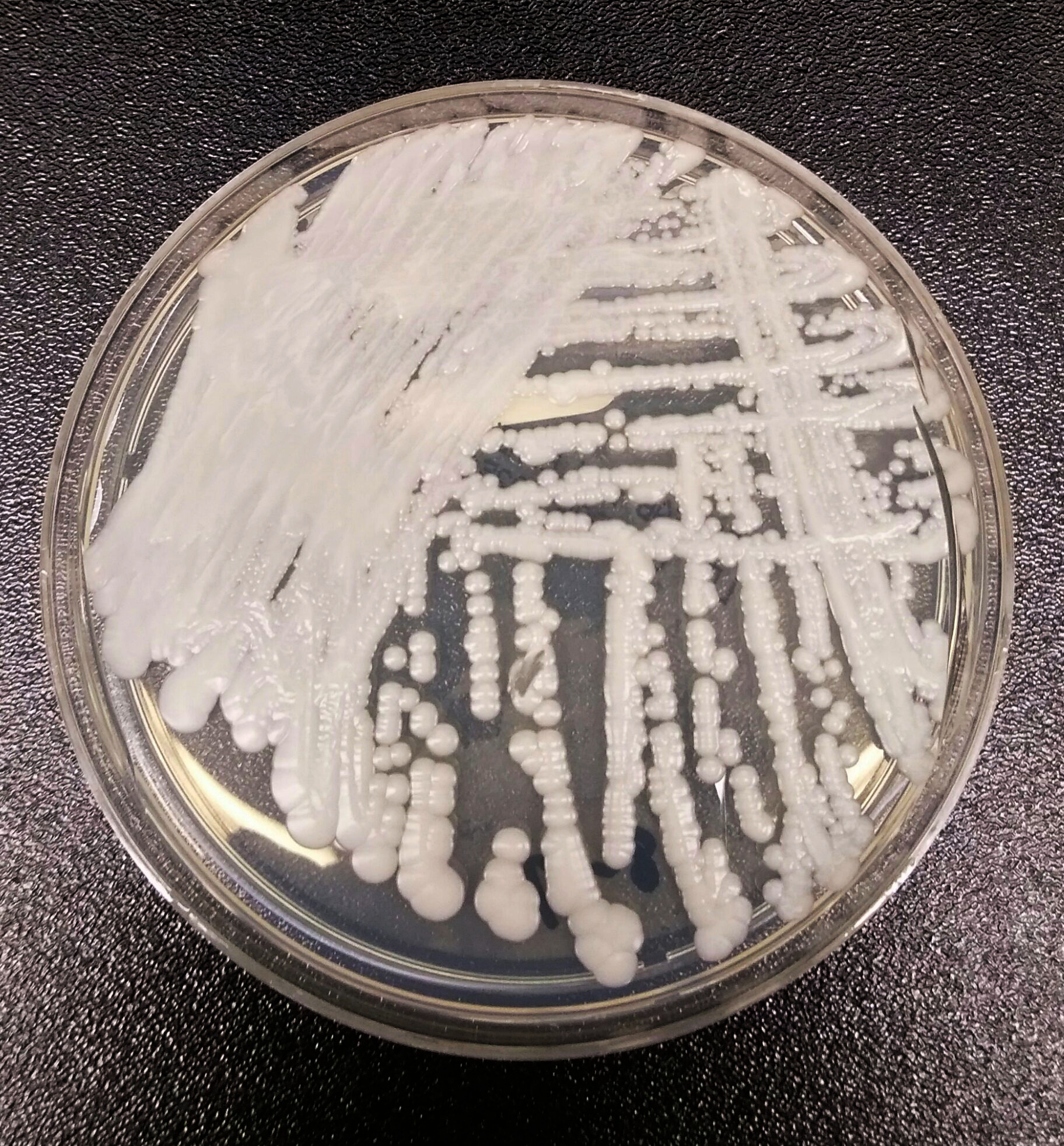
Deadly hospital fungus survives antifungal drugs by duplicating its whole genome, study finds

China's Chang'e-6 moon rocks suggest a new explanation for the lunar far side's thick crust

NASA Telescopes Trace a Ghostly Radio 'Treble Clef' to a Galaxy-Cluster Collision Hidden Behind the Milky Way
