Lab-Grown Brain Cells Learn to "Read" Braille, Pointing Toward Biohybrid Computers
Human brain organoids no bigger than a grain of sand relayed enough signal from a tactile sensor to identify Braille letters with up to 83 percent accuracy, University of Bristol researchers report, an early test of whether living neurons could someday help power computers.
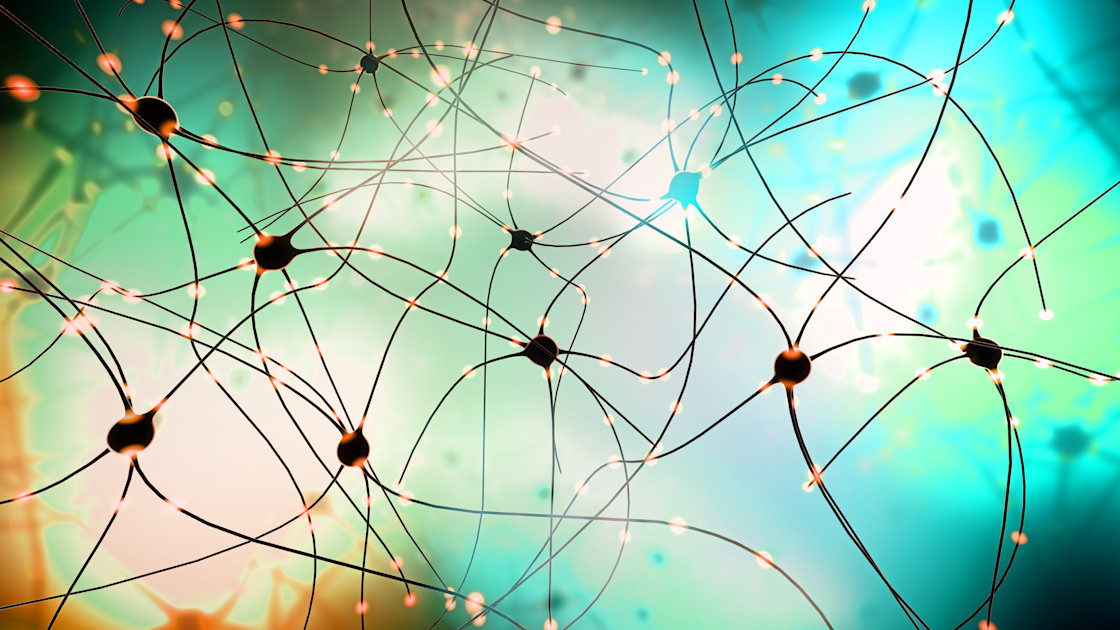
Lab-grown clusters of human brain cells smaller than a millimeter across can receive signals from a tactile sensor and relay enough information to identify individual Braille letters, according to a study published Friday in Frontiers in Artificial Intelligence by engineers at the University of Bristol. The experiment is among the first to show that so-called brain organoids can take in structured sensory data from an artificial sensor and produce a readable, letter-specific electrical response, a step the authors describe as progress toward hybrid computers that pair living neurons with conventional silicon hardware.
The organoids themselves are not brains in any functional sense. Each one is modeled loosely on human forebrain tissue, grows to under a millimeter across, and contains roughly 10,000 neurons along with supporting cells, cultured from stem cells over several weeks. For the experiment, the researchers placed the organoids on multielectrode arrays inside a system that keeps the tissue alive and records its electrical activity. A robot-mounted, event-based tactile sensor called Evetac scanned raised Braille characters, and the resulting data was converted into patterns of electrical stimulation delivered to the organoids through the array.
What the numbers show
A single organoid's response could be decoded to identify the correct Braille letter, out of all 26 in the alphabet, about 61 percent of the time. When the team combined the responses of three organoids into an ensemble, accuracy rose to roughly 83 percent. The three-organoid setup also proved more resistant to artificial noise injected into the signal than a conventional algorithm decoding the raw sensor data directly, suggesting the biological layer was not simply passing information through unchanged but contributing something to the classification itself.
The classification was performed with a support vector machine, a standard and relatively simple machine-learning method, applied to the pattern of spikes and the spatial shift in neural activity the organoids produced. The authors note that the improvement from combining multiple organoids may come from natural variation between them, since each one develops with slightly different network connections and activity levels, which could make the signals complementary rather than redundant. That same variability, they add, is also what will make standardizing such systems difficult.
Context: an emerging and contested field
The experiment sits inside a small but growing research area sometimes called organoid intelligence, which treats cultured neural tissue as a potential computing substrate rather than only a disease model. The idea gained wide attention after a 2022 study in Neuron, led by the Australian company Cortical Labs, reported that a dish of roughly 800,000 cortical neurons learned to play the video game Pong when given electrical feedback tied to its performance, in a system the researchers called DishBrain. A year later, a group of bioengineers led by Johns Hopkins University's Thomas Hartung laid out a roadmap for organoid intelligence as a field, arguing that living neural tissue might eventually offer forms of computation and learning that silicon struggles to match, at a tiny fraction of the energy cost.
That potential energy advantage is the main argument driving interest in biohybrid computing: the human brain performs enormously complex processing on roughly 20 watts of power, orders of magnitude less than the energy demands of training or running large artificial-intelligence models on conventional chips. Bristol's Braille experiment, run on a commercial organoid platform, is one of the more concrete recent attempts to test whether cultured tissue can actually receive and act on structured, sensor-derived input rather than simply exhibiting generic spontaneous activity.
"We can take information from a real tactile sensor, turn it into a form that a living neural network can receive," said Tianyi Liu, a PhD candidate in Bristol's School of Engineering Mathematics and Technology and the study's first author. "That gives us a practical way to connect artificial sensors with biological neural systems."
Benjamin Ward-Cherrier, a senior lecturer at Bristol and the study's senior author, framed the result more narrowly, saying that after the signal passed through the organoids, "the tactile data still contains enough information to classify Braille letters" with reasonable accuracy. Both researchers were careful, in comments distributed by Bristol and by Frontiers, to describe the work as an early technical demonstration rather than evidence that the tissue is thinking, sensing touch in any meaningful sense, or doing anything resembling what a human reader does when running a finger over Braille.
Caveats researchers are stressing
The authors and the journal's own coverage of the paper flagged several limits on what the experiment shows. The organoids were not shown to learn or adapt over repeated exposure to the task; the system demonstrated only that the tissue could receive an encoded signal and produce a response that correlated with the input, not that it improved with practice. "We did not demonstrate learning or long-term changes in the organoids," Liu said. The team also tested only one encoding scheme and one sensory task, using a comparatively simple measure of neural activity, so it remains unclear how well the approach would generalize to other kinds of tactile information, such as distinguishing textures or edges.
- Each organoid lacks the layered structure, vasculature, and many cell types found in actual human brain tissue.
- Why three organoids outperformed one is not established; it may reflect genuine complementary variation, or simply noise averaging.
- The study did not test closed-loop feedback, in which an organoid's own output would influence subsequent stimulation, the design that allowed DishBrain's neurons to improve at Pong.
Because the underlying preprint first appeared online in 2025, some elements of the method have already circulated among specialists; what is new is the completed, peer-reviewed version now carried by Frontiers, which includes the noise-robustness comparisons and the multi-organoid ensemble results in fuller form.
What comes next
Liu said the group's immediate priority is to move past Braille to other forms of touch, including the perception of textures and edges, to see whether the encoding approach generalizes beyond a single, highly structured classification task. The team also wants to build closed-loop experiments, in which an organoid receives feedback based on its own activity, to test directly whether the tissue can adapt through experience in the way the earlier Pong-playing neurons did. Those follow-up studies, rather than this one, would be the point at which claims about organoid "learning" could be tested rigorously.
Outside specialists not involved in the work have generally cautioned, in coverage of earlier organoid-computing papers, against reading too much into small accuracy gains from systems this nascent, and ethicists in the field have noted that oversight frameworks for cultured neural tissue were built for biomedical research, not for tissue being tested as a computing component. Researchers in the organoid-intelligence field broadly agree that current organoids show no evidence of consciousness or subjective experience, but several have argued that the ambiguity itself is reason to develop ethical guidelines in step with the technology rather than after it matures. For now, the Bristol result stands as a modest but concrete data point: electrical signals carrying real-world sensory information can pass through a few thousand living neurons and come out the other side still carrying enough structure to be read.

A Rail System Built From Single Atoms Could Make Superconductors Leak Less Energy

Astronomers Confirm Third "Wandering" Black Hole Caught Shredding a Star Far From Its Galaxy's Core

A lipid map of the mouse brain reveals 539 hidden chemical zones