Light-Activated Eye Drops Restore Sight in Blind Mice, Barcelona-Led Team Reports
A Spanish consortium says a new class of light-switchable drugs revived light perception in blind mice and zebrafish without surgery, gene editing or specialized lighting — an early but closely watched step toward a drug-based treatment for untreatable retinal blindness.

A consortium of Spanish research institutes has developed a family of light-activated drugs that restored the ability to sense light and respond to visual cues in blind mice and zebrafish, without gene therapy, retinal implants or specialized lighting equipment. The compounds, delivered as eye drops or injections, worked under ordinary indoor and overcast-daylight conditions, according to findings published this week in the Journal of the American Chemical Society.
The work, led by the Institute for Bioengineering of Catalonia (IBEC) in Barcelona, targets the two leading causes of untreatable retinal blindness: age-related macular degeneration and retinitis pigmentosa. Both diseases destroy the eye's light-sensing photoreceptor cells while leaving much of the retina's downstream wiring intact. The new molecules are designed to slot into that surviving circuitry and take over the photoreceptors' job chemically, using light itself as the switch.
What the drugs do
The compounds belong to a class the researchers call prosthe6, built on a technique known as photopharmacology, in which a molecule's shape and activity change when it absorbs light. Two lead variants, designated prosthe6-12 and prosthe6-15, were engineered to act on mGlu6 receptors found on ON-bipolar neurons, the retinal cells that normally receive signals directly from photoreceptors. When light strikes the eye, the drug molecules flip into an active shape that stimulates those bipolar cells, generating a signal the brain interprets as light, effectively standing in for the missing photoreceptors, according to a statement from the Parc Científic de Barcelona, which hosts IBEC's laboratories.
In blinded zebrafish larvae, the treatment restored saccadic eye movements, the small reflexive eye jumps that track a shifting visual field, a standard test of whether an animal is genuinely perceiving light rather than reacting to some unrelated stimulus. In mouse models of both macular degeneration and retinitis pigmentosa, treated animals recovered a spontaneous preference for dark areas over lit ones, an innate light-avoidance behavior that blind mice lose. Two compounds worked when simply dropped onto the surface of the eye, a delivery route the team says would be far easier for patients than intraocular injection.
How this differs from earlier approaches
Light-responsive chemical switches for restoring vision are not new; variants have been tested in mice for more than a decade. What distinguishes the new molecules, the researchers say, is that they respond to ordinary white light at intensities comparable to a lit room or an overcast sky, rather than requiring the bright, often colored or pulsed light sources that earlier photoswitches and optogenetic approaches needed. That makes the therapy, at least in principle, closer to something a patient could use under normal daily lighting rather than with a specialized headset or goggles. The approach also sidesteps the two other leading experimental strategies for degenerative blindness, gene therapy and implanted retinal prostheses, both of which involve surgery, carry their own risks and remain unavailable to most patients.
The project brought together IBEC with the University of Alcalá, the Institut de Química Avançada de Catalunya, the University of Barcelona, the Ramón y Cajal Institute for Health Research, the Autonomous University of Barcelona and the Fundació Eduard Soler, a patients' group that helped fund early work on the chemistry, according to the Barcelona Institute of Science and Technology, of which IBEC is a member. Chemists on the team spent years refining the molecule's structure so that it would switch on and off reliably at everyday light levels while breaking down safely rather than accumulating in tissue, a balance that has proven difficult for earlier generations of photoswitchable compounds tested since the early 2010s.
Who stands to benefit
Retinitis pigmentosa is a rare inherited condition, estimated to affect roughly 1.5 million people worldwide, but age-related macular degeneration is far more common and becoming more so as populations age; global estimates put the number of people living with some form of the disease in the hundreds of millions, and it is among the leading causes of irreversible vision loss in older adults. There is no approved cure for its more advanced, "dry" form, which the new compounds specifically target. Because prosthe6 acts on retinal circuitry rather than on any single disease-causing gene, the same molecule could in theory be used regardless of which mutation or disease process destroyed a patient's photoreceptors, a versatility gene therapies generally lack, since those are typically engineered for one specific mutation at a time.
That distinction matters clinically. Retinitis pigmentosa alone has been linked to mutations in more than 90 different genes, making a gene-by-gene therapeutic approach slow and expensive to scale even where it works. A drug that instead targets a shared downstream cell type, common to nearly everyone who has lost photoreceptors regardless of the original cause, would not need to be customized to a patient's genetic diagnosis.
"These molecules do not cure blindness, because they do not address the cause of photoreceptor degeneration. But they are remarkably effective at restoring sight, and they do so using a very simple and potentially patient-friendly approach," said Pau Gorostiza, an ICREA research professor at IBEC who led the work, in a release distributed through EurekAlert.
Rosalba Sortino, a postdoctoral researcher at IBEC and co-first author of the study, said the team deliberately aimed the drugs at a point in the retina's signaling chain close to where photoreceptors themselves would normally act. Pedro de la Villa, of the University of Alcalá, who co-led the animal testing, said the strategy exploits a therapeutic opening that degenerative eye disease leaves behind: even after photoreceptors die, much of the circuitry they once fed remains alive but idle.
What happens next
The findings so far come entirely from zebrafish and mice, and the authors describe the safety profile as preliminary. The molecules have not been tested in humans, and the researchers themselves put a device- and surgery-free treatment for patients years away rather than months. A spin-off company, Eyelumina, is being formed to carry the compounds through further development and to seek the funding needed to move toward clinical trials, following news coverage from outlets including ScienceDaily and Genetic Engineering & Biotechnology News, which detailed the compounds' chemistry and pharmacology.
Before any human trial, the team will need to establish dosing, long-term safety and how durable the restored light response is with repeated use, questions the current mouse and fish experiments were not designed to answer. Researchers outside the consortium have not yet published independent replications of the results, which is typical for a paper only weeks past its formal publication. If the approach holds up under further scrutiny, its authors argue its chief appeal is simplicity: a drug administered as eye drops, rather than a surgical implant or a one-time genetic edit, for a category of blindness that currently has no way to restore vision once it is lost.
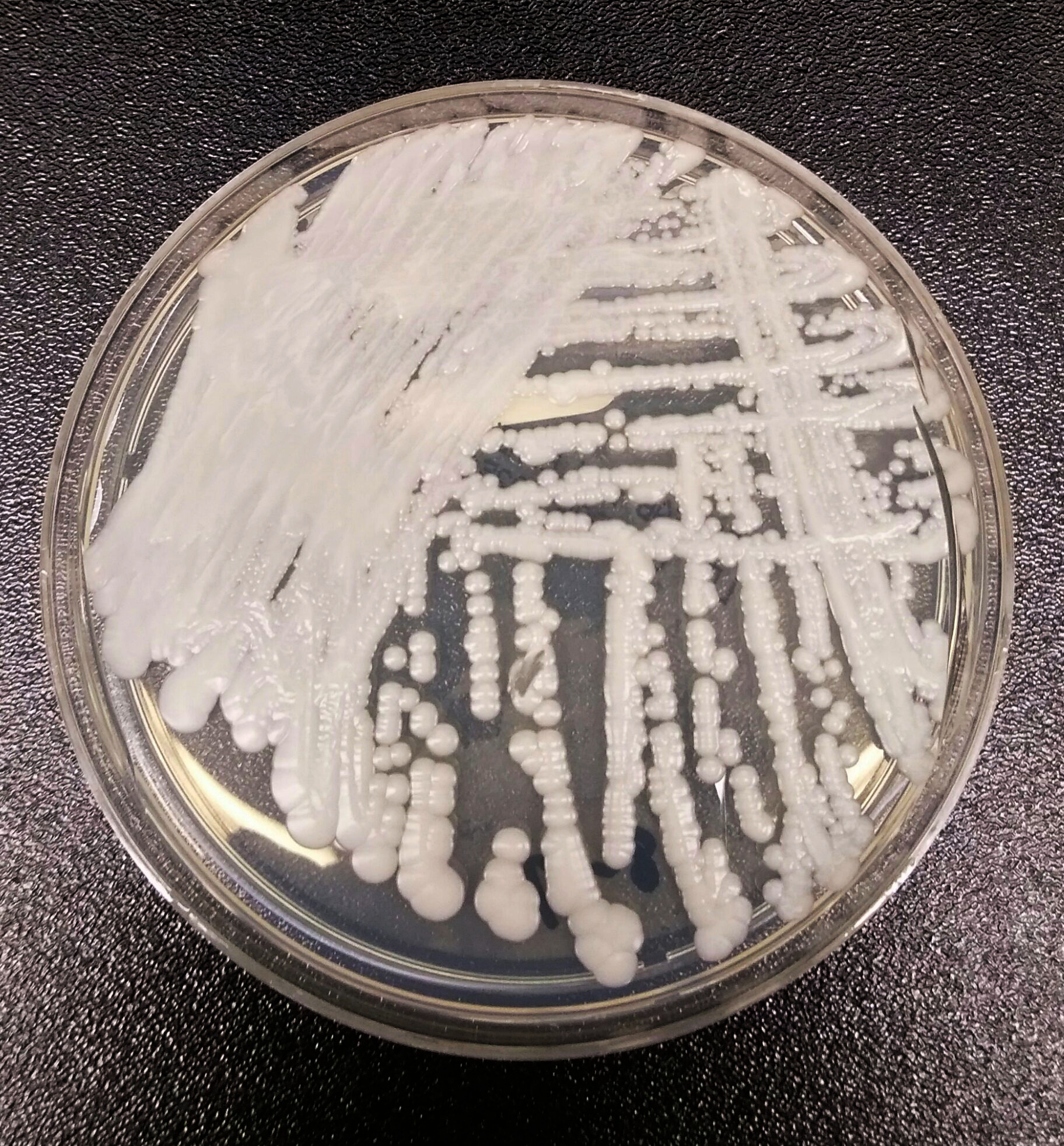
Deadly hospital fungus survives antifungal drugs by duplicating its whole genome, study finds

China's Chang'e-6 moon rocks suggest a new explanation for the lunar far side's thick crust

NASA Telescopes Trace a Ghostly Radio 'Treble Clef' to a Galaxy-Cluster Collision Hidden Behind the Milky Way
