NASA's longest Mars simulation ends Saturday after 378 days in isolation
Four volunteers are set to leave a 3D-printed Houston habitat that stood in for Mars, closing out NASA's second yearlong analog mission meant to prepare for real journeys to the Red Planet.
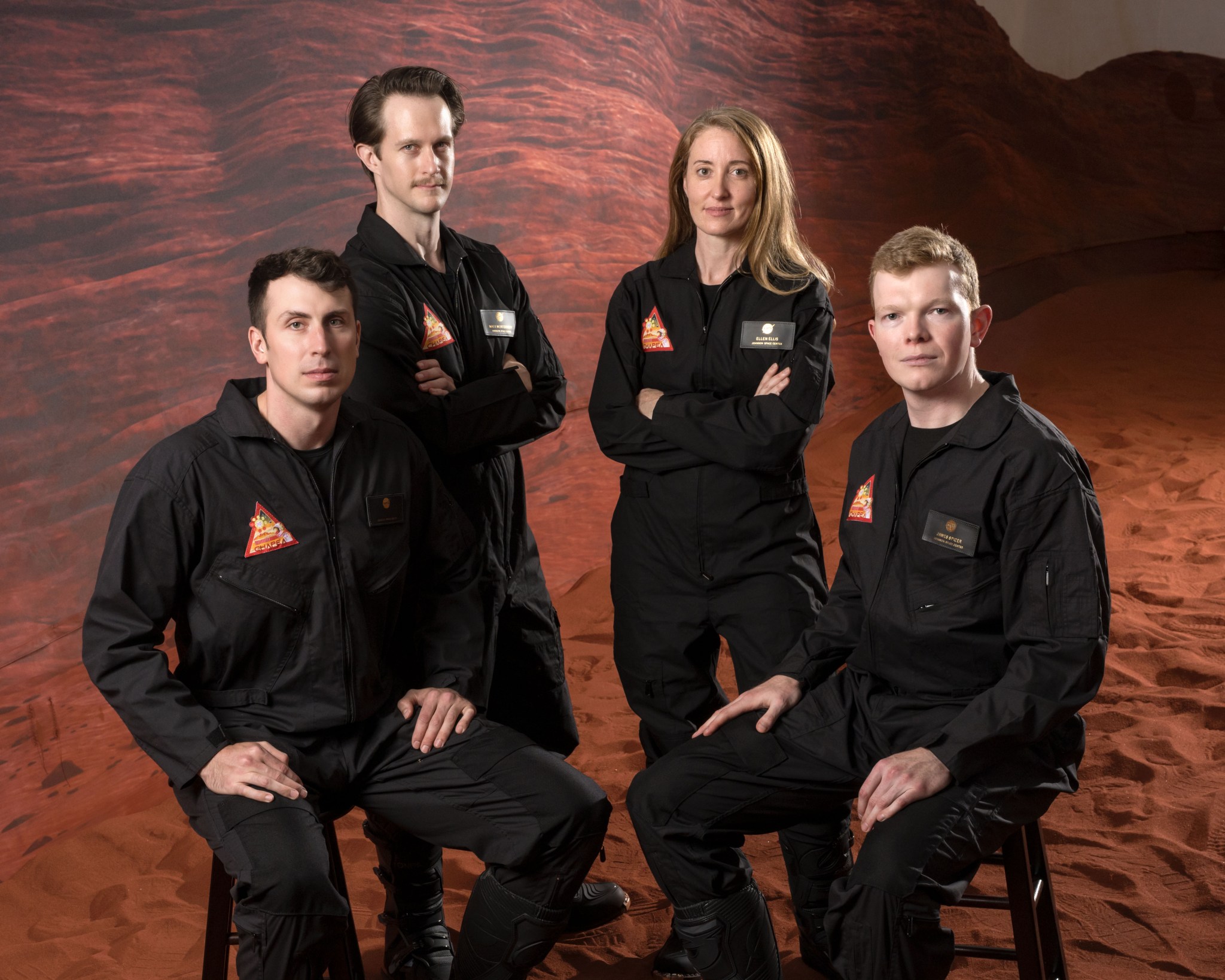
Four volunteers are scheduled to walk out of a cramped, 3D-printed habitat at NASA's Johnson Space Center on Saturday, ending the longest simulated Mars mission the agency has ever run and closing out 378 days of isolation meant to help prepare astronauts for the real thing.
The crew — commander Ross Elder, science officer Matthew Montgomery, Ellen Ellis and flight engineer James Spicer — entered the roughly 1,700-square-foot habitat on October 19, 2025, as part of CHAPEA, or the Crew Health and Performance Exploration Analog, NASA's program for simulating year-long stays on the Martian surface without leaving Houston. According to a NASA media advisory, the crew is set to exit the habitat on October 31, with live coverage of the completion ceremony beginning at 3 p.m. Eastern from Johnson Space Center, located within the broader Johnson Space Center campus in Houston.
A year of simulated Mars life
Inside the habitat, the four volunteers lived under conditions designed to mimic many of the hardships of an actual Mars surface mission: limited resources, communication delays with mission control and periodic simulated spacewalks, including mock geological sampling expeditions conducted within the habitat's attached sandbox-like environment. At one point, the crew endured a simulated two-week loss of communication with Earth, a scenario NASA uses to study how isolated crews cope psychologically when they cannot get real-time guidance from the ground. The mission's principal investigator, Grace Douglas, has used the program to study everything from food system design to how crews allocate their time and how much bandwidth future missions will need from NASA's Deep Space Network.
The crew passed two widely noted milestones along the way, according to NASA's own account of the mission: the 200-day halfway point and, more recently, the one-year mark inside the habitat, both of which the agency marked with public updates and crew interviews describing the psychological toll and routines of long-duration isolation.
Second of three planned missions
This is the second of three planned CHAPEA missions. The first ran from June 2023 to July 2024 with a different four-person crew — Anca Selariu, Ross Brockwell, Kelly Haston and Nathan Jones — and NASA has said data from both missions will feed directly into planning for Artemis-era lunar bases and, eventually, crewed missions to Mars itself, where real communication delays and resource constraints will be unavoidable rather than simulated.
NASA has not yet announced a start date for a third CHAPEA mission. In the meantime, the agency says the data gathered from Mission 2 — on everything from crew morale during the communications blackout to the practicalities of growing and preparing food in a sealed habitat — will be analyzed over the coming months, informing decisions the agency will need to make well before any astronaut actually leaves Earth's orbit for the Red Planet.
Why NASA simulates a trip it hasn't scheduled
NASA has not set a firm date for an actual crewed mission to Mars, and the agency's near-term human spaceflight priorities remain focused on returning astronauts to the lunar surface under the Artemis program. But mission planners have long argued that the psychological and logistical challenges of a Mars mission — which, unlike a lunar trip, would involve months of transit in each direction and no possibility of a quick return in an emergency — need to be studied on the ground years in advance. Analog missions like CHAPEA are far cheaper and lower-risk than any spaceflight, letting researchers iterate on habitat design, food systems and crew scheduling without the cost or danger of actually leaving low Earth orbit.
The crew's exit on Saturday will not mark the end of the data collection. Researchers typically continue monitoring CHAPEA volunteers for weeks afterward to study how quickly crew members' physical conditioning, sleep patterns and mood recover after more than a year of confinement — information NASA says is just as relevant to planning a real Mars mission as anything the crew experienced while still inside the habitat.

NASA's Lucy spacecraft enters Jupiter's Trojan asteroid region five years after launch

Shock waves inside giant exoplanets may explain their puzzling close orbits, study finds
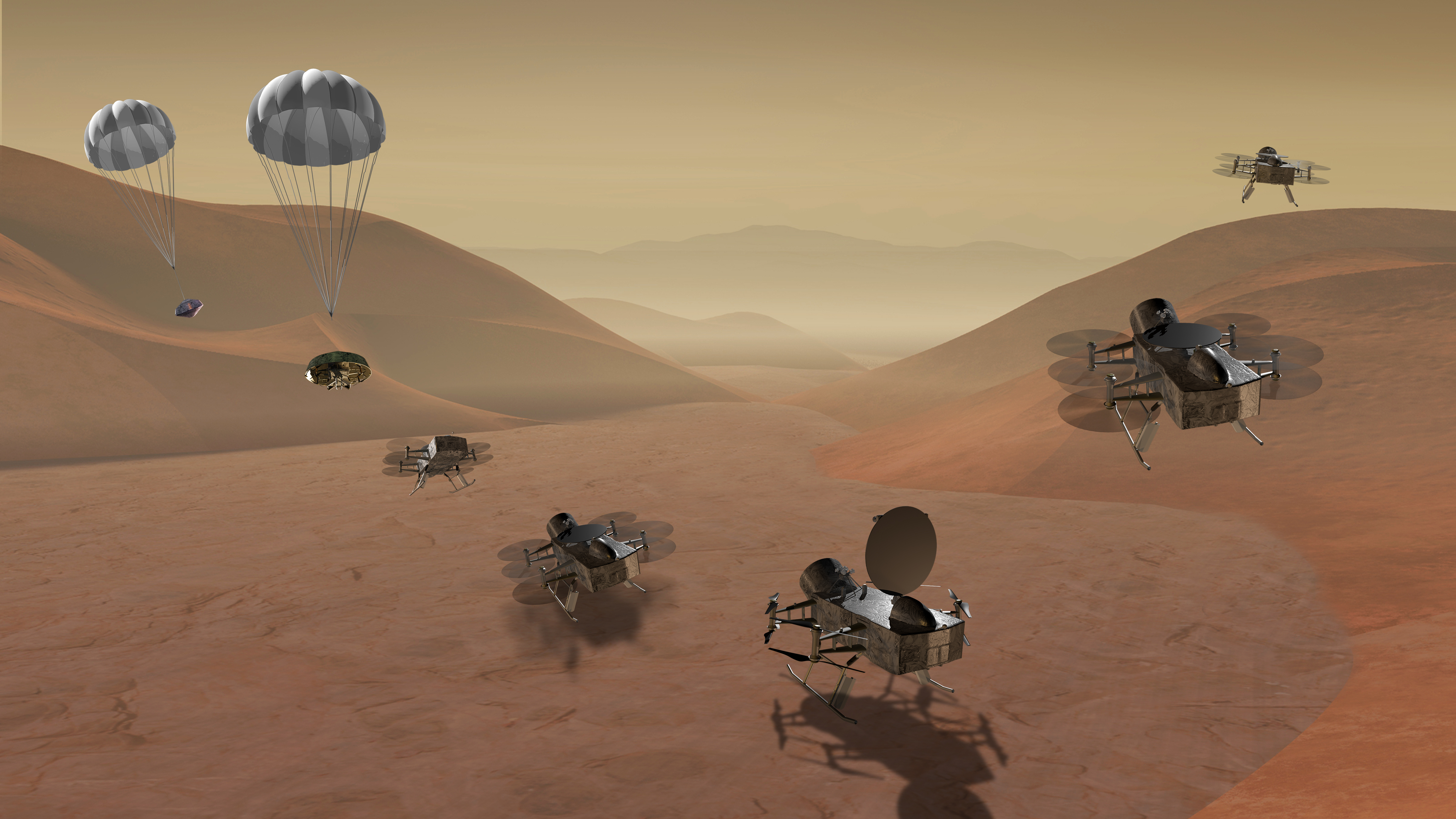
NASA's Dragonfly rotorcraft completes its first full simulated flight ahead of 2028 launch to Titan
