Scientists find seven new species in a bryozoan family once thought to be a fading relic
A survey of New Zealand's southern seafloor has more than quintupled the known diversity of hornerid bryozoans, upending the assumption that the 250-million-year-old lineage was quietly dying out.
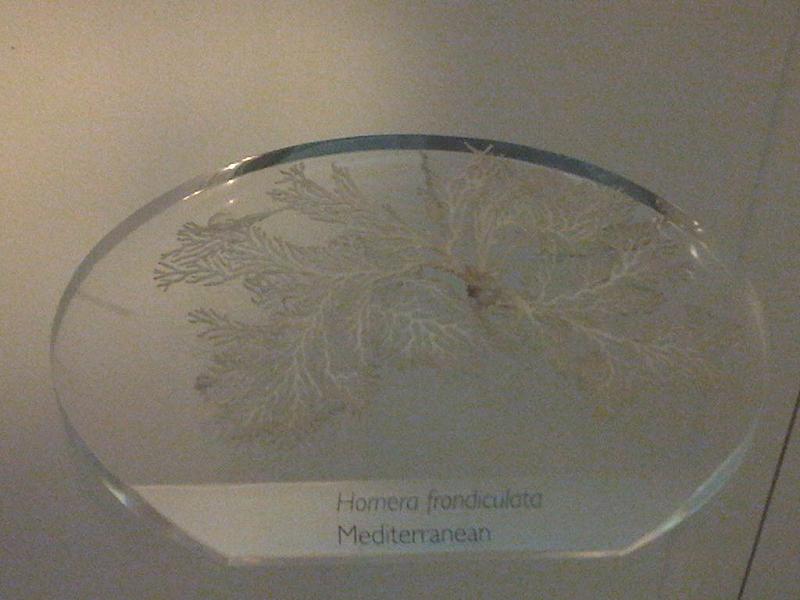
Researchers in New Zealand have described 11 species of hornerid bryozoans living in the country's southern waters, seven of them entirely new to science, in findings that overturn a decades-old assumption that this ancient lineage of lace-skeletoned marine invertebrates was a fading remnant of the deep past rather than an actively evolving group.
The work, published by a University of Otago-led team in the Zoological Journal of the Linnean Society, describes the species from seafloor samples collected between Cook Strait and New Zealand's subantarctic islands. Until now, scientists working in the region had recognized only two hornerid species. The new tally of 11, spread across three genera, suggests the group has been quietly diversifying in southern Aotearoa New Zealand waters largely unnoticed.
The numbers behind the find
Hornerids belong to the order Cyclostomatida, a group of bryozoans — tiny colonial animals that secrete branching, calcified skeletons often compared to coral or lace — that has persisted for more than 250 million years, since the Paleozoic era. Cyclostomes as a whole have long been treated by taxonomists as an evolutionary holdover, a lineage that survived mass extinctions but largely stopped generating new species long ago.
- 11 hornerid species now confirmed in southern New Zealand waters, up from 2 previously recognized
- 7 of those species are newly described; one previously named species was reinstated after being folded into a synonym for decades
- 3 genera are represented, including one newly established for the study and one resurrected from prior obscurity
- The sampling area spanned roughly 42 to 55 degrees south latitude, from Cook Strait to the subantarctic islands
To untangle the species, the team combined DNA sequencing of specimens with detailed structural analysis of their skeletons, examining branching patterns and microscopic pore structures that are difficult to distinguish without close laboratory work. That molecular-plus-morphological approach, increasingly standard in invertebrate taxonomy, is what allowed the researchers to split apart species that had previously been lumped together as look-alikes.
An animal easy to overlook
Bryozoans are rarely household names, but they play an outsized structural role on parts of the seafloor, forming dense, reef-like thickets that create habitat for other invertebrates and small fish in deep, cold water where corals are scarce. Hornerids in particular build upright, branching colonies of calcium carbonate that can persist on the seabed for years, gradually accumulating growth layers the way trees add rings.
According to the University of Otago team, the assumption of low diversity had less to do with the animals themselves than with how little modern attention they had received. Many specimens sat in museum collections or dredge samples for years without the kind of detailed comparative work needed to tell closely related species apart. Three of the newly named species carry tribute names: Hornera polaris, honoring the Otago research vessel RV Polaris II used to collect specimens, and Hornera girvanae and Hornera currieae, named for the scientists Elizabeth Girvan and Kim Currie.
New Zealand's surrounding seas have long stood out among bryozoan researchers for unusually rich fauna, a product of the varied depths, currents and cool temperate conditions spanning the mainland and the subantarctic islands. Otago's marine science program has built decades of expertise cataloguing that fauna, but hornerids specifically had escaped a full modern revision until the current project brought molecular tools to bear on a group previously classified almost entirely by eye, using external branch shape and pore arrangement alone.
Why the count matters beyond taxonomy
The distinction between two species and 11 is not merely academic. Conservation and fisheries-management decisions, including where bottom-contact fishing gear or seabed mining might be restricted, generally rely on knowing what lives where and how vulnerable each species is. A single catch-all species assumed to be common and resilient looks very different once split into several species, some of which may be restricted to narrow depth ranges or specific stretches of seafloor.
"You can't conserve, manage, study or understand a species if you don't know it's there," said Emeritus Professor Abby Smith of the University of Otago's Department of Marine Science, the study's lead author, who added that the team "never thought there would be this many species and that they would turn out to be this diverse."
The National Institute of Water and Atmospheric Research, New Zealand's government-funded ocean science agency, has separately documented the dense bryozoan communities that ring much of the country's coastline, underscoring how widespread but poorly catalogued these organisms remain even in well-studied waters. Smith's co-authors on the new paper — Helen Jenkins, Paul Taylor and Andrea Waeschenbach — work at the Natural History Museum in London, which holds one of the world's largest bryozoan reference collections and contributed comparative specimens and molecular expertise to the project.
What happens next
The authors say the southern survey likely captured only part of the picture. Hornerid diversity in northern New Zealand waters, warmer and less thoroughly sampled than the subantarctic region covered in this study, has not yet received the same combined molecular and morphological treatment, and the team expects further undescribed species to turn up there. The broader taxonomic framework used in the paper — cross-referencing skeletal structure against DNA barcodes lodged with international registries such as the World Register of Marine Species — is also expected to serve as a template for revisiting other bryozoan families long assumed to be taxonomically settled.
More broadly, the findings add to a pattern researchers have flagged across several marine invertebrate groups in recent years: species counts assembled decades ago, before DNA sequencing was routine, are turning out to significantly undercount real diversity once samples are re-examined with modern tools. For a lineage bryozoologists had filed away as an evolutionary also-ran, the New Zealand hornerids are a reminder that quiet corners of the ocean floor can still hold substantial, previously invisible biodiversity.