Japan Prepares to Launch First Mission to Land on a Mars Moon and Bring Samples Home
JAXA's Martian Moons eXploration spacecraft is scheduled to lift off this week on a seven-year round trip meant to settle a long-standing question about how Mars's largest moon, Phobos, formed.
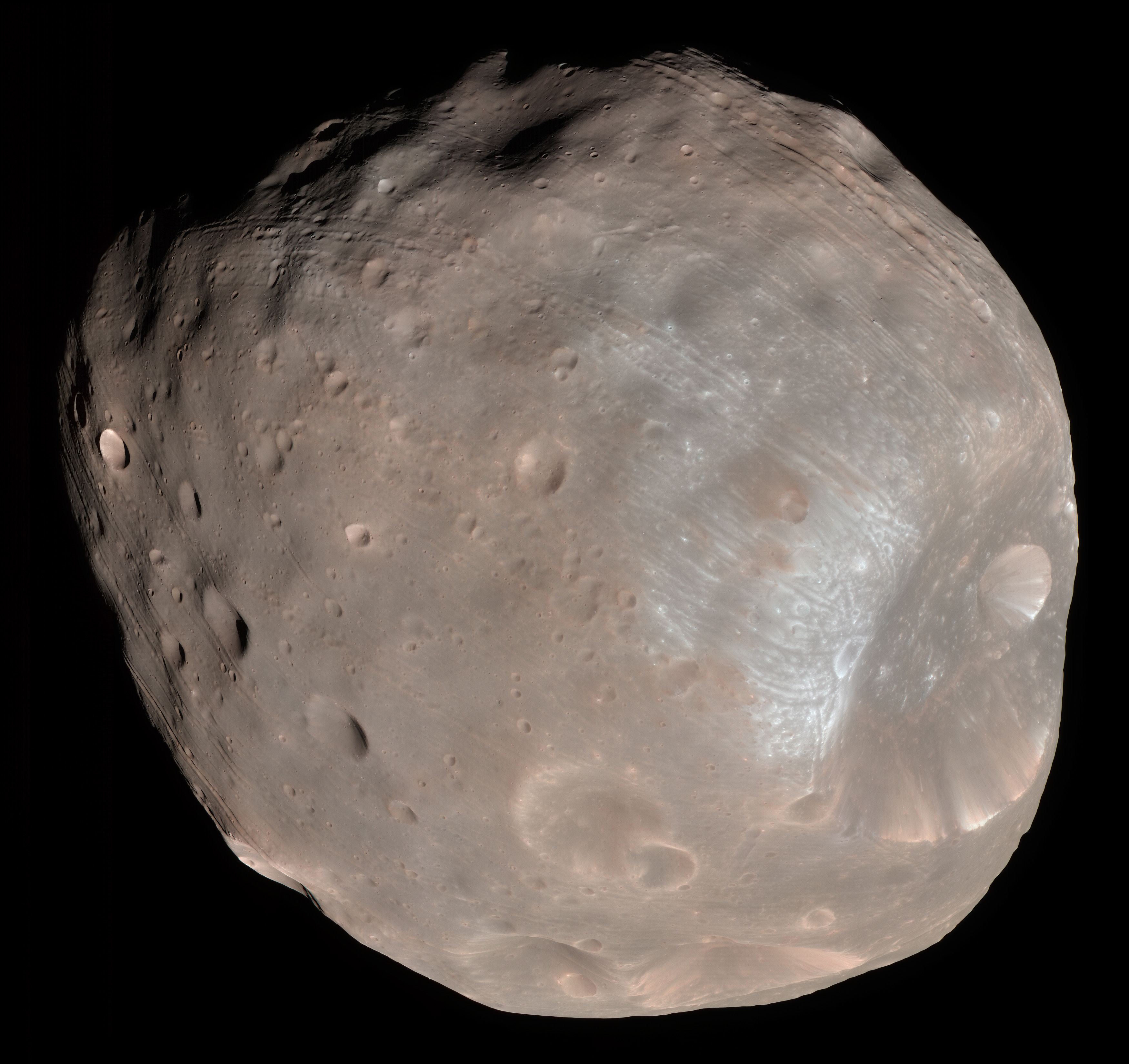
TANEGASHIMA, JAPAN — The Japan Aerospace Exploration Agency is set to launch a spacecraft before dawn on Oct. 20, local time, that would become the first in history to land on a moon of Mars and carry a piece of it back to Earth. The mission, called Martian Moons eXploration, or MMX, is scheduled to lift off at 4:41 a.m. Japan time atop an H3 rocket from the Tanegashima Space Center, roughly 3:41 p.m. Eastern time on Oct. 19.
The target is Phobos, the larger and innermost of Mars's two small moons. No spacecraft has ever stayed near Phobos for an extended period, and, as Space.com reported ahead of the launch, its origin has remained an open question since its discovery in 1877. MMX, led by JAXA in partnership with NASA, the European Space Agency, France's CNES and Germany's DLR, is designed to settle that question by bringing at least 10 grams of Phobos material back to laboratories on Earth.
A Moon of Uncertain Origin
Phobos and its smaller companion, Deimos, orbit close to Mars and closely resemble dark, carbonaceous asteroids in composition, which has long fed a theory that they are objects captured intact from the solar system's outer reaches. But that explanation has a problem: both moons orbit almost exactly along Mars's equatorial plane, a pattern captured bodies would be unlikely to fall into by chance.
Tom Statler, MMX program scientist at NASA headquarters, described the competing explanation in comments reported by SpacePolicyOnline: a giant impact on the surface of Mars could have blasted debris into orbit, where it later accreted into the two moons, much as the leading theory for the formation of Earth's own moon holds. "If you had things coming from outside being captured, they wouldn't necessarily line up that way with the equator of Mars," he said. Only direct samples, rather than remote observation, can distinguish between the two scenarios with confidence.
How the Mission Will Work
MMX draws directly on JAXA's experience with Hayabusa and Hayabusa2, the agency's two prior missions that touched down briefly on small asteroids and returned grains of material to Earth, most recently in 2020. Those missions proved Japan could navigate to and sample a body with almost no gravity and bring the result home intact. MMX scales that approach up considerably: rather than a few seconds of contact with an asteroid tens of millions of kilometers away, it must enter orbit around Mars itself, spend roughly three years studying Phobos and Deimos at close range, and execute two separate landings on a body whose surface gravity is roughly a thousandth of Earth's, before beginning the year-long journey home.
The MMX spacecraft carries a suite of cameras, spectrometers and a laser altimeter, including two instruments supplied by NASA: MEGANE, a gamma-ray and neutron spectrometer built at the Johns Hopkins Applied Physics Laboratory that will map Phobos's elemental composition from orbit, and a pneumatic sampling device built by Honeybee Robotics that can gather surface material in seconds. That sampler was tested previously in the Mojave Desert and flew on a commercial lunar lander in 2025.
A separate, Franco-German rover named Idefix, weighing about 25 kilograms on Earth but only around 15 grams in Phobos's faint gravity, will be dropped onto the surface in advance of the main spacecraft's own landing to scout terrain and study surface texture and composition up close.
- Launch: Oct. 19–20, 2026, aboard an H3 rocket from Tanegashima
- Mars orbit insertion: August 2027
- Idefix rover deployment: no earlier than early 2029
- Surface sample collection: no earlier than December 2028, with two planned touchdowns
- Departure from the Mars system and sample return to Earth: 2030–2031
Why an International Roster of Scientists Is Watching
MMX's sample-return capsule is expected to parachute into the Australian outback in 2031, after which the material will be transferred to Japan for initial extraction and cataloguing. Under agreements among the partner agencies, NASA has secured rights to at least 15 percent of the returned material, and the European and German space agencies plan to issue their own calls for scientists to propose research once samples are available.
Elliot Sefton-Nash, ESA's project scientist for MMX, said in remarks published by the European Space Agency that the payoff from the mission will extend well beyond the initial findings.
"Bringing samples to our most sophisticated labs here on Earth is a multiplier for discoveries. The data and samples returned by MMX are a window to study the evolution of Mars and the solar system, and samples brought to Earth are the gift that keeps on giving."
Lindsay Hays, acting director of NASA's Planetary Science Division, has put the agency's 14-year life-cycle cost for its contribution at $87 million, a relatively modest outlay for a mission expected to anchor Phobos and Mars-system research for decades, since returned samples can be revisited with instruments not yet invented.
What Comes Next
If the Oct. 19 launch window holds, MMX faces a roughly one-year cruise before reaching Mars in the second half of 2027, followed by more than a year of remote observation of both Phobos and Deimos from a unique vantage point JAXA calls a quasi-satellite orbit, before any attempt to touch down. Japan had originally targeted a 2024 launch for the mission before schedule slips pushed it to this year, underscoring how technically demanding a round trip to the Mars system remains.
Mission scientists also see MMX as complementary to other Mars exploration underway or planned, including ESA's Mars Express orbiter, which has been cleared to keep operating through at least 2029 and may assist with MMX observations, and the agency's long-delayed ExoMars Rosalind Franklin rover, which, as Astronomy magazine has noted, will drill into the Martian surface itself. Together, the missions are intended to build a more complete picture of how Mars and its small moons evolved together over four and a half billion years — a picture that, until MMX returns its sample capsule in 2031, will remain informed only by observation from a distance rather than by material scientists can hold in hand.

September Ranks as Earth's Second-Warmest on Record
Google Cuts a Key Quantum-Computing Error 40-Fold in First Real Hardware Test

A common salt mineral could preserve signs of life inside Enceladus's ocean, study finds
