Scientists identify a brain receptor that shuts off chronic nerve pain in mice
A Washington University study finds that a single receptor in the brainstem's locus coeruleus acts as a molecular brake on chronic nerve pain, a mechanism researchers hope to target without the body-wide risks of conventional opioids.
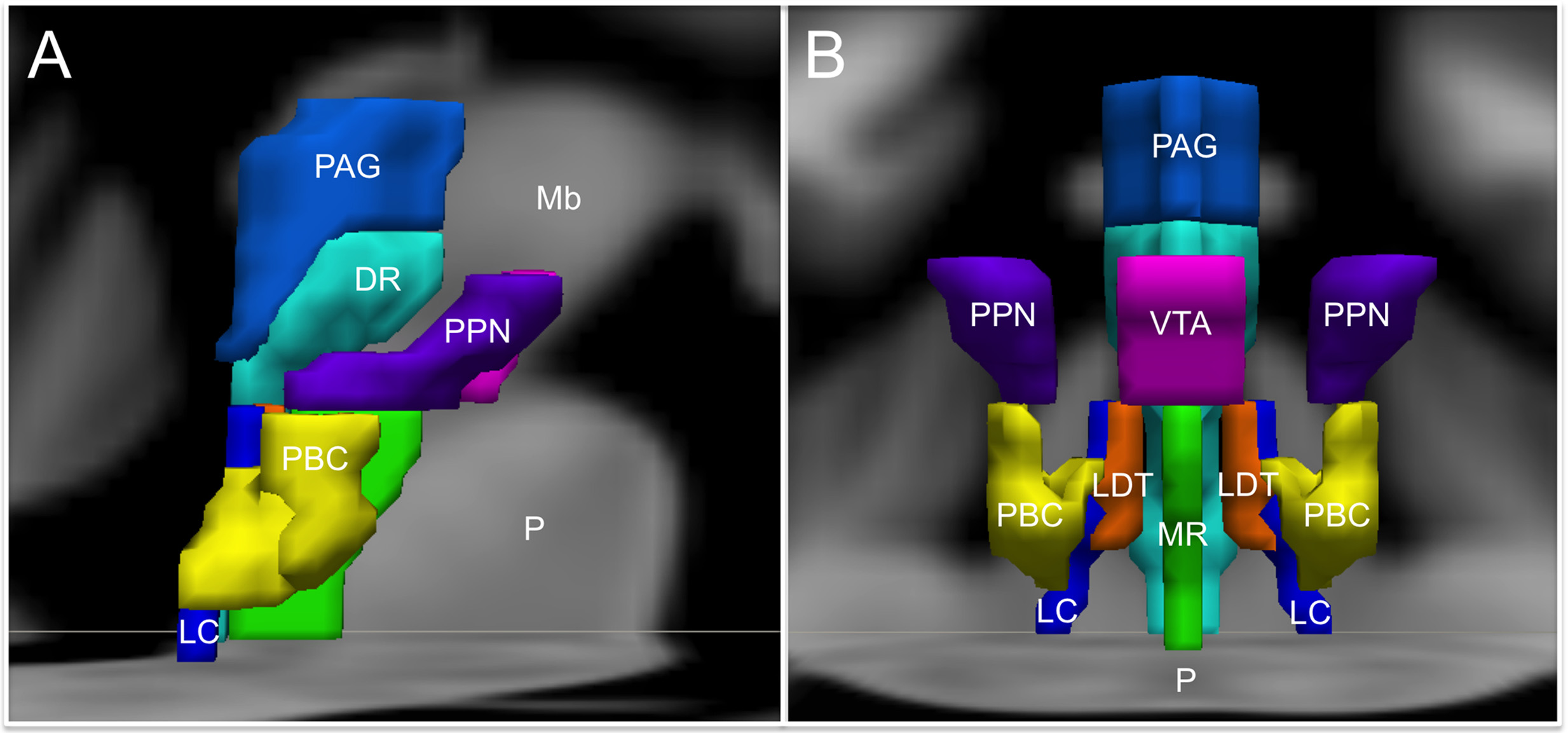
Researchers at Washington University School of Medicine in St. Louis have identified a molecular switch inside a small, ancient brain structure that determines whether nerve injury heals quietly or spirals into chronic pain. The discovery, made in mice and published this month in the journal Current Biology, points to a specific receptor inside the locus coeruleus, a cluster of neurons in the brainstem long known as the brain's principal alarm center, as a biological brake that can either quiet pain signals or, when disabled, let them run unchecked.
The finding matters because it separates, for the first time at this level of precision, the locus coeruleus's two competing jobs. The structure has been known for decades to send calming, pain-suppressing signals down the spinal cord. But after nerve injury, the same circuit can flip into an overactive state that helps sustain chronic pain instead of relieving it. The new work shows that a single class of receptor sitting on the surface of those neurons, the mu opioid receptor, is what keeps that switch from getting stuck in the "on" position.
What the experiments showed
The team, led by senior author Jordan McCall, an associate professor in the Department of Anesthesiology at WashU Medicine, worked with mice modeling neuropathic pain, the kind of shooting, stabbing or burning sensation that follows nerve damage rather than tissue injury. Co-first authors Chao-Cheng Kuo and Makenzie Norris and their colleagues first used chemogenetic tools to temporarily switch off locus coeruleus neurons and watched pain sensitivity change in response. They then went a step further, deleting mu opioid receptors specifically from those cells.
Mice missing the receptor in that one brain region became markedly more sensitive to touch and heat than mice that retained it, evidence that the receptor was normally holding the pain-generating circuit in check. When the researchers restored the receptor, the heightened sensitivity reversed. That reversal is the crux of the finding: the receptor is not just correlated with pain regulation, removing and restoring it drives the effect in both directions.
Why the location matters
Opioid drugs already work on mu opioid receptors, which is why morphine and its relatives relieve pain in the first place. The problem, as McCall put it, is that conventional opioids do not distinguish between the receptors doing useful work and the ones causing harm elsewhere in the body.
"Traditional opioid medications bind to receptors throughout the entire body and brain, often leading to side effects, tolerance and addiction risk," McCall said. "Understanding how localized receptors in the locus coeruleus act as gatekeepers could lead to more targeted, effective pain therapies with fewer risks."
That distinction is the study's practical payoff. Rather than flooding the whole nervous system with an opioid, a drug or delivery method that engaged mu opioid receptors only within the locus coeruleus could, in principle, recreate the pain-dampening effect without the sedation, tolerance and dependence that come from acting on receptors everywhere else. The team says it is now working on ways to reach the locus coeruleus selectively, though the researchers were careful to frame the work as an early-stage mechanistic discovery in mice rather than a therapy ready for testing in people.
A large and stubborn problem
The condition the work targets is common and difficult to treat. Federal survey data compiled by the National Center for Health Statistics put chronic pain at roughly one in five American adults, and a subset of that group has pain specifically tied to nerve damage, the category this research addresses. The National Institutes of Health has separately made chronic pain one of its research priorities in part because so few existing treatments work well without carrying serious downsides.
Opioid painkillers illustrate the trade-off starkly. They are often effective in the short term, but the same broad receptor binding that eases pain also drives the tolerance, dependence and overdose risk that have shaped the decades-long overdose crisis in the United States. Non-opioid alternatives, meanwhile, frequently fail to control neuropathic pain at all. That gap is what has kept researchers interested in the brain's own internal opioid signaling, the receptors and circuits the body uses to modulate its own pain before any drug enters the picture.
What researchers are saying
Outside coverage of the paper has emphasized the same point the authors make: this is a mechanism, not a medicine. Summaries of the findings note that the locus coeruleus's dual role, suppressing pain under normal conditions and amplifying it after certain kinds of injury, has been difficult to study because manipulating the region with existing drugs tends to affect the entire brain rather than the specific cells involved. The receptor-deletion approach used in this study gets around that by working within a single nucleus rather than across the whole opioid system, which is what let the team isolate the pain-generating role from the pain-relieving one within the same structure.
The study was funded chiefly through National Institutes of Health grants along with support from the National Science Foundation, the McDonnell Center for Systems Neuroscience and the Rita Allen Foundation, according to the acknowledgments accompanying the paper.
What comes next
The WashU team says its next step is developing methods to manipulate mu opioid receptor activity within the locus coeruleus with more precision than gene deletion allows, the kind of tool that would be needed before any version of this approach could be tested as a treatment. That work remains in mice, and translating a receptor-level finding in animal models into a human therapy typically takes years, assuming it clears that path at all. For now, the result gives pain researchers a more specific target than they had before: not the opioid system broadly, but one small population of brainstem cells that seems to decide, after a nerve is injured, whether the resulting pain fades or becomes chronic.
Deadly hospital fungus survives antifungal drugs by duplicating its whole genome, study finds

China's Chang'e-6 moon rocks suggest a new explanation for the lunar far side's thick crust

NASA Telescopes Trace a Ghostly Radio 'Treble Clef' to a Galaxy-Cluster Collision Hidden Behind the Milky Way
