NASA astronauts begin 100th spacewalk to install space station solar array
NASA's Anil Menon and Canadian Space Agency astronaut Joshua Kutryk ventured outside the International Space Station Thursday to install the seventh of eight new arrays meant to boost its power supply by nearly a third.
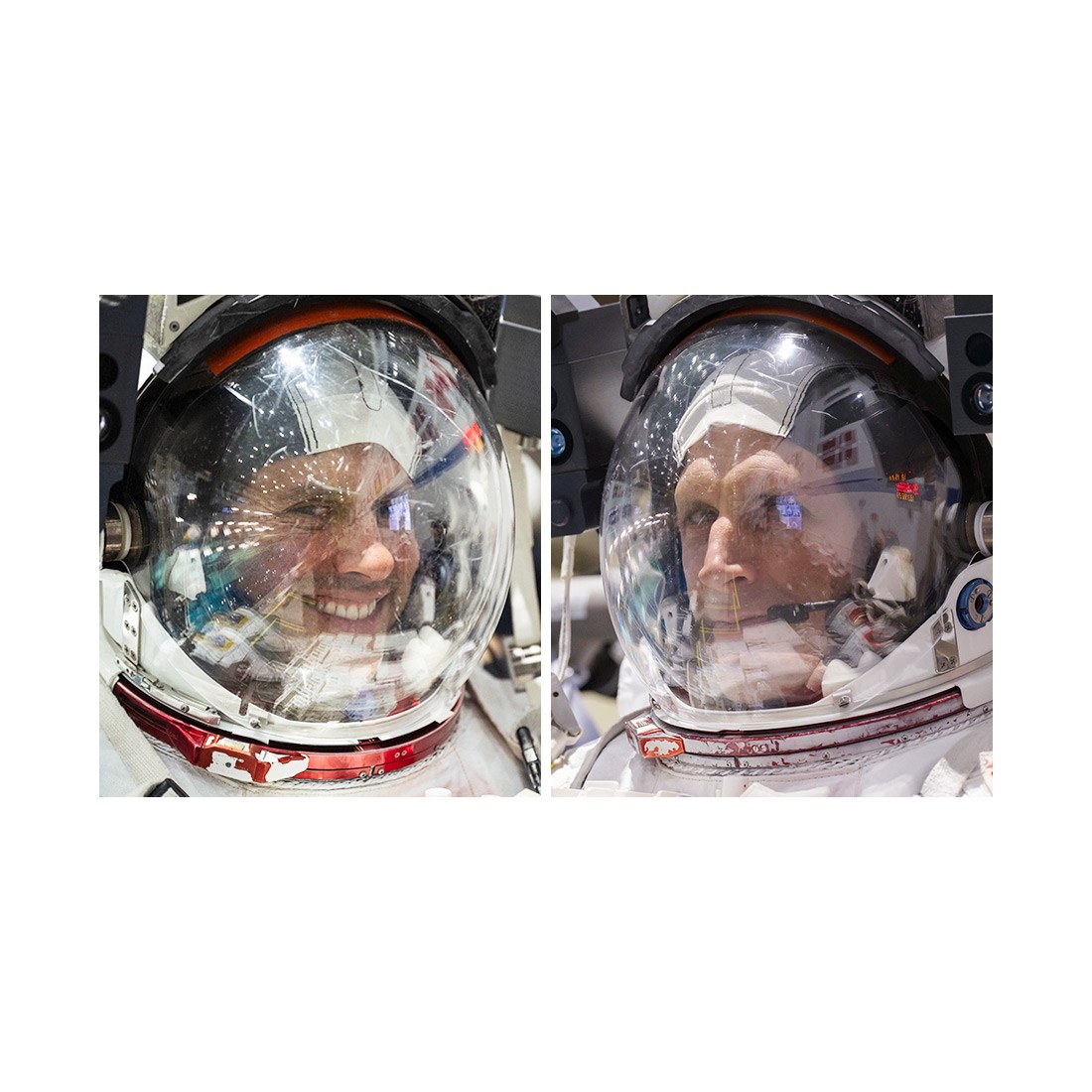
Two astronauts floated outside the International Space Station early Thursday to install a new solar array, a milestone spacewalk in a campaign to boost the orbiting laboratory's power supply by nearly a third before the station's eventual retirement.
NASA astronaut Anil Menon and Canadian Space Agency astronaut Joshua Kutryk began the spacewalk at 7:57 a.m. Eastern time, exiting the station's Quest airlock, according to a NASA update posted shortly after they ventured out. Their task was to install and deploy a Roll-Out Solar Array, known as an IROSA, on the station's 2A power channel — the seventh of eight new arrays NASA has been installing in a multi-year upgrade of the station's aging electrical system.
Cleared for the job a day earlier
Mission managers formally approved the excursion only the day before, according to a separate NASA station blog post, which showed Menon and Kutryk posing for pre-flight crew portraits at Johnson Space Center ahead of the excursion. NASA had previewed the broader two-spacewalk campaign at a news conference three weeks earlier; according to the agency's announcement of that briefing, Thursday's excursion and a follow-up spacewalk scheduled for November 5 are together expected to be the 285th and 286th spacewalks conducted in support of station assembly, maintenance and upgrades since construction of the station began. Once all eight new arrays are in place, NASA says the station's power-generation capacity will rise by up to 30%, from roughly 160 kilowatts to about 215 kilowatts.
Kutryk, flying his first mission to the station, is a Royal Canadian Air Force colonel and test pilot who joined the Canadian Space Agency's astronaut corps in 2017. The agency's own mission materials describe him as part of Canada's small roster of active astronauts rotating through space station assignments as the country also prepares a Canadian crew member for an upcoming Artemis lunar mission.
Powering a station built to be retired
The additional power is not just about running more experiments. NASA has said the expanded electrical capacity from the IROSA upgrades will help support the station's systems through the end of its operational life, including the eventual controlled deorbit the agency and its international partners have been planning for later in the decade. The existing solar arrays, some of which have been generating power since the station's earliest modules launched more than two decades ago, have degraded over time, making the new roll-out arrays — which unfurl like a window shade rather than unfolding in rigid panels — a more efficient near-term fix than replacing the station's original power system wholesale.
Assuming Thursday's spacewalk concludes without complications, Menon and Kutryk are scheduled to go back outside on November 5 to install the eighth and final array, on the station's 3B power channel, completing a power upgrade that NASA has been working toward across several spacewalks this year.
A physician and a test pilot outside the airlock
Menon, an emergency physician who worked as a flight surgeon before joining NASA's astronaut corps, and Kutryk, a Royal Canadian Air Force colonel and test pilot, are both currently serving aboard the station as part of its long-duration crew rotation. Canada's astronaut program has flown only a small number of spacewalkers since joining the space station partnership, making Kutryk's excursion a notable milestone for the Canadian Space Agency regardless of how the broader power-upgrade campaign is ultimately remembered. Spacewalks of this kind typically run several hours, with the two astronauts working as a pair so one can assist the other with tethering, tool handling and the task of maneuvering the roll-out array into position with help from the station's robotic arm.
NASA had not yet reported the spacewalk's completion or total duration at the time of publication; the agency's station blog is expected to post an update once Menon and Kutryk have returned inside and the new array has been confirmed fully deployed and generating power.

DoorDash to acquire Instacart in $17 billion grocery delivery deal

IBM Moves to Rein In Runaway AI Agents With New Identity Tools

Alphabet's cloud revenue more than doubles as its AI chip business takes shape
