Gunman kills six on Kraków's Main Square; Poland declares two days of national mourning
A man described by Poland's interior minister as "fascinated" by far-right ideology drove onto Kraków's historic Main Market Square on Saturday and opened fire on bystanders, killing six people and wounding at least 15 others before police shot and detained him.
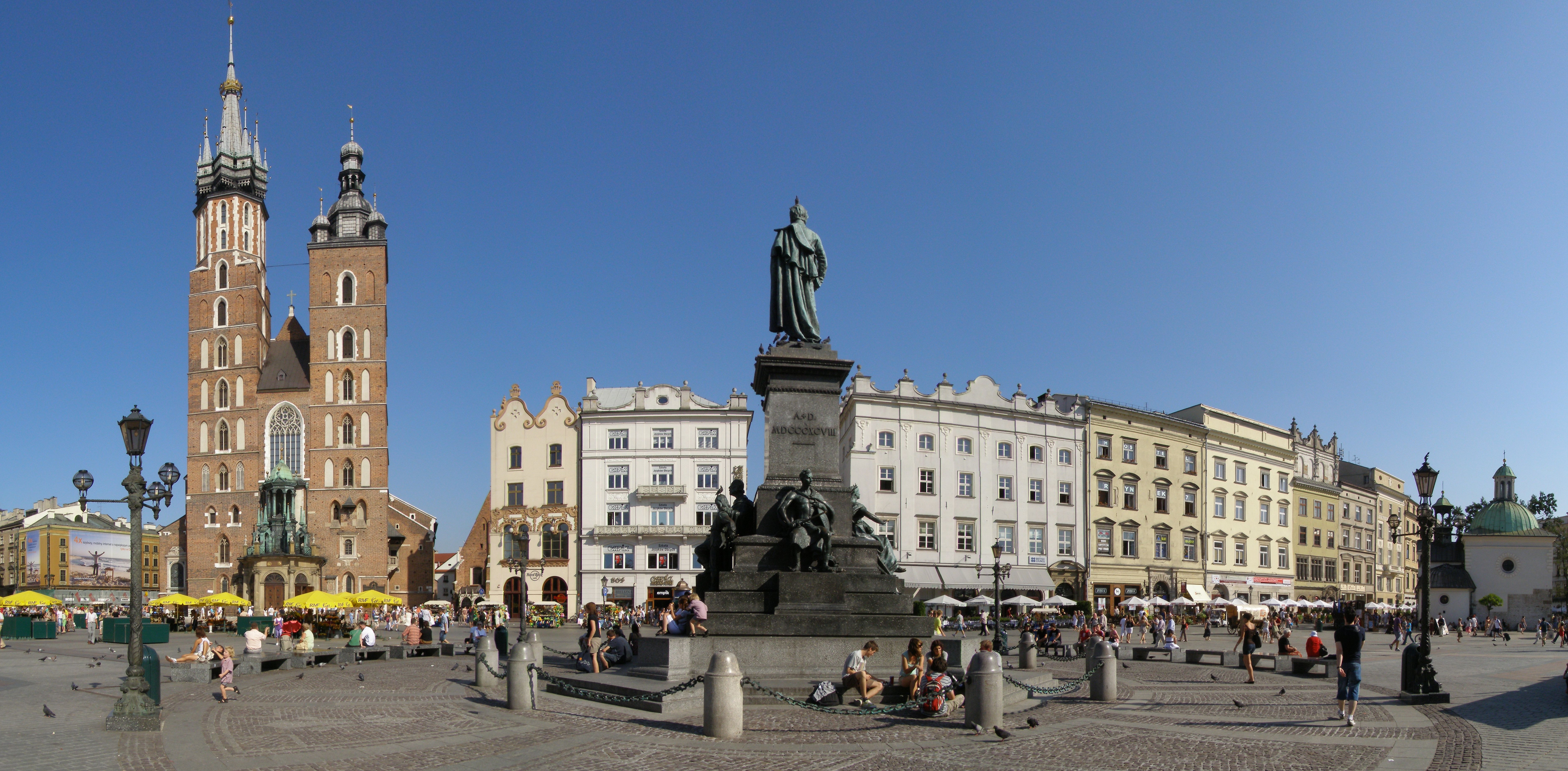
A gunman drove a car onto Kraków's Main Market Square on Saturday afternoon and opened fire on people in the crowded heart of Poland's second-largest city, killing six and wounding at least 15 others, including two police officers, before officers shot and detained him. City officials confirmed the attack within hours in a statement posted by Kraków's city hall, and Poland's president and prime minister both traveled to the city as the government declared two days of national mourning.
Police said the gunman, a 24-year-old Polish citizen, drove into the square — a UNESCO-listed plaza that draws roughly 15 million visitors a year, most of whom pass through it — before stepping out and firing at random people nearby. Two police officers were among the wounded as they moved to stop him; one suffered a gunshot wound, and the other was in very serious condition in surgery with three gunshot wounds, Interior Minister Marcin Kierwiński said. The attacker kept firing even after being shot himself and was eventually subdued and taken into custody, according to police accounts relayed by Euronews, citing the Associated Press.
Investigators later found three more bodies — two women and a man — at the suspect's home, which Prime Minister Donald Tusk's office said were likely members of his own family. The Prime Minister's chancellery confirmed in a statement that six people were killed and 16 injured, including the attacker, in what it described simply as a tragedy in the heart of the city. A British national was among the dead, Kraków's regional police chief, Marek Boron, said, according to the AFP wire carried by France 24; two of the dead had not yet been formally identified by Saturday evening, and five of the wounded being treated in hospital were foreign nationals.
A suspect "fascinated" by far-right ideology
Police said the attacker wore military-style fatigues and a bulletproof vest and was armed with a semi-automatic rifle resembling an AR-15, with additional weapons and ammunition found in the car he was driving. He was from Ostrowiec Świętokrzyski, a town roughly 100 kilometers from Kraków, and had no previous criminal record, a Małopolska police spokesman said, according to the Associated Press report carried by Euronews. Local media reported that the car was registered to his 52-year-old father, who reportedly held several firearms licenses — a detail police had not independently confirmed as of Saturday night.
Kierwiński told reporters that "everything suggests that the perpetrator held very, very radical views," adding that the suspect appeared "fascinated by far-right ideologies" and held views he described as "ultra-nationalist." Defence Minister Władysław Kosiniak-Kamysz went further, calling the attack an "act of terror," while taking care to note that the gunman "was not and is not a soldier of the Polish Army" — an apparent response to speculation about his military-style clothing. Police also moved to tamp down other rumors, saying they had found no evidence of a second attacker.
"We must show extraordinary solidarity at all levels," Prime Minister Donald Tusk said after meeting emergency responders and local officials in Kraków.
Nawrocki and Tusk declare days of mourning
President Karol Nawrocki announced two days of national mourning, for Sunday and Monday, November 8 and 9, and traveled to Kraków alongside Tusk. Kraków's own mayor, Łukasz Gibała, went further at the municipal level, declaring mourning across the city through Wednesday, draping municipal flags in black and cancelling public events. According to the Prime Minister's office, Tusk praised what he called the "courage of police officers, the dedication of rescuers and the selfless help" ordinary residents gave one another in the chaotic aftermath, and said the families of the wounded officers would receive government support. He also urged the public to rely only on official information from the agencies working at the scene, rather than unverified reports circulating online.
The attack is being described by wire services as the deadliest mass shooting in Poland since the end of communist rule in 1989. It follows a run of knife attacks across the country in October that Tusk had already characterized as evidence of what he called a "cult of violence," and it comes against a backdrop of a rapidly growing civilian arsenal: more than 50,000 new firearms licenses were issued in Poland in 2025 alone, bringing the national total to roughly 411,000, according to police figures cited by AFP.
International reaction
The European Union's foreign policy chief, Kaja Kallas, wrote that the loss of life in Kraków was "a tragedy that will be felt far beyond Poland." Ukrainian President Volodymyr Zelensky offered condolences and said Ukraine "stands in solidarity with Poland," a message with particular resonance given the hundreds of thousands of Ukrainian refugees and migrant workers who have settled in Kraków since 2022. Other governments, including those of victims' home countries, had not yet issued full written statements by Saturday evening, a lag not unusual for a weekend attack of this scale in its first hours.
What happens next
Prosecutors in Kraków have opened an investigation, though as of Saturday night the regional prosecutor's office had not yet published a public communiqué on the case. Officials have given no timeline for when charges might be filed or when the attacker's motive will be formally established, and the Interior Ministry has not said whether the case will be formally classified and prosecuted as terrorism, which under Polish law carries distinct procedural consequences. The two days of national mourning will see flags lowered and some public events curtailed nationwide, while Kraków's city-level mourning period, declared by Mayor Gibała, runs several days longer. The city, which is in the middle of its high season for international tourism around its historic Christmas markets, now faces questions about security on a square with limited vehicle barriers, and Poland's parliament is likely to face renewed pressure over firearms licensing rules given the scale of the civilian arsenal officials cited in the hours after the attack.

Malaysia's king warns against defying pardon order as Najib's house arrest stalls

Pope Leo XIV opens Latin America tour in Uruguay, three weeks after lung surgery

EU Fraud Investigators Raid Spanish Rail Bodies After Second Deadly Crash
