Myanmar's Coup Leader, Now President, Wins Back Southeast Asian Neighbours
Malaysia gave Senior General Min Aung Hlaing a red-carpet welcome this month, the fifth ASEAN state to receive him as head of state since April, even as the civil war he triggered in 2021 grinds into its fifth year and a UN report documents hundreds of fresh civilian deaths.

Myanmar's coup leader turned civilian president, Senior General Min Aung Hlaing, received a red-carpet welcome and an honour guard in Kuala Lumpur this month, the latest and most pointed sign that the five-year-old campaign to isolate his military-backed government over its 2021 seizure of power is collapsing. Malaysian Prime Minister Anwar Ibrahim hosted the general for two days of talks in Putrajaya on October 7 and 8, making Malaysia the fifth member of the Association of Southeast Asian Nations to receive him as head of state since he was sworn in as president in April.
The visit, and the warmth with which it was conducted, mark a turning point for a man whose army ousted an elected government in February 2021 and has since been fighting a civil war that monitoring groups say has killed as many as 100,000 people and displaced more than 3.5 million, according to reporting on his diplomatic rehabilitation. ASEAN barred Min Aung Hlaing from its highest-level meetings in 2021 over the junta's failure to implement a regional peace plan. Malaysia's reception of him in Putrajaya is the clearest evidence yet that the bloc's unity on that exclusion has broken down.
The numbers behind the visit
The immediate, stated purpose of the trip was migration, not politics. Malaysia hosts roughly 193,000 Myanmar nationals, most of them Rohingya who fled persecution and still lack citizenship at home. Anwar told reporters after the talks that Myanmar has so far accepted the return of 10,493 of its nationals from Malaysia, and Min Aung Hlaing said his government would send navy ships to bring back more "as soon as possible." Malaysian officials, including Communications Minister Fahmi Fadzil, insisted the visit did not amount to recognition of the junta's legitimacy and was intended "to find a solution to the longstanding issue of Myanmar refugees" in the country, according to Malaysian press coverage of the arrival.
The toll of the war that makes those refugees unwilling to return is tracked most systematically by the United Nations. A report from the UN High Commissioner for Human Rights, covering the six months spanning Myanmar's widely criticised election period from August 2025 to January 2026, verified at least 702 civilian deaths, including 224 women and 153 children, with airstrikes the leading cause of death. The report's authors, who describe their count as a floor rather than a comprehensive total, also documented forced recruitment, killings and sexual violence against Rohingya civilians. Fighting has not slowed since: a September 28 strike on a market in Rakhine State killed an estimated 50 people, and the Arakan Army, an ethnic armed group, now controls most of the Rohingya homeland region.
How a pariah became a guest
ASEAN's position traces back to a Five-Point Consensus agreed by the bloc's leaders in Jakarta in April 2021, weeks after the coup, which called for an immediate end to violence, dialogue among all parties and humanitarian access through the regional disaster-relief body. Myanmar's military government never meaningfully carried it out, and ASEAN foreign ministers responded that October by excluding Min Aung Hlaing from the bloc's summits — a diplomatic freeze that held, unevenly, for nearly five years.
That freeze began thawing after Min Aung Hlaing engineered his own transition from junta chief to civilian president. His government held a three-stage election between December and January that excluded the ousted National League for Democracy and jailed prominent dissidents; the vote was condemned by Western governments and rights groups as neither free nor fair, but it gave him a civilian title to present to neighbours. He was sworn in as president in April, an inauguration attended by representatives of China, India and Thailand among roughly twenty countries. Since then he has made official visits to Thailand, Laos, Cambodia, Vietnam and now Malaysia — covering a majority of ASEAN's ten other members — as well as to India, China, Russia and Belarus. Malaysia's government has said Indonesia and Brunei could be next. Reuters has also reported that Washington has opened direct talks with his administration, focused on shutting down the online scam centres operating from Myanmar territory, even as U.S. sanctions on Min Aung Hlaing himself remain in place.
Who pays the price, and who is objecting
The people most directly affected sit on opposite sides of the repatriation deal. Myanmar nationals facing return from Malaysia, many of them Rohingya who fled a government that still denies them citizenship, face an uncertain reception; the United Nations and rights groups have repeatedly warned that returns are not being carried out on a genuinely voluntary basis. Inside Myanmar, civilians in Rakhine, Sagaing and other contested regions continue to bear the brunt of an intensified military air campaign, even as China has brokered local ceasefires along its border to protect its own economic interests there.
Myanmar's detained former leader, Aung San Suu Kyi, 81, remains a quieter marker of the conflict's toll. An International Committee of the Red Cross delegate visited her in Yangon on August 3, producing her first photographs in years and a rare private conversation permitted under the ICRC's standard procedures for detainees; the organisation says its own observations from the visit were shared only with the authorities holding her.
Analysts and rights advocates have described Malaysia's reception of Min Aung Hlaing as a significant breach in the wall ASEAN built around his government. Bridget Welsh, of the University of Nottingham's Asia Research Institute Malaysia, was blunt about the shift.
"Malaysia's reversal on Min Aung Hlaing has broken a dam of opposition to the junta. It is a step back for ASEAN as an organisation, and for Myanmar."
Laetitia van den Assum, a former Dutch diplomat who has worked on Myanmar's Rakhine crisis, called it "quite surprising" that ASEAN governments are now seeking the repatriation of Rohingya refugees from a government accused of having orchestrated crimes against that same population. Khin Zaw Win, director of the Yangon-based Tampadipa Institute, argued that China, India and Thailand have pushed hardest for Min Aung Hlaing's recognition because they "have the biggest stakes in how Myanmar pans out," adding that "convenience plays a part for all of them." Phil Robertson of Asia Human Rights and Labor Advocates took the opposite view, arguing against welcoming Myanmar "fully back into the fold" and calling instead for targeted sanctions, including a ban on aviation fuel sales that could ground the air campaign, and possible referral of military leaders to the International Criminal Court. Human Rights Watch had urged Anwar before the visit to press Min Aung Hlaing to end abuses and halt forced returns.
What happens next
Min Aung Hlaing's government is widely expected to continue its regional tour, with Indonesia and Brunei flagged by Malaysian officials as the most likely next stops among the bloc's remaining members. The bloc's own position will be tested at upcoming meetings chaired first by the Philippines and then, from next year, by Singapore, both of which will have to decide whether to formalise the informal thaw already under way among individual member states. ASEAN has shown no sign of abandoning the Five-Point Consensus on paper, even as it becomes harder to enforce in practice.
Inside Myanmar, the war shows no sign of ending. Analysts say the military is unlikely to retake full control of the country and is instead relying on a mix of intensified airstrikes, recruitment drives and localised ceasefires brokered by China to stabilise the areas it still holds. For the hundreds of thousands of Myanmar nationals abroad, including many Rohingya in Malaysia, the practical question is whether further repatriation agreements like the one just struck in Putrajaya will be matched by any genuine improvement in safety at home — or whether, as rights groups warn, diplomatic normalisation is outpacing accountability for the conflict that produced the refugees in the first place.
.jpg?width=1200)
Kenya confirms third Ebola case, patient already in quarantine
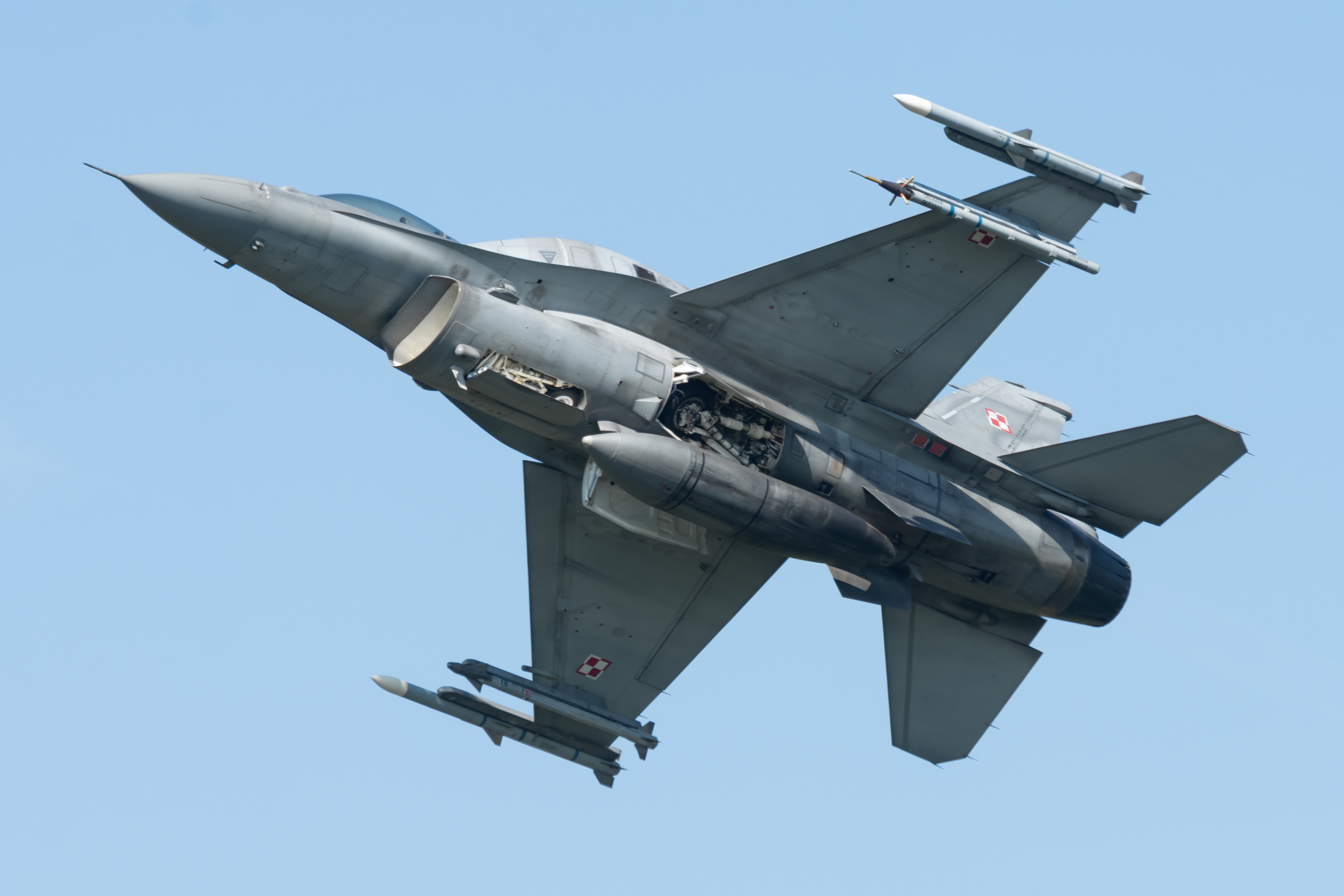
Russia Pounds Ukraine's Grid Overnight, Poland Scrambles Jets Near Border

Ireland's first general strike since 2009 shuts schools and hospitals in pay dispute
