Russia Pounds Ukraine's Grid Overnight, Poland Scrambles Jets Near Border
A broad overnight barrage cut power to hundreds of thousands in western Ukraine and killed several people in Kharkiv, prompting Poland to put fighter jets in the air as Bulgaria pressed NATO for help defending the Black Sea.
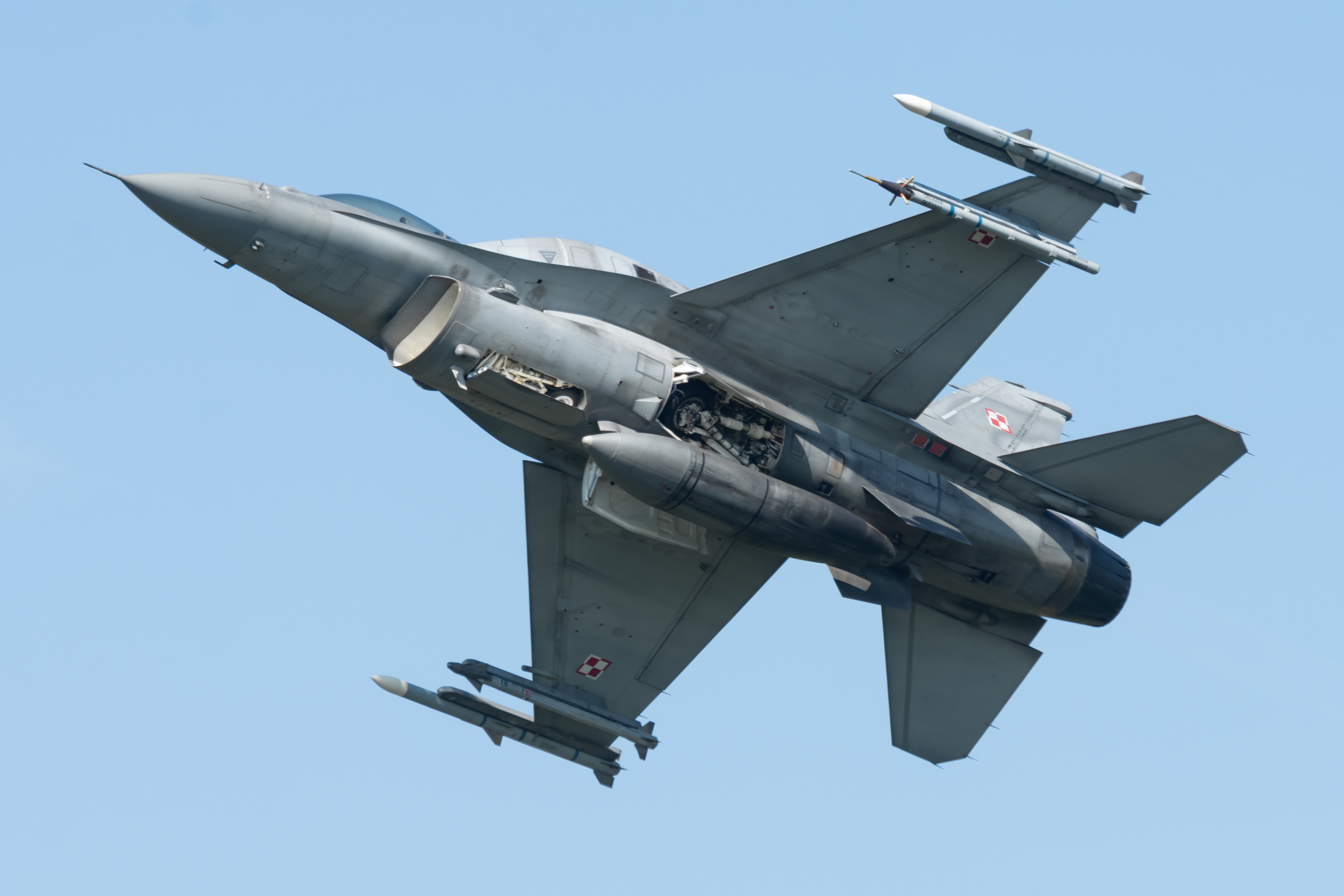
Poland scrambled fighter jets and put ground-based air defences on heightened alert before dawn on Friday as Russia carried out one of its broadest aerial bombardments of Ukraine in weeks, striking power infrastructure and residential areas from the Polish border to the Kharkiv front line. The Polish military reported no violation of its own airspace, but the response underscored how directly the war keeps reaching into NATO territory more than four years after Russia's full-scale invasion.
What happened
Russian missiles and drones hit targets across western, central and eastern Ukraine overnight and into Friday morning. In Volyn region, which borders Poland, strikes on energy infrastructure cut power to roughly 370,000 people and injured at least two people, according to regional governor Roman Romaniuk. In Kharkiv, in the country's northeast, a Russian drone and missile strike killed at least two to three people and wounded more than a dozen, with officials still updating the toll through the day; a separate strike on a market in the city left two dead and 17 injured, according to Ukraine's state news agency. Rivne and Sumy, further west and north, also reported damage to a shopping centre and a mall respectively. In Kyiv, the private power operator DTEK ordered emergency outages as the capital's grid absorbed fresh damage.
Poland's armed forces said fighter jets, along with allied aircraft already based in the country, were scrambled as a precautionary measure once the scale of the Russian attack became clear near the border, a step first reported overnight as the strikes unfolded. Airports in the border region have been temporarily closed during similar attacks in the past; this time, the military said it recorded no incursion into Polish skies.
The numbers
- Roughly 370,000 people left without power in Volyn region after strikes on energy facilities.
- At least two dead and 17 injured in a strike on a Kharkiv market, part of a day of strikes on the city that separately killed several more people, according to regional officials.
- Russia's defence ministry said it shot down 644 Ukrainian drones overnight, including dozens aimed at Moscow, forcing a brief suspension of flights at the capital's four airports and at St Petersburg's Pulkovo airport.
- At least 25 sailors have been killed or gone missing since September in a string of at least seven drone strikes on cargo ships off the Black Sea coasts of Romania and Bulgaria, a parallel escalation that has alarmed NATO's eastern flank.
How we got here
The exchange of strikes has intensified since the summer, when Ukraine stepped up long-range attacks on Russian oil refineries and energy infrastructure, a campaign that has squeezed Russian fuel supplies and drawn criticism from US President Donald Trump, who has blamed the strikes for pushing up global oil prices. Russia has responded with sustained attacks on the Ukrainian grid as winter approaches, a tactic it has used in each of the past several years to pressure the civilian population.
At the same time, Poland, Romania, Moldova and the Baltic states have logged repeated drone incursions into their airspace and waters since September 2025, when a swarm of Russian drones crossed into Polish territory and prompted NATO to reinforce its eastern flank with additional fighter jets, air-defence systems and surveillance assets from member states including France, Denmark, Germany and the United Kingdom. Poland's Ministry of National Defence has since scrambled aircraft on a near-routine basis whenever Russia launches large-scale strikes close to the border, a pattern that repeated itself again on Friday.
The Black Sea has become a second flashpoint. A commercial vessel sank off Bulgaria's coast this week after being struck by a drone, prompting Sofia to summon Russia's ambassador. Bulgarian Prime Minister Rumen Radev said the evidence pointed to Russia, though his government stopped short of a formal accusation.
Who is affected
The most direct toll is on Ukrainian civilians in Volyn, Kharkiv, Rivne and Sumy, where families lost power, homes and businesses were damaged, and hospitals treated dozens of injured. In Kyiv, DTEK's emergency outages mean rolling blackouts for residents already bracing for a fourth wartime winter. Along NATO's eastern and southern flanks, the strikes add to a broader sense of exposure: Polish border communities live with the recurring disruption of military scrambles and occasional airport closures, while Black Sea shipping has become measurably more dangerous for merchant crews.
"The outcome benefits the Russian Federation," Bulgarian Prime Minister Rumen Radev said of the Black Sea ship attacks, while stopping short of formally blaming Moscow.
Reaction and what people are saying
Dimitar Stoyanov, the head of Bulgaria's Ministry of Defence, said his government has formally asked NATO to deploy combat aircraft and anti-drone systems to help protect Black Sea shipping, and that Sofia is "awaiting their decision" while urging the alliance to "strengthen our capabilities." He said he plans to coordinate with his Romanian and Turkish counterparts on a common Black Sea approach and that Bulgaria expects to join a NATO anti-drone initiative by the end of October. Romania's president said his country has separately requested additional military equipment. NATO had not responded to a request for comment on the Bulgarian request, according to Reuters. On the Russian side, officials framed the drone shoot-down figures as evidence that Moscow's air defences are holding against an intensifying Ukrainian campaign against refineries and energy sites.
What happens next
Ukrainian officials expect further strikes on the power grid as cold weather sets in, and Kyiv has signalled it will continue targeting Russian refineries despite US pressure to pause. NATO is due to decide on Bulgaria's request for additional aircraft and anti-drone systems, with Sofia hoping for an answer before the end of October, when it also expects to formally join the alliance's broader anti-drone initiative. Poland's military is likely to keep scrambling jets on a near-weekly basis as long as Russian strikes continue to land close to its border, officials and independent analysts say, even without a confirmed violation of Polish airspace. Diplomats will also be watching whether the Black Sea ship attacks are formally attributed to Russia, a step that could trigger a sharper NATO response.
.jpg?width=1200)
Kenya confirms third Ebola case, patient already in quarantine

Myanmar's Coup Leader, Now President, Wins Back Southeast Asian Neighbours

Ireland's first general strike since 2009 shuts schools and hospitals in pay dispute
