Berkshire Hathaway profit falls 28% as buybacks surge under new CEO Abel
The conglomerate's third-quarter net income fell on weaker investment gains and a steep drop in insurance underwriting, even as Greg Abel's Berkshire nearly doubled its share repurchases and Howard Buffett formally succeeded his father as chairman.
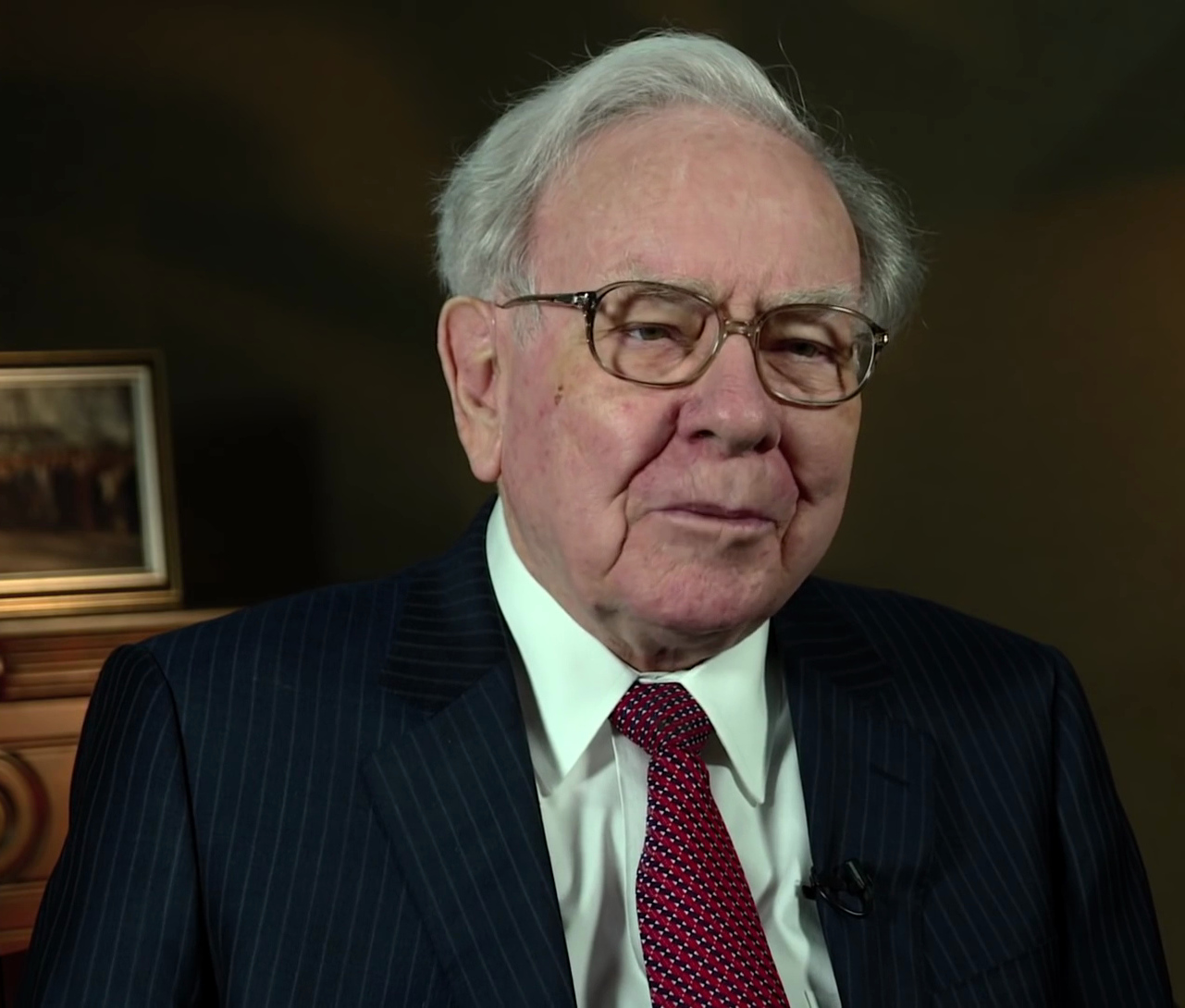
Berkshire Hathaway Inc. reported a 28 percent drop in third-quarter net earnings on Saturday, as a sharp pullback in investment gains and a steep decline in insurance underwriting profit outweighed growth across the conglomerate's railroad, energy and manufacturing businesses. Net earnings attributable to shareholders fell to $22.1 billion, from $30.8 billion a year earlier, the Omaha, Nebraska-based company said in its quarterly earnings release, even as it nearly doubled the pace of its own share buybacks.
Operating earnings, the measure Berkshire's management prefers because it strips out swings in the value of the company's stock portfolio, fell a more modest 5.8 percent to $12.705 billion, down from $13.485 billion in the third quarter of 2025. Investment gains, which are driven largely by unrealized changes in Berkshire's equity holdings, fell to $9.4 billion from $17.3 billion a year earlier. For the first nine months of 2026, net earnings rose to $57.9 billion from $47.8 billion, while operating earnings climbed to $37 billion from $34.3 billion, according to the release.
Insurance drags, railroads and factories deliver
The quarter's weakness was concentrated in Berkshire's insurance operations. Underwriting profit fell 43 percent, to $1.352 billion from $2.369 billion, and insurance investment income dropped 14 percent, to $2.734 billion from $3.181 billion, the company's filing shows. Berkshire's brief earnings release does not break out results for individual insurance units such as Geico or its reinsurance operations, and it offered no explanation for the decline.
Other parts of the conglomerate fared better. Earnings at BNSF, the railroad Berkshire has owned outright since 2010, rose 19 percent to $1.729 billion. Berkshire Hathaway Energy's earnings increased 8 percent to $1.612 billion, and the manufacturing, service and retailing group — which includes businesses from Dairy Queen to Precision Castparts — grew 12 percent to $4.042 billion. Those gains were not enough to offset the insurance shortfall, leaving total operating earnings lower for the quarter.
Buybacks accelerate as the cash pile keeps growing
The more notable shift was in how Berkshire is deploying its capital. The company spent about $9.6 billion repurchasing its own Class A and Class B shares in the third quarter, more than double the roughly $4.5 billion it spent in the second quarter, bringing total 2026 buybacks to about $14.4 billion through September 30, according to the earnings release and a CNBC report on the results. That marks a sharp reversal from the latter part of Warren Buffett's tenure as chief executive, when Berkshire went roughly five straight quarters without buying back a single share, preferring instead to let cash accumulate.
Cash and cash equivalents nonetheless kept climbing, rising to $377.4 billion at the end of September from $365.5 billion three months earlier, CNBC's tally of the disclosures shows — a reminder of how much cash Berkshire's operating businesses and investment portfolio continue to throw off even as capital returns to shareholders pick up. Berkshire's insurance float, the premiums it holds before paying out claims, stood at roughly $178.5 billion as of September 30, up about $2.1 billion since the end of 2025, the company said. Berkshire ended the quarter with 1,418,900 Class A equivalent shares outstanding, down from roughly 1.438 million a year earlier, reflecting the steady reduction from repurchases.
A changing of the guard in Omaha
The results arrived in Greg Abel's first full year running Berkshire day to day. Abel became chief executive on January 1, 2026, ending Buffett's six-decade run atop the company, and the leadership transition reached a further milestone in September, when Berkshire's board elevated Buffett to the newly created role of chairman emeritus and elected his son, Howard G. Buffett, a Berkshire director since 1993, as chairman of the board, according to a company announcement. Susan Decker continues as lead independent director. Warren Buffett remains a Berkshire director and shareholder but no longer holds an operating or chairman title.
In a letter to shareholders accompanying that announcement, Buffett, who turned 96 this year, described the handoff in blunt, practical terms rather than sentimental ones, writing that Abel had "taken hold of the Chief Executive Officer job in every respect" and that he had "not had to think twice" about Abel's decisions.
Greg runs the company; Howard will guard its culture and values – both worth more than anything on our balance sheet.
Abel, in a statement issued at the time on behalf of Berkshire's board, said Buffett's "impact on Berkshire and its owners is without parallel in the history of American business" and that the culture he built "will remain at the heart of Berkshire," with Howard Buffett as its "guardian." The arrangement splits authority in a way unusual among large American companies: Abel controls operating and capital-allocation decisions, including the buyback program now in evidence, while Howard Buffett's board role is framed explicitly around preserving Berkshire's governance culture rather than running the businesses.
Buffett's own letter leaned on his age as much as his record. He wrote that he had recently celebrated his 96th birthday with family, including a great-grandchild who had just turned one, and that after more than 60 years running Berkshire — he joined the company in 1965 — he still considered it "the best job in the world." He described Howard's three decades on Berkshire's board as "a longer apprenticeship" than his own before he took control of the company at 34, and said he would remain "a shareholder alongside you," a line aimed at underscoring that his wealth, still concentrated almost entirely in Berkshire stock, stays tied to the company's performance regardless of his title.
Markets look past the headline decline
Investors showed little alarm at the profit drop. Berkshire's Class A shares have risen more than 12 percent over the past month even as the S&P 500 fell about 5.5 percent over the same stretch amid a broader selloff in richly valued technology and artificial-intelligence-related stocks, and the company's shares are up roughly 13 percent for the year to date against a 7.8 percent gain for the S&P 500, according to CNBC's market data accompanying its earnings coverage. A separate Bloomberg report carried by Yahoo Finance likewise framed the quarter as one in which rising buybacks and a swelling cash position mattered more to shareholders than the year-over-year profit decline, noting that Berkshire's five largest disclosed equity holdings — Alphabet, American Express, Apple, Bank of America and Coca-Cola — were unchanged in the quarter.
Analysts had modeled a lower bar for the quarter than Berkshire cleared on an operating basis, though the size of the earnings swing underscores how much the company's reported profit still depends on paper gains and losses in its roughly $300 billion stock portfolio rather than on the cash-generating businesses it owns outright. Berkshire does not hold a conference call or offer forward guidance, a longstanding policy that predates Abel's tenure, so the earnings release itself — together with the fuller quarterly report, or 10-Q, that the company has posted on its website and will file with the Securities and Exchange Commission — remains the primary record of the quarter's performance.
The split between a strong operating quarter and a weaker headline profit figure is one Berkshire has spent decades trying to teach investors to look past. The company's earnings release itself reiterates, in language it has used for years, that swings in unrealized investment gains "can be extremely misleading to investors who have little or no knowledge of accounting rules" and that such figures are "usually meaningless" from one quarter to the next. That framing has taken on added significance this year as Berkshire works through its first full earnings cycle under a chief executive other than Buffett, with investors parsing each release for signs of how Abel's capital-allocation choices, including the step-up in buybacks, differ from his predecessor's.
The next data points investors are likely to watch closely are Berkshire's quarterly disclosure of its U.S. stock holdings, typically filed with the SEC around the middle of November, which will show whether Abel continued the buying of equities that resumed earlier this year after a long stretch of net selling, and Berkshire's full-year results and annual shareholder letter, due early next year. For now, the company that built its reputation on patience under Buffett is showing, under Abel, a greater willingness to put its enormous cash hoard to work buying back its own stock, even as that cash hoard keeps growing regardless.

EU Clears AkzoNobel-Axalta Coatings Merger, With a Catch

Moderna swings to profit and lifts 2026 sales outlook as new flu shot and cancer therapy gain traction
US economy added 165,000 jobs in October, unemployment falls to 4.1%
